
Plants
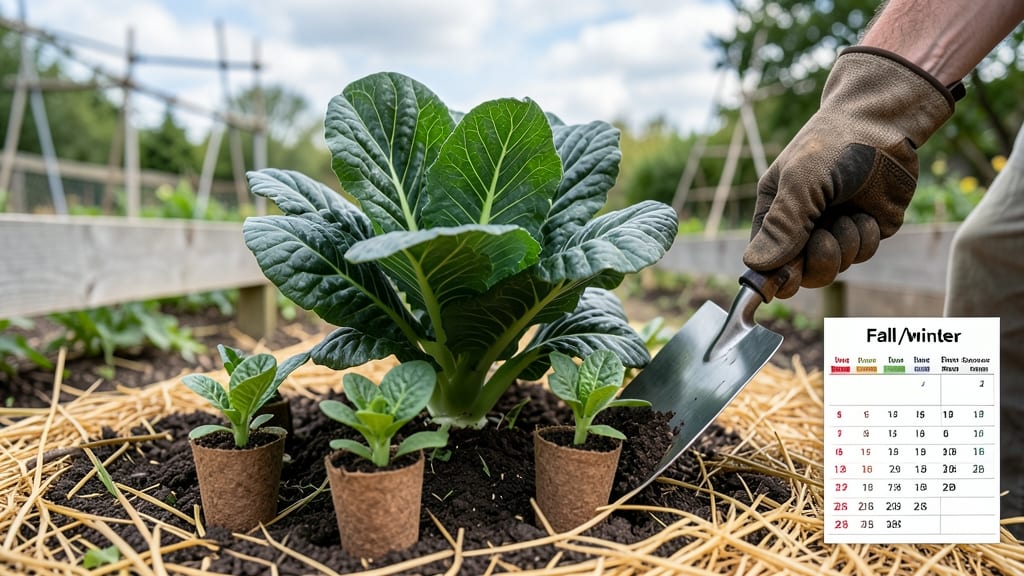
Planting collard greens 🥬 in Georgia isn't just about timing—it's about working with the state's unpredictable heat and humidity to guarantee a thriving harvest.
The difference between a bountiful crop and a wilted disappointment often comes down to knowing exactly when to start seeds or transplant seedlings, whether you're aiming for spring or fall harvests.
Georgia's 7b-8b climate zones give you two prime opportunities to grow these cold-hardy greens: late winter through early spring and again in late summer for fall harvests. But get it wrong, and you'll either face frost damage or struggle with heat stress that turns your plants into sad, stunted shadows.
Let me show you the exact windows that work—and how to prep your soil for maximum success.
Most gardeners in Georgia plant their collard greens between February and March for spring harvests or August and September for fall, but there's more to it than just picking a month.
We'll cover how to adjust for your specific region, whether you're in the cooler northern part of the state or the hotter southern areas, and which varieties hold up best under Georgia's summer sun.
Ready to grow collard greens that taste as good as they look? I'll walk you through everything from soil prep to post-planting care, so you can enjoy fresh, homegrown greens from April through December—without the guesswork.
Georgia’s ideal planting windows for collard greens: spring vs. fall timing
Georgia’s USDA zones 7b-8b give you two prime chances to grow collard greens: spring and fall. Timing is everything—plant too early, and frost will kill tender seedlings; too late, and summer’s 90°F+ heat will make leaves bitter and bolt prematurely.
My Georgia Southern garden thrives when I follow these frost-free windows.
For spring planting, aim for mid-March to early April—about 4-6 weeks before your last expected frost (typically February 15 in most regions). This gives seedlings time to establish roots before warm soil temperatures kick in.
In North Georgia (zone 7b), wait until late March to avoid late frosts.
Fall is your best bet for sweet, tender collards. Start seeds or transplants in late August to early September, giving plants 60-70 days to mature before first frost (November 15).
In South Georgia (zone 8b), you can push it to mid-September—just cover young plants with frost cloth if temps dip below 28°F.
Visual Tip: Use a garden marker to label planting dates—my fall crop from August 20 outlasted a light frost in early November!
My fall crop always outperforms spring—cooler temps sweeten the flavor, and I avoid pests like cabbage worms that thrive in summer. For spring success, harden off seedlings for 7-10 days before transplanting to toughen them against Georgia’s unpredictable March weather.
Pro heat-tolerant varieties like 'Top Bunch' or 'Vates' handle 90°F+ days better than standard types. I’ve seen 'Georgia Southern' bolt at 85°F, so if you’re planting in late summer, choose slow-bolting types and provide afternoon shade with row covers.
Always check your local frost dates—the University of Georgia Extension offers free frost maps tailored to your county. Even a 5°F difference can shift your planting window by 2-3 weeks.
For container growing, start seeds in early March and move pots outside after last frost. Containers dry out faster, so I use self-watering pots to keep roots moist during Georgia’s dry springs.
Remember: Collards are cool-season crops, but they’ll tolerate light frost (down to 15°F) once established. My fall plants often survive until December with a thick mulch layer.
Georgia’s ideal planting windows for collard greens: spring vs. fall timing
Georgia’s USDA Zones 7b-8b offer two perfect windows for growing collard greens: spring and fall. Spring planting starts 4-6 weeks before your last frost date (typically February-March), while fall planting begins August-September for a late harvest before frost.
Timing is everything—heat stress or early frost can ruin your crop if you’re off by even a few weeks.
In North Georgia (cooler microclimates), aim for March 1-April 15 in spring and August 15-September 15 in fall. South Georgia gardeners can push planting 2-3 weeks earlier in spring (late February) and 1-2 weeks later in fall (early October) thanks to milder winters.
Always check your local frost-free date—Georgia’s average last frost is February 15, but first frost arrives around November 15.
| Season | Planting Window | Key Considerations | Harvest Window |
|---|---|---|---|
| Spring | North GA: Mar 1-Apr 15 South GA: Feb 25-Mar 30 |
Soil temp ≥50°F Direct sow or transplant |
April-June |
| Fall | North GA: Aug 15-Sep 15 South GA: Aug 1-Sep 30 |
60+ days before first frost Avoid bolting |
October-December |
For spring planting, start seeds indoors 4-6 weeks before your last frost or sow directly when soil reaches 50°F. In Georgia, this usually means mid-February to early March for most regions.
Use black plastic mulch to warm soil faster if needed. Fall planting requires more precision—aim for 80-90 days before your first frost (typically August-September) to ensure mature leaves before cold sets in.
Pro tip: Use heat-tolerant varieties like 'Georgia Southern' or 'Top Bunch' to extend your growing window. These varieties handle 90°F+ temperatures better than traditional types, letting you push fall planting into early October in South Georgia. Always harden off seedlings for 7-10 days before transplanting to prevent shock.
Monitor your local extended forecast—unexpected heat waves in spring or early frosts in fall can derail your collards. If temperatures dip below 30°F, protect young plants with row covers or straw mulch. With the right timing, you’ll enjoy tender collards from April through December—no greenhouses required!
Remember: Soil prep matters just as much as timing. Test your soil’s pH (6.0-7.0) and amend with compost before planting. Collards thrive in rich, well-draining soil—don’t skip this step, or you’ll fight poor growth all season. 🌱