
Plants
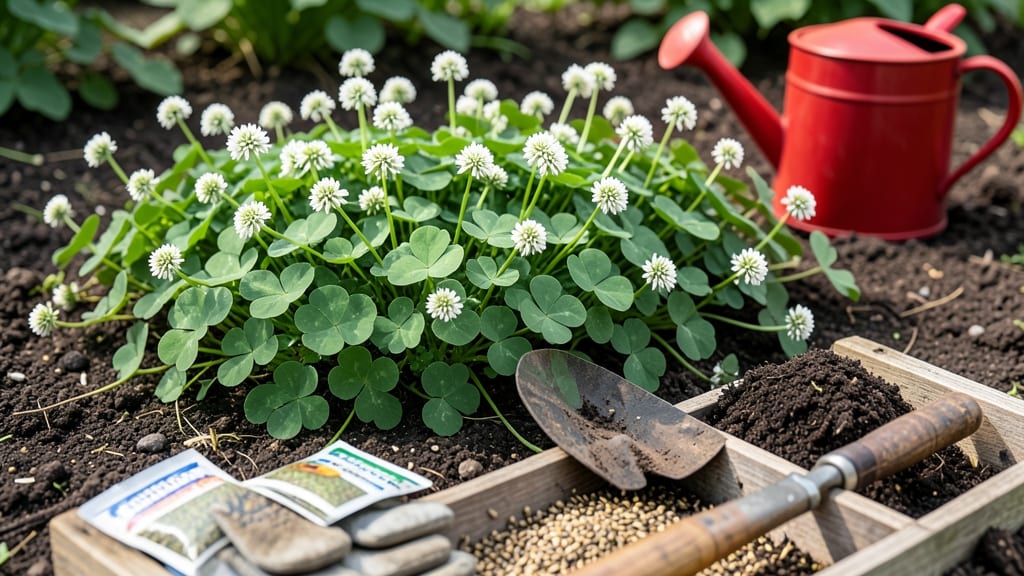
Planting clover in Utah isn't a one-size-fits-all task—your elevation and microclimate dictate the perfect timing to avoid frost damage and ensure strong growth.
With Utah's dramatic shifts from Zone 5 mountain regions to Zone 8 desert areas, knowing the exact window could mean the difference between a thriving cover crop and a failed patch.
Most gardeners in Utah's 6b areas like Salt Lake City should aim for early spring (March-April) or late summer (August-September), but those in 7b zones like St. George have slightly more flexibility.
The key is planting when soil temperatures hit 50°F—this ensures your 🌱 clover seeds germinate properly without risking late frosts that can wipe out tender seedlings.
Why does this matter? Clover thrives in Utah's climate when planted at the right time, offering erosion control, nitrogen enrichment, and even pollinator support.
But get it wrong, and you'll face stunted growth or total crop failure—especially in high-desert areas where summer heat can dry out young plants before they establish.
In this guide, I'll break down the exact planting deadlines for your specific Utah location, plus the best clover varieties that handle your region's unique conditions. Let's get started.
Utah's frost-free planting zones for clover: elevation-based deadlines
Utah's diverse elevations create wildly different planting zones—what works in St. George's Zone 7b (3,000 ft) fails in Park City's Zone 5b (8,000 ft). Clover thrives when planted after last frost risk, but Utah's microclimates shift deadlines by weeks. Let's break down the exact windows for your region.
For lowland Utah (e.g., St. George, Cedar City), aim for March 15-April 15 in spring or August 15-September 15 for fall. Higher elevations like Salt Lake City (6b) should wait until April 1-April 30 to avoid late frosts.
Mountain areas (e.g., Ogden, Park City) need to push planting to May 1-May 15.
Here’s how elevation impacts your frost-free window:
🌱 Utah Clover Planting Zones by Elevation
| Zone & Location | Avg. Elevation | Last Frost Date | First Frost Date | Ideal Planting Window |
|---|---|---|---|---|
| Zone 7b (St. George, Cedar City) | 3,000–4,000 ft | March 15 | November 15 | March 15–April 15 or August 15–September 15 |
| Zone 6b (Salt Lake City, Provo) | 4,200–5,000 ft | April 1 | October 15 | April 1–April 30 or August 1–September 1 |
| Zone 5b (Ogden, Park City) | 5,000–8,000 ft | May 1 | October 1 | May 1–May 15 or July 15–August 1 |
| Zone 4a (High Mountains: Logan, Heber) | 8,000+ ft | May 15 | September 15 | May 15–June 1 only (fall planting risky) |
⚠️ Note: High-elevation areas may need row covers to extend spring planting.
Soil temperature matters just as much as air temperature. Clover seeds won’t germinate until soil reaches 50°F (10°C). Use a soil thermometer to confirm readiness—especially in high-desert zones where daytime warmth doesn’t penetrate deep.
In St. George, soil hits 50°F by early March, but in Salt Lake City, wait until late April.
For fall planting, aim to sow 6–8 weeks before first frost. This gives clover time to establish roots before winter dormancy. In Zone 6b (Salt Lake City), that means August 1–September 1; in Zone 7b (St. George), you can push to September 15.
Late fall plantings risk weak germination before cold sets in.
Utah’s high desert climate also means dry winds can desiccate young seedlings. If planting in March or September, use mulch or shade cloth to retain moisture. In southern Utah, afternoon winds are strongest—plant on cloudy days or water deeply twice daily for the first week.
Pro tip: Check the Utah Climate Center’s frost alerts (www.climate.usu.edu) for real-time updates. Their microclimate maps show localized frost pockets that can shift planting deadlines by days. For example, Park City’s valley floor may frost later than nearby hills.
If you’re unsure about your exact microclimate, observe nearby orchards or gardens. Clover planted alongside fruit trees (which bloom early) is a good indicator—if the trees are in full bloom, it’s safe to plant in most of Utah.
Just avoid low-lying areas, where cold air pools and delays planting by weeks.
Remember: White clover tolerates cooler temps better than red clover, so adjust varieties by elevation. High-altitude gardeners should stick with white clover for spring plantings, while lowland areas can handle red clover’s faster growth in warmer months.
How to adjust planting dates for Utah's microclimates: a step-by-step guide
Utah's dramatic elevation changes create microclimates that can shift planting deadlines by weeks. For example, Salt Lake City (4,200') has a last frost around March 15, while Park City (8,000') may not clear frost until May 1.
Adjusting your planting timeline based on your specific elevation and local weather patterns is key to success.
Start by checking the 30-year average frost dates for your area using the Utah Climate Center or local Cooperative Extension Service. These dates serve as your baseline—then tweak them based on recent weather trends.
For instance, if your area has seen earlier springs in the last few years, you might safely plant 2 weeks earlier than the average.
Use a soil thermometer to confirm readiness. Clover seeds need soil temperatures of at least 50°F (10°C) to germinate properly. In Utah's high desert regions, this often means waiting until mid-April even if frost risk has passed, while valley areas like St. George can plant as early as February.
Check Local Frost Data
- Visit Utah Climate Center for your specific location
- Note last frost date and first frost date for your area
- Adjust planting window to 2-3 weeks before last frost for spring planting
- For fall planting, aim for 6-8 weeks before first frost
For high-elevation areas above 7,000 feet, consider using row covers or cold frames to extend your planting season. These protective measures can add 2-4 weeks to your growing window by shielding young clover plants from unexpected late frosts.
In low-desert regions like Washington County, watch for heat spikes in late spring—planting too early may stress clover before it establishes.
Monitor your local weather forecasts in the weeks leading up to planting. Look for predictions of consistent temperatures above 50°F for at least 5 consecutive days. This stability indicates safe planting conditions.
In Utah's unpredictable climate, having a backup plan—like a small batch of seeds planted a week later—can save your entire crop if early planting fails.
Remember that fall planting often yields better results in Utah's climate. By seeding in late summer (August-September), clover establishes roots before winter and greens up earlier in spring. This approach takes advantage of Utah's cooler fall temperatures and consistent rainfall patterns.