
Plants
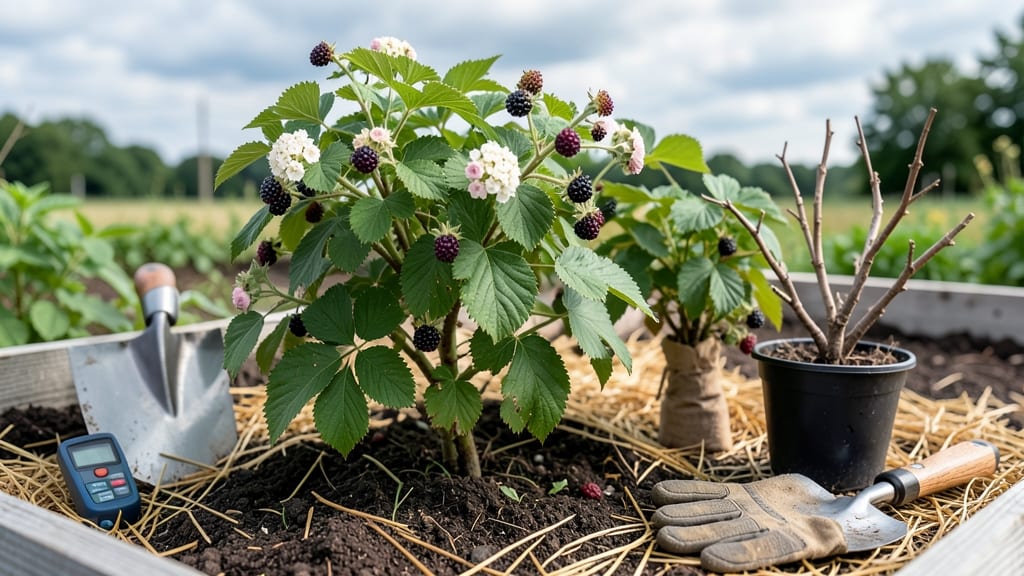
Timing your blackberry 🫐 planting in Virginia isn't just about the calendar—it's about matching your variety to the state's 6a-8a chill hours and avoiding common pitfalls that can ruin your harvest before it starts.
Plant too early, and frost might kill your young canes. Wait too late, and your berries may never fully ripen in Virginia's variable climate. The sweet spot? Late winter to early spring (February-April) or fall (September-October), when soil temperatures cooperate and your chosen variety's chill requirements align perfectly.
I'll walk you through the exact planting windows for Virginia's most reliable varieties—whether you're growing low-chill types in Zone 8a or hardier varieties in the cooler Piedmont.
You'll learn how to prep your soil, when to mulch for winter protection, and why some gardeners swear by fall planting while others stick to spring.
By the end, you'll know not just when to plant, but how to set your blackberries up for a bountiful harvest from July through September—without wasting years on trial and error.
Virginia’s best planting months for blackberries by chill-hour needs
Virginia’s diverse climate zones (USDA 6a-8a) and chill-hour requirements make timing critical for blackberry success. The ideal planting window spans late winter to early spring (February–April) or fall (September–October), but exact timing depends on your variety’s chill needs and local microclimate.
Coastal areas like Norfolk (Zone 8a) have milder winters, while Roanoke (Zone 6b) faces harsher conditions. Low-chill varieties (400–600 hrs) thrive in Zone 8a, while high-chill types (800+ hrs) struggle without winter dormancy. Matching your variety to your zone avoids winterkill or poor fruiting.
For spring planting, aim to plant bare-root canes 4–6 weeks before your last frost date (March 15 in Zone 6a to April 15 in Zone 8a).
In fall, plant at least 6 weeks before the first frost (November 1 in Zone 8a to November 15 in Zone 6a) to allow root establishment.
🌱
In Zone 8a (coastal), fall planting works well for low-chill varieties, but avoid it in Zone 6a (mountains) where winters are harsh. Spring planting is safer for high-chill types, giving roots time to establish before summer heat.
Soil temperature matters too—wait until the ground warms to 50°F (10°C) for spring planting. Use a soil thermometer to monitor. In fall, plant when daytime temps drop below 75°F (24°C) to reduce transplant shock.
🌡️
Mulch heavily (4–6 inches) after planting to protect roots from temperature fluctuations. In Zone 6a, add an extra layer of straw in winter to prevent heaving. For container-grown plants, use insulated pots and move them to a sheltered spot in winter.
🪴
Always plant on a slightly elevated mound (6–12 inches high) to improve drainage, especially in clay-heavy soils common in Virginia’s Piedmont. Amend soil with compost and sand if drainage is poor—blackberries hate soggy roots.
✂️
Top Virginia-adapted blackberry varieties and their ideal planting timelines
Virginia’s climate offers perfect conditions for blackberries, but variety selection and planting timing are critical for success. The state’s USDA zones 6a-8a accommodate everything from low-chill to high-chill varieties, but matching your variety to your zone ensures reliable fruiting.
For example, Natchez thrives in coastal Virginia (Zone 8a) with just 400-500 chill hours, while Prime-Ark Freedom handles 800+ chill hours in the Piedmont (Zone 6a-7a).
Here’s how to align your blackberry variety with Virginia’s planting windows for maximum productivity. Whether you’re planting bare-root canes in early spring or potted plants in fall, timing directly impacts root establishment and winter survival. Let’s break down the top 5 Virginia-adapted varieties and their precise planting schedules.
| Variety | Chill Hours | Best Planting Months | Virginia Zones | Key Notes |
|---|---|---|---|---|
| Natchez | 400-500 | Feb-Mar (bare-root) or Sep-Oct (potted) | 7b-8a (coastal) | Thornless, early producer, needs trellis |
| Chester | 500-600 | Feb-Apr (bare-root) or Sep-Oct (potted) | 6b-8a (transition zones) | High yield, disease-resistant, thorny |
| Prime-Ark Freedom | 800-1000 | Feb-Mar (bare-root) or Sep (potted) | 6a-7a (Piedmont) | Thornless, late-season, cold-hardy |
| Arapaho | 600-700 | Feb-Apr (bare-root) or Sep-Oct (potted) | 6a-7b (mountain regions) | Disease-resistant, high sugar, thorny |
| Ouachita | 700-800 | Feb-Mar (bare-root) or Sep (potted) | 6b-7a (valleys) | Thornless, late harvest, needs support |
For coastal Virginia gardeners (Zone 8a), focus on low-chill varieties like Natchez or Chester planted in February-March or September-October. These varieties bloom later, avoiding late frosts that can damage flowers.
In Piedmont regions (Zone 6a-7a), Prime-Ark Freedom and Arapaho excel when planted in late winter before buds swell, ensuring they meet their higher chill-hour needs.
Pro tip: If you’re in a transition zone like Roanoke (Zone 7a), opt for mid-chill varieties (600-800 hours) and plant in early spring to avoid winterkill. Always check your local frost dates—planting too early in Zone 6a (e.g., before March 1) risks exposing young canes to sub-freezing temps.
Use mulch (3-4 inches) to insulate roots during winter.
Once planted, prioritize trellising for all varieties to improve air circulation and disease resistance. For thornless varieties like Natchez or Ouachita, use flexible trellis systems to make harvesting easier. And remember: fall-planted canes need extra watering to establish roots before winter dormancy begins.
With the right