
Plants
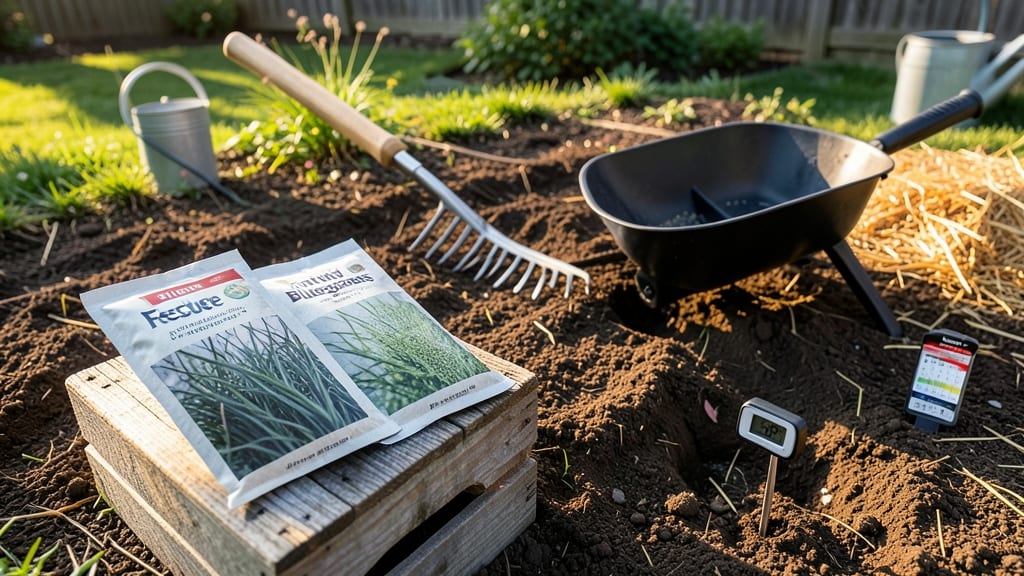
If you're staring at a bare patch of dirt in Minnesota and wondering "when is it too late to plant grass seed", you're not alone. The answer depends on your hardiness zone, soil temperature, and whether you're willing to gamble with frost.
Planting too late can leave your new 🌱 grass struggling to establish roots before winter sets in.
For most of Minnesota's USDA zones 3-5, the ideal window for planting grass seed is early spring or late summer. But life happens, and sometimes you miss those perfect weeks.
The good news? With the right approach, you can still get a head start on next year's lawn—even if you're planting in September or early October.
Here’s what you need to know: soil temperatures below 50°F slow germination, and frost can kill young grass before it takes hold. We’ll break down the exact deadlines by zone, plus cold-hardy grass varieties that give you a fighting chance when time is running out.
Don’t let a late start ruin your lawn dreams. I’ll walk you through the steps to assess your soil, choose the right seed, and give your grass the best shot at survival—even when the calendar says it’s too late.
Minnesota grass seed planting deadlines by hardiness zone (2024 update)
Minnesota’s USDA zones 3-5 create a tight window for fall grass seed planting. The general rule is to plant 4-6 weeks before the first hard frost, but your exact deadline depends on your zone.
For most of Minnesota, this means late August to early September is ideal, but late September can still work with the right conditions.
Soil temperature is your best indicator—grass seed needs at least 50°F soil temps to germinate. In northern Minnesota (zone 3), soil may drop below this by mid-September, while southern areas (zone 5) can extend planting until early October.
Always check a soil thermometer before seeding to avoid wasted effort.
Here’s the critical countdown: If you’re in zone 4 (central MN), aim to finish planting by September 20th. For zone 3 (north), September 1st is your cutoff. Zone 5 (south) can push to October 1st, but only if nighttime temps stay above 40°F consistently.
🌱Pro Tip: Use a frost date calculator (like the Old Farmer’s Almanac) to pinpoint your local first frost. Subtract 4-6 weeks to find your last safe planting date.
If you miss these deadlines, don’t panic—overseeding in spring is always an option. But late fall planting requires extra care: choose cold-hardy varieties, use starter fertilizer, and protect seedlings with winter mulch once they’re established.
Now, let’s break down your exact deadline by zone with this comparison table—because even a week too late can mean the difference between a thick lawn and winter kill.
Minnesota Grass Seed Planting Deadlines by Zone
| Zone | Last Safe Planting Date | Soil Temp Threshold | Risk Level (Late Planting) |
|---|---|---|---|
| Zone 3 (North MN) | September 1 | 50°F+ (soil) | High (frost likely by Oct 1) |
| Zone 4 (Central MN) | September 20 | 50°F+ (soil) | Moderate (frost by Oct 15) |
| Zone 5 (South MN) | October 1 | 50°F+ (soil) | Low (frost by Nov 1) |
*Based on historical frost dates for Minnesota. Always verify with local weather sources.
If you’re planting in late September or October, your success hinges on soil prep. Cold soil slows germination, so amend with compost to improve warmth retention. A thin layer of straw mulch (not hay—it can smother seedlings) helps insulate seeds from temperature swings.
Another critical factor is seed variety. Not all grass types handle late planting equally. Fine fescue and Kentucky bluegrass are your best bets for fall—both tolerate cooler temps and establish roots before winter. Avoid tall fescue for late planting; it struggles to germinate below 60°F.
For zones 3-4, extend your window by 2 weeks with a seed warmer (a black plastic sheet over the seeded area traps heat). This can push your deadline to mid-October in zone 4, but only if daytime temps stay above 55°F.
Combine this with daily watering (morning only to prevent fungal growth) for best results.
🌿Remember: Even if you plant late, spring overseeding is always an option. But a well-timed fall planting gives you a head start on next year’s lawn—just don’t wait until the snow flies!
Signs your late-season grass seed planting will fail (and how to fix it)
If you’re planting grass seed in Minnesota after early September, watch for these red flags that signal trouble. Soil temperatures below 50°F and frequent nighttime frosts are the biggest threats. Even if your seed packet says "fall planting," Mother Nature might have other plans.
One of the first warning signs is slow or uneven germination. If sprouts take longer than 3 weeks to appear—or only appear in patches—your soil may be too cold.
Another clue? Weeds sprouting first while your grass struggles. This means the seed isn’t getting enough sunlight, warmth, or moisture to compete.
Check your soil moisture levels next. If the top inch of soil feels dry within 24 hours of watering, your grass won’t establish roots. Late-season planting requires daily watering until germination occurs, but many gardeners cut back too soon, thinking cooler temps mean less watering.
Here’s the kicker: even if your grass does sprout, weak roots can’t handle Minnesota’s first hard frost (usually mid-September in Zone 4). Without a strong root system, young grass turns brown and dies back, leaving you with a winter-bare lawn—or worse, a weed magnet next spring.
⚠️ Late-Season Planting Warning Signs
🌱 Slow germination (no sprouts after 3 weeks)
❄️ Nighttime temps below 40°F (seed won’t germinate)
🌿 Weeds outcompeting grass (seed lacks energy to grow)
💧 Soil stays dry too fast (roots can’t establish)
🌡️ Frost predicted within 4 weeks (roots won’t survive)
If you spot these issues, don’t give up yet! Adjust your approach to salvage your lawn. For starters, switch to cold-hardy varieties like Fine Fescue or Tall Fescue, which germinate in cooler soil. Next, use a seed starter fertilizer to jumpstart growth—just follow the package rates.
For moisture, water deeply in the morning (1 inch total per week) and cover seeds with straw mulch (1/4 inch thick) to retain heat and moisture. This mimics the protective layer of snow that would naturally insulate seeds in winter.
Finally, if frost is imminent, delay mowing until grass reaches 3–4 inches tall—longer blades shade roots and reduce stress.
Remember, late planting isn’t a lost cause—it’s about working with the climate, not against it. With these fixes, you can still get a head start on next year’s lawn, even if the calendar says it’s too late.