
Plants
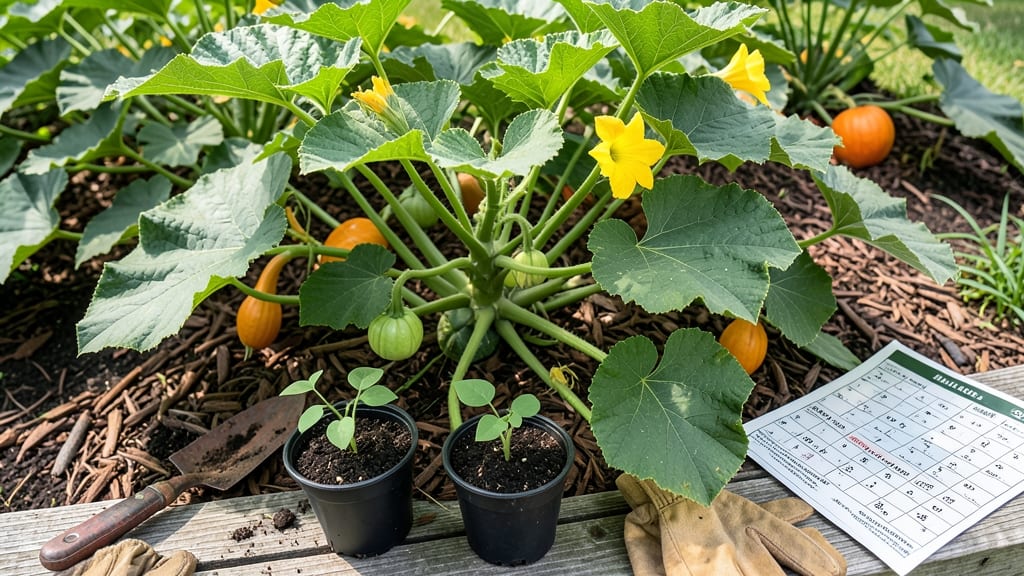
Timing your 🎃 pumpkin planting in Indiana isn't just about throwing seeds in the dirt—it's the difference between a bumper crop and bolted vines that never produce.
In Zone 5b-6b, where last frosts linger until mid-April, planting too early risks freezing out tender seedlings, while waiting too long cuts your harvest window short.
Most Indiana gardeners miss the 30-day window between soil warming to 60°F and the first reliable frost-free days. That means starting seeds indoors in late March or waiting until early May for direct sowing—both require precise planning to avoid premature bolting or stunted growth.
I'll break down exactly when to plant—whether you're using transplants or direct sowing—and how to adjust for Indiana's microclimates. You'll learn the critical soil temperature thresholds, last-frost-date calculations, and even how to extend your season with row covers.
Let's get your pumpkins off to the right start—because in Indiana's short growing season, every day counts. Ready to plant with confidence? Here's what you need to know.
Indiana pumpkin planting deadlines by Zone 5-6: avoid bolting with exact dates
Indiana’s Zone 5-6 climate demands precision when planting pumpkins. The last frost date (typically April 15) marks the start of your window, but soil temperature is the real game-changer. Seeds need 60°F+ soil to germinate—cold soil causes rot or stunted growth.
Most Indiana gardeners hit the sweet spot between mid-April and early June, but late zones (like Zone 6b) can extend planting until June 1.
Miss the deadline, and you risk bolting (premature flowering) or a harvest too late for fall festivities. For example, planting in March often leads to weak vines, while waiting until July means pumpkins won’t mature before frost. The key? Soil thermometers and local frost data from Purdue Extension.
Here’s the critical timeline for Indiana pumpkin success:
| Stage | Action | Zone 5b | Zone 6b |
|---|---|---|---|
| Soil Prep | Test pH (6.0-7.0), add compost | Early April | Early April |
| Planting Window | Direct sow seeds 1" deep | Mid-April to May 15 | April 15 to June 1 |
| Germination | Wait for 60°F+ soil | 7-14 days | 7-14 days |
| Harvest Ready | Rind hard, stem brown | Late Sept-Oct | Late Sept-Oct |
| First Frost Risk | Protect vines if frost threatens | Oct 15 | Oct 20 |
Northern Indiana (e.g., LaPorte) may need to plant 2 weeks earlier than southern areas (e.g., Evansville). Use row covers to extend the season if you’re cutting it close. For transplants, start seeds indoors 4-6 weeks before your last frost date.
Pro tip: ‘Jack Be Little’ matures in 75 days, while ‘Howden’ takes 100+ days. Choose fast varieties for late plantings. Always hill soil around vines to prevent rot and encourage root growth.
Indiana’s microclimates can shift deadlines by 1-2 weeks. Check your USDA Zone and local frost maps—don’t rely on averages. For example, Lake County stays cooler longer than Vigo County.
If you’re in Zone 5b, aim for May 1 as your cutoff. For Zone 6b, you can push to June 1 with fast-maturing varieties. Late plantings won’t yield giant pumpkins, but they’ll still produce edible fruit for pies or roasting.
Remember: Pumpkins need 90-120 days to mature. Planting on June 1 in Zone 6b might only give you small pumpkins by frost—plan accordingly. Use succession planting for a staggered harvest.
For container gardening, start seeds indoors by April 1 and transplant after frost. Dwarf varieties like ‘Sugar Pie’ thrive in 5-gallon pots with proper spacing.
🎃
How to extend Indiana’s pumpkin season: cold-frames, row covers, and succession planting
Indiana’s short growing season (just 165 frost-free days) can make pumpkin growing feel like a race against time. But with the right tricks, you can push harvests into late October or even November. The key? Extending the season with protective gear and smart planting strategies.
Most gardeners in Zone 5b-6b focus on planting between mid-April and early June, but that leaves little room for error. By using cold-frames or row covers, you can safely plant 2-3 weeks earlier or delay harvests by 4-6 weeks—critical for Indiana’s unpredictable fall weather.
Here’s how to maximize your pumpkin harvest with proven techniques:
Choose shorter-season varieties like 'Jack Be Little' (75 days) or 'Howden' (85 days) for earlier harvests. These thrive in Indiana’s cooler springs and still produce 3-5 lb pumpkins.
Install floating row covers over seeds planted in late March. Remove covers when flowers appear to allow pollination. This buys you 2-3 extra weeks of growth before last frost.
Sow new seeds every 10-14 days from mid-May to early June. This staggered approach ensures a continuous harvest from September through October.
Cover vines with lightweight row covers or hoop tunnels in early October. This extends maturity by 2-3 weeks, letting you harvest after frost without spoilage.
Apply 4-6 inches of straw mulch around hills in late September. This insulates roots and keeps soil 5°F warmer, delaying vine death.
Pick smaller pumpkins first (they ripen faster) and leave larger ones on the vine until late October. Store harvested pumpkins in a cool, dry place (50-55°F) for 2-3 months.
Even in Indiana’s cool climate, these methods can turn a single planting into a month-long harvest. For example, I’ve used row covers to plant 'Sugar Pie' in early May and still harvested fully mature pumpkins in mid-October—just in time for Halloween!
Pro tip: Pair these techniques with companion planting (like nasturtiums to deter pests) for even better results. With the right approach, Indiana’s pumpkin season doesn’t have to end with the first frost—it can stretch into deep autumn. 🎃