
Watering
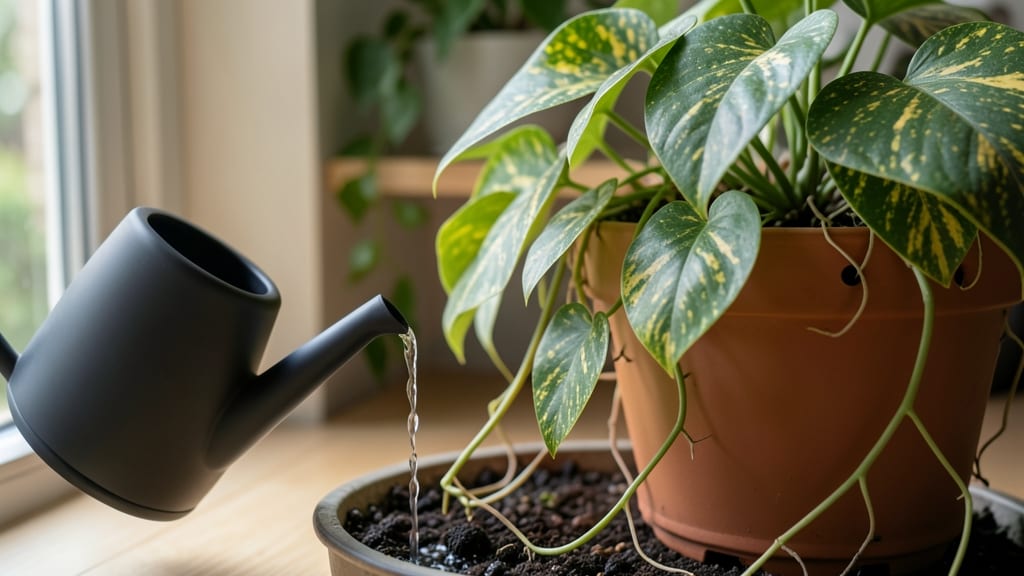
If your money plant 💵 is telling you it’s thirsty but you’re not sure how much water to give, you’re not alone. The right watering routine is the difference between a thriving Pachira aquatica and one that struggles with yellow leaves or root rot.
Too little water, and the leaves droop; too much, and the roots suffocate.
Here’s the good news: with a few simple checks and a consistent schedule, you can master the art of watering this resilient vine.
Whether you’re dealing with dry winter air or humid summer days, I’ll show you exactly when to water and how to tell if your plant is getting just the right amount.
No more guessing games—just a clear, step-by-step approach to keep your money plant 💵 happy year-round. Let’s dive into the exact watering schedule and signs your plant needs (or doesn’t need) a drink.
From the finger test to seasonal adjustments, you’ll learn how to adjust your routine for optimal growth. Ready to give your plant the care it deserves?
Money plant watering schedule by season: exact frequency for healthy growth
Your money plant (Pachira aquatica) thrives on consistency, but seasonal changes dramatically alter its water needs. In summer’s heat, roots dry faster, while winter’s chill slows evaporation. The key is adjusting your schedule based on soil moisture, not just calendar dates.
Let’s break down the ideal routine for each season—plus how to tweak for humidity and light conditions.
Start by testing your soil moisture with your finger: Insert it 1-2 inches deep into the soil. If it feels dry at this depth, it’s time to water. If damp, wait another 2-3 days.
This simple test replaces guesswork with science, preventing both root rot and wilting leaves. For container-grown money plants, smaller pots dry out faster than large ones, so adjust accordingly.
Here’s your seasonal watering guide, tailored to indoor conditions with average humidity (40-60%). If your home is drier than 40% (common in winter with heating), water 1-2 days earlier than listed. For humidity above 60% (like bathrooms or kitchens), extend the interval by 2-3 days to avoid soggy roots.
| Season | Frequency | Soil Test Depth | Water Amount | Best Time |
|---|---|---|---|---|
| Spring | Every 7 days | 1-2 inches | 1 cup (250ml) | Morning (8-10 AM) |
| Summer | Every 5-7 days | 1 inch | 1.5 cups (375ml) | Morning (7-9 AM) |
| Fall | Every 7-10 days | 1.5-2 inches | 1 cup (250ml) | Morning (9-11 AM) |
| Winter | Every 10-14 days | 2 inches | 0.5 cup (125ml) | Morning (10 AM-12 PM) |
Note: Adjust for pot size (smaller = more frequent) and light exposure (brighter = drier soil faster).
During summer months, your money plant may show signs of thirst faster—watch for drooping leaves or crispy leaf edges. Increase watering to every 5 days if the soil dries within 3 days of your last watering.
Conversely, in winter, reduce frequency to every 2 weeks if the soil remains damp longer than expected. Place a humidity tray near your plant to boost moisture levels without overwatering.
Light plays a sneaky role in water needs: A money plant in bright indirect light (e.g., near an east window) will dry out 20% faster than one in low light.
If you notice yellowing leaves despite following the schedule, move your plant to a shadier spot and reduce watering by 1-2 days. Conversely, if leaves curl inward or feel dry to the touch, it’s time to water—even if it’s not your scheduled day.
Pro tip: Use room-temperature water to avoid shocking roots. Cold water from the tap can cause root stress, making your money plant more susceptible to fungal infections. Let tap water sit for 24 hours before using, or invest in a water filter to improve plant health.
Pair this with a well-draining potting mix (like a 60/40 blend of peat and perlite) to prevent waterlogging.
For outdoor money plants (common in USDA zones 10-12), increase watering to every 3-5 days in summer, as outdoor conditions are drier and windier. Mulch around the base with 1-2 inches of organic mulch to retain moisture and regulate soil temperature.
If your plant is in a large container (10+ gallons), the soil may stay moist longer—check the bottom 2 inches of soil before watering.
Remember: Consistency beats perfection. If you miss a watering day, don’t double up—just adjust the next schedule. Your money plant’s resilience will reward your attention with lush, braided stems and vibrant foliage. Track your plant’s response in a garden journal to fine-tune its care over time.
Money plant watering schedule by season: exact frequency for healthy growth
Your money plant 💵 thrives on consistency, but its water needs shift dramatically with the seasons. In spring, when growth speeds up, you’ll water every 7 days—but in winter, when it rests, stretching to 10-14 days between drinks prevents soggy soil.
The key is matching your routine to your plant’s natural rhythm and your home’s humidity levels.
Start by checking the top 1 inch of soil—if it’s dry, it’s time to water. In summer, high heat and low humidity mean you may need to water every 5-7 days, while fall brings a gradual return to the 7-10 day schedule.
Here’s how to adjust without guessing:
| Season | Frequency | Soil Check | Humidity Tip |
|---|---|---|---|
| Spring | Every 7 days | Top 1 inch dry | Moderate humidity boosts growth |
| Summer | Every 5-7 days | Top 1-2 inches dry | Low humidity = water more |
| Fall | Every 7-10 days | Top 1 inch dry | Cooler air = slower drying |
| Winter | Every 10-14 days | Top 2 inches dry | Dry indoor air = less frequent water |
Pro tip: Use a moisture meter or the finger test (insert your finger 1 inch deep) to avoid overwatering. If your home has low humidity (common in winter), your money plant will dry out faster—so check soil more often.
Conversely, high humidity in summer can slow drying, so resist the urge to water on schedule if the soil still feels damp.
Another game-changer? The time of day you water matters. Always water in the morning (before 10 AM) to let excess moisture evaporate during the day. Nighttime watering traps dampness in the soil, inviting root rot 🌱. Stick to this routine, and you’ll see lush, vibrant growth year-round.
Watch for leaf color changes as your first clue. Dark green leaves mean your schedule is spot-on, while yellowing or crispy edges signal you’ve over- or underwatered.
Adjust gradually—don’t double your watering overnight if you’ve missed a few days. Patience and consistency are your best tools for a thriving money plant.
For extra peace of mind, place your pot on a caching tray to catch excess water. This prevents soggy saucers while giving you a visual cue if you’ve overwatered. With this seasonal guide, your money plant will stay happy, healthy, and full of good luck—no guesswork required!