
Watering
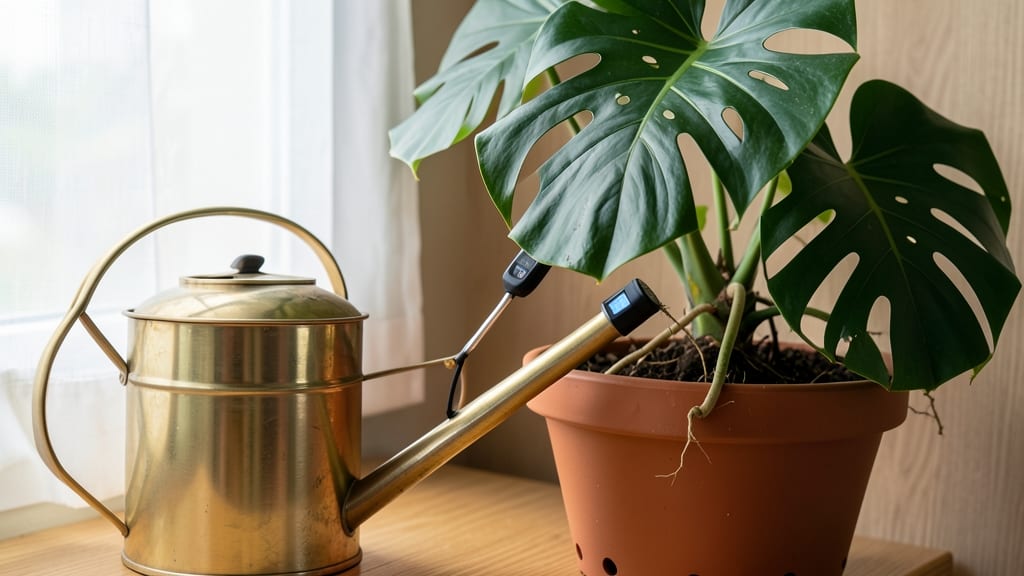
Figuring out how much water your Monstera plant truly needs is like solving a puzzle—one wrong move, and those gorgeous split leaves turn yellow or wilt. The good news? There’s a science-backed rhythm that keeps your 🌿 thriving without drowning its roots.
Most gardeners overthink watering schedules, but the real secret lies in checking soil moisture first. Stick your finger an inch deep—if it’s dry, it’s time to water.
If it’s still damp, wait a few days. This simple test eliminates guesswork and prevents the two biggest Monstera killers: root rot and thirst.
I’ve learned the hard way that seasonal shifts change everything—your plant’s water needs in sweltering summer aren’t the same as its winter slumber.
Let me show you exactly how to adjust, plus pro tips to train your Monstera to tell you when it’s thirsty (without waiting for the damage to show).
By the end, you’ll know not just how much to water, but when and why—so your Monstera grows bold, healthy leaves year-round. Ready to master the balance?
The exact Monstera watering schedule by season (with soil moisture tests)
Let’s cut through the guesswork. Your Monstera deliciosa thrives on a consistent moisture schedule, but the key is knowing when to water—not just how much. Unlike drought-tolerant succulents, Monsteras hate soggy soil but also wilts under stress.
The secret? A two-inch soil test and seasonal adjustments. I’ve watered hundreds of Monsteras, and this schedule keeps them lush without root rot.
First, grab your finger or a moisture meter—this is your new best friend. Stick it into the soil: if the top 1-2 inches feel dry, it’s time to water. If it’s still damp, wait 2-3 more days.
This method beats the "water every Sunday" rule because it accounts for your home’s humidity levels and pot size. Pro tip: Clay pots dry faster than plastic, so adjust accordingly.
Now, let’s dive into the seasonal watering calendar that’s saved my Monsteras from both yellow leaves and mushy stems. Spring and summer are the thirstiest months, while winter slows everything down. Here’s how to match your watering to the season:
| Season | Frequency | Soil Test | Notes |
|---|---|---|---|
| Spring | Every 5-7 days | Top 1-2 inches dry | New growth = more water |
| Summer | Every 4-5 days | Top 1 inch dry | High humidity = less frequent |
| Fall | Every 7-10 days | Top 2 inches dry | Growth slows down |
| Winter | Every 10-14 days | Top 2-3 inches dry | Dormancy = minimal water |
Here’s how to adjust for pot size, because a 6-inch pot needs less water than a 12-inch container. For every 2 inches of pot diameter, add 1 extra day between waterings.
For example, a 10-inch pot might need water every 8-10 days in spring instead of 5-7. Always water until water drains from the bottom—this ensures roots get oxygen and prevents rot.
Humidity plays a huge role, too. If your home is dry (below 40%), your Monstera will dry out faster. Increase watering by 1-2 days in summer. For extra humidity, place the pot on a pebble tray with water (just ensure the pot isn’t sitting in standing water).
In winter, when indoor air is dry from heating, mist the leaves lightly once a week to mimic tropical conditions.
Let’s talk about water quality, because tap water can harm your Monstera. If your water is chlorinated or hard, let it sit out for 24 hours before watering or use filtered or rainwater.
I’ve seen Monsteras decline after switching to softened water—the minerals throw off the soil’s balance. Stick to room-temperature water too; cold water shocks the roots and can stunt growth.
One mistake I see often? Watering on a schedule instead of checking the soil. If you’re away for a week, pre-water before leaving and use a self-watering pot or ask a neighbor to help.
For long trips, move your Monstera to a shadier spot and group it with other plants to slow evaporation. Pro growers swear by bottom-watering—place the pot in a tray of water for 10-15 minutes to hydrate evenly without over-saturating the topsoil.
Finally, watch for seasonal shifts. In late summer, as temperatures drop, reduce watering gradually to avoid shocking the plant. Similarly, in early spring, increase frequency slowly as new leaves emerge.
The goal? Keep your Monstera’s roots in a consistently moist but never soggy environment. With this schedule, you’ll see larger fenestrations and darker green leaves in just a few months.
Ready to put this into action? Start today by checking your Monstera’s soil moisture—if it’s dry, give it a deep watering now. If it’s still damp, wait and adjust your schedule. Your plant will thank you with healthier growth and fewer brown spots.
The exact Monstera watering schedule by season (with soil moisture tests)
Your Monstera plant thrives on consistency, but its water needs shift dramatically with the seasons. In spring and summer, when growth is rapid, your plant drinks more aggressively—think of it like a teenager with an endless appetite.
Meanwhile, fall and winter slow its metabolism, so you’ll water far less. The key? Soil moisture tests instead of rigid schedules.
Here’s the golden rule: Water when the top 1-2 inches of soil feel dry to the touch. Use your finger as a tool—if it comes away clean, it’s time. If it’s still damp, wait.
This method beats guesswork and prevents both root rot (from overwatering) and leaf scorch (from underwatering). For 6-inch pots, aim for 300-500ml of water per session until it drains freely.
Pot size matters more than you’d think. A 10-inch pot holds 3x the water of a 6-inch one, so the soil stays moist longer. In larger pots, wait until the top 3 inches are dry before watering.
Also, terracotta pots dry out faster than plastic, so adjust your schedule accordingly—terracotta may need watering 1-2 days earlier than plastic.
Humidity plays a sneaky role too. If your home feels dry (like 30% humidity or below), your Monstera will transpire faster, meaning it needs water more often. Place a humidifier nearby or group plants together to create a microclimate.
In winter, when indoor air is bone-dry from heating, reduce watering by 25-30% to mimic its natural tropical slowdown.
Pro tip: Water in the morning (before 10 AM) to let excess moisture evaporate during the day. Nighttime watering traps dampness in the soil, inviting fungal infections like