
Watering
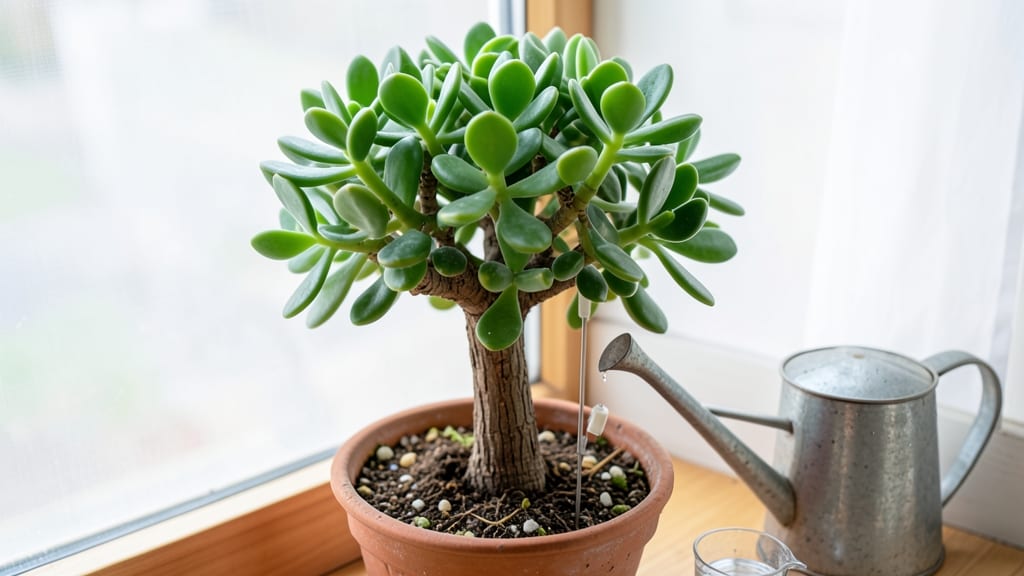
If you’ve ever killed a jade plant 🌿 by guessing how much water it needs, you’re not alone—most gardeners do. The truth? This succulent thrives on neglect, not regular watering, and overdoing it is the fastest way to turn its plump leaves into a sad, mushy mess.
Here’s the game-changer: your jade plant’s watering schedule depends on more than just weeks—it’s about soil, season, and even the pot you’re using. Skip the guesswork and learn the exact cues to water only when it really needs it, so you can keep those glossy leaves happy year-round.
From spring’s growth spurt to winter’s dormancy, we’ll break down how often to water (spoiler: it’s less than you think) and how to spot the warning signs before it’s too late. No more shriveled stems or root rot—just a thriving plant that rewards your patience.
Ready to master the art of watering? Let’s dive into the simple, science-backed routine that’ll have your jade plant 🌿 looking lush in no time—without the drama.
Jade plant watering schedule: how often to water by season
Your jade plant 🌿 thrives on a watering routine that mirrors its natural desert origins—meaning less is almost always more. The biggest mistake I see? Watering on a fixed schedule without checking the soil first.
Instead, think of your jade plant’s water needs as a seasonal dance: active growth in spring/summer demands occasional hydration, while winter’s dormancy requires patience. Let’s break it down by season so you can water with confidence.
First, grab your jade plant and a finger—yes, really. Stick your index finger about 1-2 inches into the soil. If it feels dry at that depth, it’s time to water. If it’s still slightly moist, wait another week.
This simple test replaces guesswork with science, and trust me, your plant will thank you. Overwatering is the silent killer, causing root rot before you even notice the wilting leaves.
Now, let’s talk spring and summer—the growing seasons when your jade plant drinks the most. During these months, water every 2-3 weeks, but always check the soil first. A good rule of thumb: if the top 1-2 inches of soil are bone-dry, it’s time.
Avoid letting water pool in the saucer—empty it 10 minutes after watering to prevent soggy roots. In hotter months, you might water slightly more often, but never let the soil stay soggy for more than a day.
Here’s where most gardeners go wrong: they assume winter means no water, but that’s not quite right. Your jade plant enters a dormant phase in fall and winter, slowing its growth. During these months, water just once every 4-6 weeks, or when the soil is completely dry.
The key is to mimic its natural environment—desert plants survive drought, not constant moisture. Overwatering in winter is a fast track to root rot, so resist the urge to keep the soil damp.
One question I get asked often: What if my jade plant is in a pot vs. planted in the ground? The answer changes everything. Potted jade plants dry out faster because containers lack the moisture-retention of garden soil.
If your plant is in a clay or terracotta pot, water every 10-14 days in summer. For plastic pots, which retain moisture longer, stretch it to every 2-3 weeks. Outdoor jade plants in well-draining soil can go 3-4 weeks between waterings, but always check the soil depth.
Let’s address a common myth: “My jade plant’s leaves are wrinkled—does it need water?” Not always! Wrinkled leaves can signal either thirst or overwatering. The difference? If the leaves are also shriveled and the stem feels soft, it’s thirsty.
But if the soil is soggy and the leaves feel mushy, you’ve overdone it. The fix? For thirst: water deeply and place it in bright light. For overwatering: stop watering, let the soil dry out completely, and repot in fresh, well-draining soil if needed.
| Season | Watering Frequency | Soil Check | Key Tips |
|---|---|---|---|
| Spring | Every 2 weeks | 1-2 inches dry | Increase light exposure for faster growth |
| Summer | Every 3-4 weeks | Top 2 inches dry | Water early morning to reduce evaporation |
| Fall | Every 3-4 weeks | Completely dry | Reduce fertilizer to prepare for dormancy |
| Winter | Every 4-6 weeks | Bone-dry soil | Avoid cold drafts; keep in bright, indirect light |
Pro tip: Rotate your jade plant every few weeks so all sides get even sunlight. Uneven light exposure can cause one side to dry out faster, leading to inconsistent watering needs. And if you’re using a self-watering pot, skip it—jade plants hate sitting in moisture.
Instead, opt for a terracotta pot, which breathes and dries out faster, or a cactus/succulent mix that mimics their natural habitat.
Remember, your jade plant’s watering needs are a marriage of observation and patience. The more you pay attention to its cues—wrinkled leaves, dry soil, or a slightly wilted stem—the easier it becomes.
And once you master this schedule, you’ll have a thriving jade plant 🌿 that’s the envy of every plant lover you know. Now, go check that soil—your plant’s thirsty (or maybe not!).
Signs your jade plant needs water (or too much!)
Your jade plant 🌿 communicates its water needs through subtle (but critical) visual cues. The key? Pay attention to its leaves, stems, and soil—not just a calendar.
A wrinkled leaf isn’t always thirst, and a plump stem isn’t always happiness. Let’s decode these signals so you never water by guesswork again.
First, check the soil moisture with your finger. Stick it about 1 inch deep—if it feels dry, it’s time to water. If it’s still damp, wait. This simple test prevents 90% of overwatering mistakes I’ve seen in my garden journal.
Jade plants store water in their leaves, so they can handle dry spells better than soggy soil.
🌱 Did You Know? A jade plant can survive months without water if kept in bright light, but its leaves will wrinkle as a warning sign. This is your plant’s way of saying, “I’m thirsty, but don’t drown me!”
Now, let’s talk about the biggest mistake I see: ignoring the seasonal slowdown. In winter, your jade plant enters dormancy, and its water needs drop by 50%.
A plant that looked fine in summer might suddenly show signs of overwatering if you keep the same schedule. Always adjust for temperature and light levels—not just time.
Pro tip: If your jade plant’s leaves start falling off, it’s often a sign of too much water, not too little. The roots can’t handle soggy conditions, and the plant sheds leaves to conserve energy.
This is a clear SOS—stop watering immediately and let the soil dry out completely before trying again.
Finally, trust your plant’s natural rhythm. Jade plants are survivors, and they’ll bounce back from mild underwatering. But once root rot sets in? That’s a slow, sad decline that’s hard to reverse.
The secret is patience and observation—not a rigid schedule. Your jade plant will thank you with glossy, vibrant leaves for years to come.