
Plants
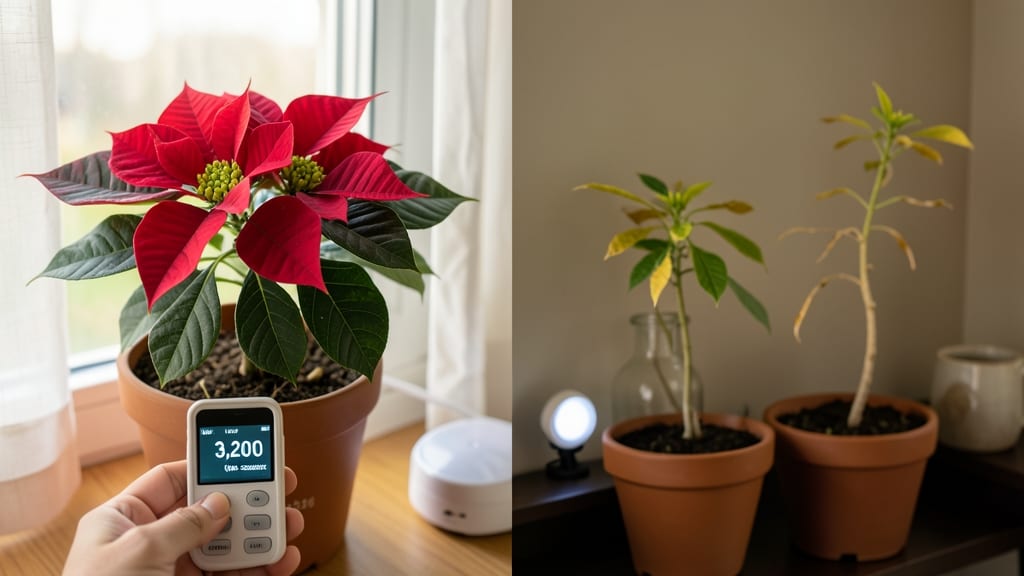
If your poinsettia 🎄 looks tired or refuses to bloom, the answer might be simpler than you think—how much light does a poinsettia plant need is the key to keeping it vibrant.
These festive plants thrive in bright, indirect sunlight, but too much direct sun can scorch their leaves, while too little leaves them pale and leggy.
Getting the balance right isn’t as tricky as it sounds. Most homes naturally provide the perfect conditions with an east- or west-facing window, but seasonal changes can throw things off. I’ll show you exactly how to adjust light levels so your poinsettia stays lush from September through January.
You’ll also learn to spot the warning signs—like yellowing leaves or stretched stems—that mean your plant needs more (or less) light. Plus, I’ll share easy fixes, including how to use grow lights if natural light falls short.
By the end, you’ll have a foolproof plan to keep your poinsettia looking its best year after year—no guesswork required!

Optimal light requirements for poinsettia growth and blooming
Poinsettias thrive in bright indirect light, making them perfect for indoor holiday decorating. Unlike sun-loving plants, these tropical beauties need gentle sunlight to prevent leaf burn while still receiving enough light to fuel their vibrant red or pink bracts.
Understanding their light needs is key to keeping your poinsettia healthy and blooming year after year.
The ideal light exposure for a poinsettia is 6-8 hours of bright, indirect sunlight daily. This means placing your plant near an east or west-facing window where morning or afternoon sun gently filters through.
South-facing windows can work too, but you’ll need to use a sheer curtain to diffuse the intense midday rays.
During the growing season (spring and summer), poinsettias benefit from slightly more light to build energy for their fall blooms. In winter months, when natural light is scarce, you may need to supplement with artificial lighting to maintain their color and health.
This balance ensures your poinsettia stays lush and vibrant throughout the holidays.
Poinsettias are sensitive to direct sunlight, which can cause leaf scorch, turning edges crispy and brown. Even a few hours of harsh afternoon sun can damage their delicate foliage. If you notice these signs, move your plant to a shadier spot immediately and monitor its recovery closely.
For optimal color development, poinsettias require 12-14 hours of darkness daily for 4-6 weeks before blooming. This photoperiodism trick triggers the production of vibrant pigments in their bracts.
Start this process in early fall by placing your poinsettia in a dark closet or covering it with a black bag for 14 hours each night.
| Light Requirement | Specification | Seasonal Adjustments |
|---|---|---|
| Daily Light Hours | 6-8 hours | Increase to 8 hours in summer; supplement in winter |
| Light Type | Bright indirect | Use sheer curtains for south windows; avoid direct sun |
| Dark Period | 12-14 hours | Required 4-6 weeks before blooming |
| Window Placement | East or west | Rotate plant weekly for even growth |
If your poinsettia isn’t getting enough light, you’ll notice stretched stems and pale leaves, a condition called etiolation. This happens when the plant reaches for more sunlight, weakening its structure.
To fix this, move your plant closer to a light source or introduce a grow light for 12-14 hours daily. LED grow lights with a red and blue spectrum are ideal for mimicking natural light.
In contrast, too much direct sunlight causes leaf edges to turn yellow or brown, a clear sign of sunburn. If this happens, immediately move your poinsettia to a spot with filtered light and trim any damaged leaves with clean scissors.
Healthy new growth will soon replace the affected areas, restoring your plant’s beauty.
For best results, rotate your poinsettia quarter-turns weekly to ensure even light exposure on all sides. This prevents lopsided growth and keeps the plant compact and full.
Pair this with consistent watering and moderate humidity, and your poinsettia will reward you with stunning color and longevity throughout the holiday season.
Remember, poinsettias are tropical plants that thrive in indoor environments with stable conditions. By providing the right balance of light—bright but indirect—you’ll create the perfect setting for your poinsettia to shine as the star of your holiday decor. 🎄
Optimal light requirements for poinsettia growth and blooming
Poinsettias thrive under bright indirect light, mimicking their natural understory habitat. These plants need 6-8 hours of light daily but cannot tolerate harsh midday sun, which causes leaf burn. Think of it like a sun-dappled forest floor—enough light to fuel growth but protected from intense rays.
The key is positioning your poinsettia near an east or west-facing window. South-facing windows work too, but you may need to filter sunlight with sheer curtains to prevent leaf damage. North-facing windows often provide too little light, leading to weak, leggy growth and poor color development.
During summer months, poinsettias may need extra care. If placed near a south-facing window, move them 2-3 feet back to avoid direct sun exposure. In winter, when natural light is scarce, supplement with a grow light for 12-14 hours daily to maintain vibrancy.
Light directly impacts your poinsettia's color vibrancy. Insufficient light leads to pale, greenish bracts (the colorful leaves), while too much causes bleached or crispy edges. The ideal balance ensures those bold reds, pinks, or whites that make poinsettias a holiday staple.
🌱 Poinsettia Light Requirements Summary
| Requirement | Specification |
|---|---|
| Light Type | Bright Indirect |
| Daily Hours Needed | 6-8 hours |
| Best Window Placement | East or West |
| Avoid | Direct Sun, North Windows |
| Winter Supplement | Grow Light (12-14 hrs) |
Understanding photoperiodism is crucial for blooming. Poinsettias need 12+ hours of darkness daily for 4-6 weeks before flowering to trigger color change. This means keeping them in a dark closet or covered with a box from late afternoon to early morning during this critical period.
For year-round care, adjust light exposure based on seasons. In spring and fall, aim for 6 hours of morning sun followed by afternoon shade. During holiday displays, maintain consistent light to prolong vibrant colors until Valentine's Day.
Pro tip: Rotate your poinsettia quarter-turn weekly to ensure even light exposure. This prevents one-sided growth and keeps those stunning bracts symmetrical and showstopping.