
Plants
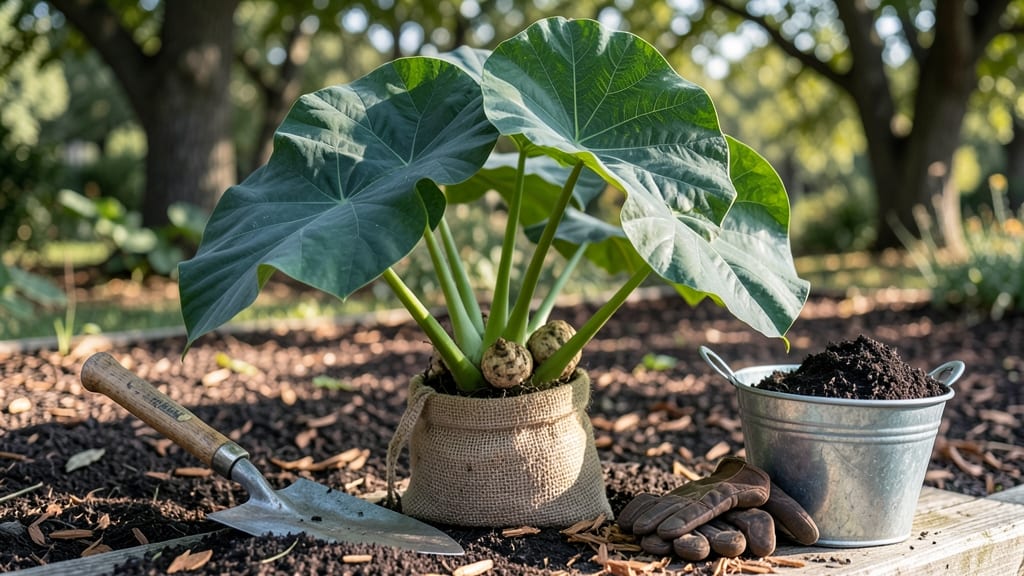
If you’ve ever dreamed of lush, tropical-looking Elephant Ear 🌿 plants thriving in your Georgia garden, timing is the secret ingredient—plant too early, and frost will fry your bulbs; too late, and you’ll miss the prime growing season.
The perfect window for planting in Georgia’s 7b-8b zones is right after your last frost date, typically March to April, but regional microclimates mean your county’s ideal timing could vary by weeks.
Why does this matter? Because Elephant Ear bulbs are sensitive to cold, and planting them too soon can trigger bolting (those unwanted flowers) or stunted growth.
In Georgia’s humid summers, getting the timing right also means your plants will establish strong roots before the heat peaks, giving you those dramatic, waist-high leaves you love. Let’s break down the exact frost-free window for your county so you can plant with confidence.
Most gardeners in Georgia assume spring is the only time to plant Elephant Ear, but with the right variety and preparation, you can even tuck bulbs into the ground in late February or early May.
The key is knowing your local frost dates and adjusting for soil temperature—warm enough to encourage root growth, but not so hot it stresses the bulbs before they’re ready. I’ll show you how to read your county’s frost maps and choose the best planting strategy for zero-bolt, show-stopping foliage.
Whether you’re a first-time gardener or a seasoned pro, getting this right means fewer headaches and more time enjoying your garden’s tropical vibes. Let’s dive into the county-specific planting windows and soil prep tips that’ll have your Elephant Ear 🌿 looking its best all summer long.
Georgia’s frost-free planting windows by county for Elephant Ear bulbs
Planting elephant ear bulbs (Colocasia spp.) in Georgia requires precision—your county’s last frost date determines whether you’ll enjoy zero-bolt foliage or struggle with stunted growth. Georgia spans USDA Zones 6–9, creating microclimates where February planting works in south Georgia but risks frost in north Georgia.
Let’s break it down by region to ensure your elephant ears thrive.
For Zone 7 (north Georgia), like Dawson, Gilmer, and Fannin counties, aim for March 15–April 15 planting. These areas experience hard frosts until late March, so bulbs planted too early may rot.
In Zone 8 (central Georgia), including Fulton, DeKalb, and Gwinnett counties, you can start as early as February 20–March 30, giving roots time to establish before summer heat arrives.
Southern Georgia’s Zone 9 (Brunswick, Camden, and Chatham counties) offers the longest growing season—plant January 15–March 15 for maximum foliage. However, even here, late-winter planting (February) balances root growth with heat tolerance. Always check your local frost dates via the Georgia Weather Network or NOAA’s frost calendar for real-time adjustments.
🌱Pro Tip: Use mulch (2–3 inches) after planting to insulate bulbs from temperature swings. In Zone 6 (northwest Georgia), like Catoosa and Walker counties, delay planting until April 1–May 1 to avoid frost damage entirely.
🌡️ Georgia County Planting Windows for Elephant Ear Bulbs
| County Region | USDA Zone | Ideal Planting Window | Risk of Frost | Bulb Depth |
|---|---|---|---|---|
| North Georgia (Dawson, Gilmer, Fannin) | Zone 6–7 | March 15–April 15 | High (late frosts) | 2–3 inches |
| Central Georgia (Fulton, DeKalb, Gwinnett) | Zone 7–8 | February 20–March 30 | Moderate (occasional frost) | 2–3 inches |
| South Georgia (Brunswick, Camden, Chatham) | Zone 8–9 | January 15–March 15 | Low (minimal frost) | 1–2 inches (warmer soil) |
| Mountain Counties (Murray, Whitfield) | Zone 6–7 | April 1–May 1 | Very High (late frosts) | 3 inches (extra insulation) |
📌 Note: Adjust for microclimates (e.g., valleys vs. ridge tops) by observing nearby gardens or using a minimum-maximum thermometer.
If you’re in Zone 8–9 and plant in January, prioritize shade cloth (30–50%) until soil warms to 65°F. Cool soil slows root growth, leaving bulbs vulnerable to rot. Conversely, Zone 6 gardeners should wait until soil temperatures exceed 60°F—use a soil thermometer to monitor.
For container planting, extend your window by 2–4 weeks earlier—pots warm faster than ground soil. However, move containers indoors (garage or basement) if nighttime temps drop below 50°F.
This trick works well for ‘Illumination’ or ‘Black Magic’ varieties, which thrive in heat but need protection from cold snaps.
🌿 Warning: Planting too late (after May 15) risks bolting—elephant ears may flower prematurely, diverting energy from foliage growth. In Zone 9, late plantings can also struggle with summer heat stress if roots aren’t established by June.
Test your soil’s drainage before planting—elephant ears hate soggy roots. Amend heavy clay with compost or sand to improve aeration. In sandy soils (common in south Georgia), add peat moss to retain moisture. Always plant bulbs in partial shade during their first 2–3 weeks to reduce transplant shock.
💡 Local Tip: Georgia’s humid summers can cause foliar diseases if bulbs are planted too early. Space plants 3–4 feet apart for airflow, and avoid overhead watering. In high-humidity zones (e.g., Savannah), mulch with pine straw to reduce fungal risks.
Finally, mark your planting date on a calendar and track foliage growth weekly. If leaves appear yellow or wilted by June, your bulbs may need more phosphorus-rich fertilizer (e.g., 10-20-10) to support rapid growth. Adjust your next year’s planting window accordingly!
Georgia’s frost-free planting windows by county for Elephant Ear bulbs
Planting Elephant Ear bulbs in Georgia isn’t one-size-fits-all—your county’s last frost date could mean the difference between thriving foliage and bolting (those unwanted flowers). Most of the state falls in USDA Zones 7b–8b, but microclimates shift planting windows by weeks.
For example, North Georgia (Zone 7a–7b) like Dahlonega or Blairsville should wait until mid-April, while South Georgia (Zone 8a–8b) like Savannah or Valdosta can plant as early as late February. The rule of thumb? Plant when soil temps hit 60°F+ and nighttime lows stay above 45°F.
Why does this matter? Elephant Ear bulbs are tropical and cannot tolerate frost. Planting too early risks cold damage, while waiting too long means your plants won’t establish roots before summer’s heat peaks. Georgia’s frost-free period spans 210 days (March 15–November 15), but your county’s exact window varies.
Use the table below to pinpoint your ideal planting month—whether you’re in Atlanta’s Zone 7b or Brunswick’s Zone 8b.
| County/Region | USDA Zone | Last Frost Date | Ideal Planting Window | Risk of Bolting |
|---|---|---|---|---|
| North GA (Dahlonega, Blairsville) | 7a–7b | April 1–15 | Mid-April | High (cold snaps) |
| Atlanta Metro (Zone 7b) | 7b | March 20–April 5 | Late March–Early April | Moderate |
| Central GA (Macon, Columbus) | 8a | March 5–15 | Early March–Late March | Low |
| South GA (Savannah, Valdosta) | 8a–8b | February 15–March 5 | Late February–Early March | Very Low |
| Coastal GA (Brunswick, Tybee) | 8b | February 1–15 | Early February–Late February | None |
Pro tip: If you’re in Zone 7b (e.g., Atlanta) and want to plant earlier, opt for tropical varieties like Colocasia ‘Illumination’, which tolerate slightly cooler soils.
For Zone 8b (e.g., Savannah), you can even tuck bulbs into the ground in late May for a fall display—just mulch heavily to protect roots from early frosts. The key is matching your variety to your county’s heat and cold extremes.
One common mistake Georgia gardeners make? Planting Elephant Ear bulbs too deep. They should go 2–3 inches below soil level, with the top of the bulb just below the surface.
Deeper planting delays sprouting, while shallow planting exposes bulbs to frost. Use a soil thermometer to confirm temps are 60°F+ before planting—this ensures roots establish quickly and your plants bolt-free.
For container gardening, adjust your timeline by 2–4 weeks later than in-ground planting. Pots warm up faster, but they also dry out quicker—so monitor soil moisture closely.
In Zone 7b, wait until mid-April for containers; in Zone 8b, early March is safe. Always use a well-draining potting mix with perlite to prevent rot.
Remember: Elephant Ear bulbs are not perennial in most of Georgia—they’ll die back in winter. Dig up and store bulbs in sphagnum moss after the first frost (usually November 15) to replant next spring.
This gives you control over your planting window and avoids frost surprises. With the right timing, your Elephant Ear 🌿 will reward you with waist-high, tropical foliage all summer long.