Plants
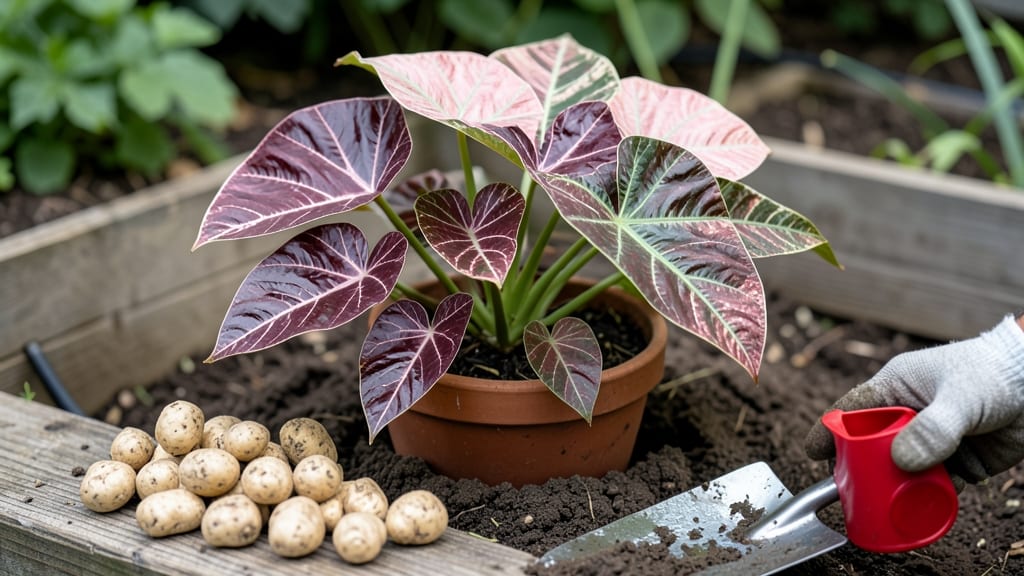
Ideal planting months for caladium bulbs in Texas by region
Texas's diverse climate means your caladium bulbs thrive best when planted at different times depending on your region. In North Texas (USDA zones 7b-8a), where cooler springs linger, aim for mid-April to early May after the last frost.
For Central Texas (zones 8a-8b), the window shifts to late March through April, while South Texas (zones 9a-10b) gardeners can start as early as late February to March.
These heat-sensitive bulbs need warmth to sprout, but they’ll wilt if planted too early in hotter zones. East Texas (zones 8a-9a) falls in between, with March to early April being ideal. Always check your last frost date—caladiums can’t handle freezing temperatures, even as bulbs.
🌱
| Region | USDA Zone | Best Planting Window | Soil Temp Threshold | Heat Risk |
|---|---|---|---|---|
| North Texas | 7b-8a | Mid-April to early May | 65°F+ | Moderate (late summer) |
| Central Texas | 8a-8b | Late March to April | 65°F+ | High (summer) |
| East Texas | 8a-9a | March to early April | 60°F+ | Moderate (humidity) |
| South Texas | 9a-10b | Late February to March | 60°F+ | Very High (year-round) |
If you’re in a transition zone like Central Texas, watch for soil temperatures—they should stay above 60°F consistently. Use a soil thermometer ($10 at garden centers) to avoid planting too early. In South Texas, where heat arrives earlier, March plantings often yield fuller foliage by summer.
Pro tip: Container gardening extends your planting window. Start bulbs indoors in January (for South Texas) or February (for Central/East Texas) and transplant after last frost. This gives your caladiums a head start before Texas’s brutal summer sun peaks.
For North Texas gardeners, patience pays off. Planting in May might seem late, but it ensures your bulbs don’t bake in April’s unpredictable heat waves. The trade-off? You’ll miss the earliest summer color, but your plants will thrive longer.
Remember, caladiums are tender perennials in Texas—they’ll die back in frost but can be dug up and stored for next year. Treat them as annuals if you prefer low-maintenance gardening, or overwinter bulbs in a cool, dry place (like a garage) to replant annually.
🌿
One common mistake? Planting caladium bulbs too deep. They need 1-2 inches of soil coverage—any deeper, and they’ll rot. In heavy clay soils (common in East Texas), mix in compost or perlite to improve drainage. Well-draining soil prevents bulb rot, which is a Texas gardener’s worst nightmare.
Finally, shade is non-negotiable. Caladiums burn in direct Texas sun. Choose partial shade spots (like under trees or on east-facing porches) to keep their stunning foliage vibrant all summer.
Signs your Texas soil and climate are ready for caladiums
Before you rush to plant those stunning caladium bulbs, check if your Texas soil and climate are truly ready. These tropical beauties thrive in warmth but can wilt if planted too early.
The key is waiting until your soil temperature consistently hits 60-70°F—a sure sign the ground is primed for growth.
Start by testing your soil temperature with a simple soil thermometer (or even your finger—if it feels warm like a summer day, you're good to go!).
In most of Texas, this means waiting until mid-April to early May for Central Texas or late March to April for warmer East Texas regions.
🚨 WARNING: Planting too early risks frost damage or stunted growth. Caladiums despise cold—even a light 32°F frost can kill them. Use your local frost-free date (North Texas: March 15, South Texas: February 15) as a guideline, but always confirm with a weather forecast.
⚠️ Avoid These Common Mistakes
- Planting in cold soil (<60°F) stalls growth and invites rot.
- Ignoring humidity levels—caladiums need 50-70% humidity to thrive.
- Skipping shade prep—direct Texas sun burns their delicate leaves.
Pro tip: Mulch with 2-3 inches of organic matter to retain moisture and warmth.
Next, assess your garden’s shade. Caladiums crave partial to full shade, especially in Central and North Texas where afternoon sun can scorch their leaves. If your yard lacks natural shade, consider planting them under dappled trees or near east-facing structures.
Finally, prep your soil by amending it with compost or peat moss to improve drainage—caladiums hate soggy roots. Aim for a slightly acidic to neutral pH (6.0-7.0), which mimics their tropical origins. A quick pH test kit makes this easy!
With these checks complete, your Texas garden will be the perfect tropical haven for caladiums—just in time for their summer spectacle. 🌿