
Plants
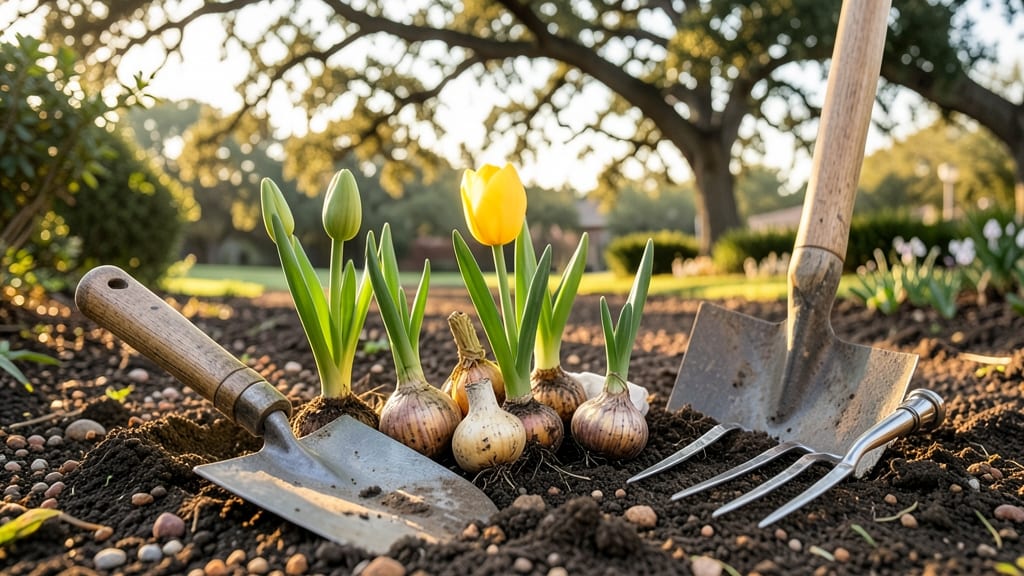
Timing your spring bulb planting in Central Texas isn't just about following a calendar—it's about outsmarting the heat and drought that can turn your garden dreams into a sad, wilted mess.
With the right strategy, you can coax those 🌷 blooms to life next spring, even in zones 8a-8b where summers scorch and winters barely chill.
Most gardeners make one big mistake: they plant too early or too late, leaving bulbs vulnerable to rot or dehydration. The key is getting them in the ground 6-8 weeks before the first frost, which in Central Texas means aiming for late October through December.
This window gives roots time to establish before the real cold sets in.
But here's the game-changer: not all bulbs are created equal in Texas. Some varieties, like spider lilies or rain lilies, handle our clay soil and occasional drought like champs, while others need extra TLC.
I'll show you which bulbs to prioritize and how to prep your soil to give them the best shot at survival.
Ready to transform your yard into a springtime paradise? Let's dive into the exact steps—from soil prep to post-planting care—that will have your bulbs thriving when most gardeners are still shivering. Your future blooms will thank you.
Best fall planting months for Central Texas bulbs (with heat escape tips)
Central Texas gardeners face a tricky balance: plant bulbs too early, and they’ll rot in the summer heat; too late, and they won’t establish roots before winter. The ideal window is mid-September through November, when soil temperatures drop below 80°F but before the first frost hits.
This timing ensures bulbs root deeply before Texas’ unpredictable cold snaps.
In USDA Zones 8a-8b, your last frost date typically falls around December 15, giving you a 6-8 week buffer to plant before dormancy.
For example, Austin’s soil cools faster than San Antonio’s due to elevation, so Austin gardeners can start as early as late August for heat-sensitive varieties like tulips.
Here’s the critical rule: Aim to plant bulbs 6-8 weeks before the first frost. In Central Texas, this means mid-October at the latest for most spring-blooming bulbs. For hardier varieties like rain lilies or spider lilies, you can stretch planting into early December.
Soil temperature is your best guide. Use a soil thermometer to confirm temps are below 75°F at 6 inches deep. If your soil stays above 80°F for more than a week, delay planting—even if the calendar says it’s "fall."
Microclimates matter! Austin’s Hill Country cools faster than San Antonio’s urban heat islands, so adjust your timeline accordingly. In Waco, clay-heavy soil retains heat longer, so wait until late October to avoid overheating bulbs.
🌱 Central Texas Bulb Planting Timeline
| Month | Soil Temp Goal (°F) | Best Bulbs to Plant | Heat Risk |
|---|---|---|---|
| September | 75-80°F | Rain lilies, spider lilies | Moderate (early Sept) |
| October | 65-75°F | Tulips, daffodils, crocus | Low |
| November | 60-70°F | All spring bulbs | None |
| December | 55-65°F | Hardy bulbs only | Frost risk |
🌡️ Pro Tip: Plant in the coolest part of the day (early morning or late afternoon) to reduce heat stress on bulbs.
If you miss the fall window, don’t despair! January-February is your second chance for planting bulbs like crocus or grape hyacinths, which tolerate cooler soils. However, these bulbs may bloom later or produce fewer flowers than fall-planted varieties.
For container gardening, extend your planting window by 2-3 weeks—pots cool faster than in-ground soil. Use black plastic pots to absorb heat and plant bulbs deeper than usual (twice their height) to protect them from temperature swings.
Remember: Central Texas bulbs hate soggy soil. Amend your clay-heavy soil with compost and sand to improve drainage. After planting, apply a 2-inch layer of mulch to insulate bulbs from winter freezes and summer heat.
By mastering these heat escape tips, you’ll outsmart Central Texas’ climate and enjoy vibrant spring blooms year after year. The key? Plant early, mulch well, and monitor soil temps—your bulbs will thank you with bold, long-lasting flowers!
Best fall planting months for Central Texas bulbs (with heat escape tips)
Central Texas' scorching summers and unpredictable fall rains make timing critical for bulb success. The ideal window spans from mid-September through early December, but your exact timing depends on your local microclimate—Austin's cooler hillsides differ from Waco's heat pockets.
Plant too early (before September 15), and bulbs may rot from heat stress; too late (after December 1), and they won't establish roots before winter dormancy. Aim for soil temps below 70°F—use a soil thermometer to confirm readiness.
🌱
| Month | Soil Temp Goal | Best For | Risk Level |
|---|---|---|---|
| Mid-September | 65-70°F | Early bloomers (tulips, daffodils) | Low (if rains arrive) |
| October | 60-65°F | Most bulbs (ideal window) | Moderate (watch for drought) |
| November | 55-60°F | Late bloomers (rain lilies) | Low (cooler soils) |
| Early December | 50-55°F | Hardy natives (crinum lilies) | High (freeze risk) |
For Austin's higher elevations, start 2 weeks earlier (early September) to escape summer heat faster. In San Antonio's flatter terrain, delay until late October to avoid early freezes. Always amend clay soil with compost—Texas' heavy soils suffocate roots.
Pro tip: Mulch immediately after planting with 2-3 inches of pine straw to insulate bulbs from temperature swings. This is non-negotiable in Central Texas' volatile winters.
Skip fall planting entirely for tender bulbs like dahlias—wait until January when soils are consistently below 60°F. These need winter chill to bloom reliably.
🌿