
Plants
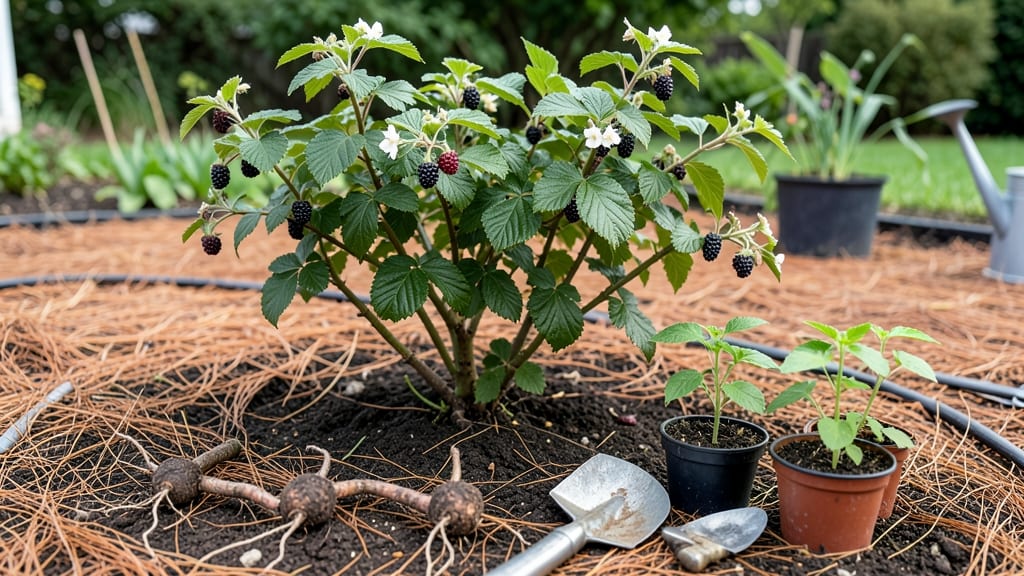
Timing your blackberry planting in Alabama isn't just about the calendar—it's about matching your variety to the chill hours your region delivers. Plant too early, and your 🫐 bushes might bolt in the heat; too late, and frost could nip tender canes before they establish.
With Alabama's 7a-8b zones offering two prime windows (late winter or fall), getting this right means the difference between a bountiful harvest and empty vines.
I've grown blackberries across Alabama's varied microclimates, and what I've learned is that northern Alabama's cooler springs often work better for high-chill varieties like 'Chester', while southern Alabama's milder winters favor low-chill types like 'Arapaho'.
The key? Understanding your specific chill-hour needs and planting when soil temps hit that sweet spot of 50-60°F—not when the weather feels "spring-like".
Let me walk you through exactly when to plant each variety in your area, how to prepare your soil for Alabama's heavy clay, and why fall planting often gives gardeners the edge.
We'll cover everything from bare-root timing to post-planting care that keeps your blackberries thriving through our long, humid summers.
Whether you're a first-time grower or a seasoned gardener looking to boost your yield, these Alabama-specific strategies will help you avoid common mistakes and get your blackberries off to the strongest possible start. Ready to turn your backyard into a berry patch? Let's get planting.
Best planting times for blackberries in Alabama by chill-hour requirements
Alabama’s varied climate means blackberry varieties thrive best when matched to their chill-hour needs. High-chill varieties like Chester need 500-700 chill hours, while low-chill types like Arapaho require just 200-300 chill hours. Planting at the wrong time can delay fruiting or reduce yields—so timing is everything!
In Alabama, the ideal planting window spans from late winter to early spring (February–March) and early fall (September–October). Fall planting gives roots time to establish before winter, while spring planting aligns with soil warming. Let’s break down the best variety-specific timing for your region.
Chill hours are critical because they trigger flowering. Northern Alabama (USDA Zones 7a-7b) gets more chill hours than southern Alabama (Zones 8a-8b). If you’re in Zone 8b, avoid high-chill varieties—they’ll struggle to fruit.
| Variety | Chill Hours | Best Planting Time | Notes |
|---|---|---|---|
| Chester | 500-700 | Late Winter (Feb) | Best for North Alabama |
| Natchez | 300-400 | Early Spring (Mar) or Fall (Sept) | Thornless, great for beginners |
| Arapaho | 200-300 | Fall (Sept-Oct) | Low-chill, thrives in South Alabama |
| Ouachita | 300-400 | Early Fall (Sept) | Heat-tolerant, good for Zone 8 |
For bare-root plants, aim to plant by mid-March in North Alabama or early November in South Alabama. Bare-root varieties establish faster if planted when soil temps are above 50°F but before active growth begins.
If you’re using potted blackberries, extend your window slightly—plant anytime soil isn’t frozen (typically February through April or September through October). Potted plants adapt better to transplant shock, making them ideal for late-season planting.
Pro tip: Soil temperature matters more than air temperature. Use a soil thermometer to confirm 50°F+ before planting. Cold soil can stunt root growth, delaying fruiting by months.
In Zone 7a (North Alabama), prioritize fall planting for high-chill varieties. The cooler temps help roots establish before winter’s chill. In Zone 8b (South Alabama), focus on low-chill varieties like Arapaho and plant in late winter to avoid summer heat stress.
Watch for last frost dates: North Alabama’s March 15 average is safer for spring planting, while South Alabama’s February 15 allows earlier starts. Use the Alabama Cooperative Extension frost maps to fine-tune your schedule.
Once planted, mulch heavily (4–6 inches) to retain moisture and regulate soil temps. In Alabama’s heat, mulch prevents root burn and keeps berries cleaner. Pair this with drip irrigation for consistent moisture—critical during Alabama’s dry spells.
Timing your blackberry planting right ensures bigger yields and healthier canes. Whether you’re in Birmingham or Mobile, match your variety to your chill hours and soil conditions for the sweetest harvest possible. 🫐
How Alabama’s microclimates affect blackberry planting timing
Alabama’s geography creates distinct planting zones that can shift your blackberry schedule by 3-4 weeks. Northern Alabama’s cooler springs (like Huntsville) often allow early March planting, while southern regions (like Mobile) may need to wait until late March to avoid heat stress.
These differences stem from chill-hour accumulation and frost timing, which vary by 100-200 hours across the state.
The Appalachian foothills in northeast Alabama typically see last frosts around March 15**, giving high-chill varieties like 'Chester' a head start.
Meanwhile, the Gulf Coast region may experience milder winters with last frosts as late as April 1, pushing ideal planting dates toward late March or even early April for low-chill types like 'Arapaho'.
🌡️ Soil temperature is your true planting guide—not air temperature. Use a soil thermometer to confirm 50-60°F at 4-6 inches deep before planting. In northern Alabama, this often aligns with late February to early March, while southern areas may need to wait until mid-to-late March.
| Region | Last Frost Date | Ideal Planting Window | Best Varieties | Key Consideration |
|---|---|---|---|---|
| Northern Alabama (USDA 7a) | March 15 | Late February - Early March | Chester, Natchez, Triple Crown | Cooler springs; higher chill hours |
| Central Alabama (USDA 7b-8a) | March 22 | Early-to-mid March | Ouachita, Apache, Choctaw | Moderate chill; watch for late frosts |
| Southern Alabama (USDA 8a-8b) | April 1 | Mid-to-late March | Arapaho, Osage, Kiowa | Milder winters; lower chill needs |
Humidity also plays a role—southern Alabama’s higher summer humidity can stress newly planted blackberries, making fall planting (September-October) a smarter choice in these areas. The cooler soil temps and lower pest pressure of fall give plants time to establish roots before summer heat arrives.
For real-time adjustments, check the Alabama A&M Extension’s frost maps or use a local weather station like the one at your nearest Cooperative Extension office. These tools help account for microclimate variations within just a few miles—critical when planting expensive bare-root canes.
Pro tip: If you’re in a transition zone (like Birmingham), consider planting both high-chill and low-chill varieties to extend your harvest season. The 30-day difference in ripening between 'Chester' and 'Arapaho' means berries from June through August instead of just July.