
Trees
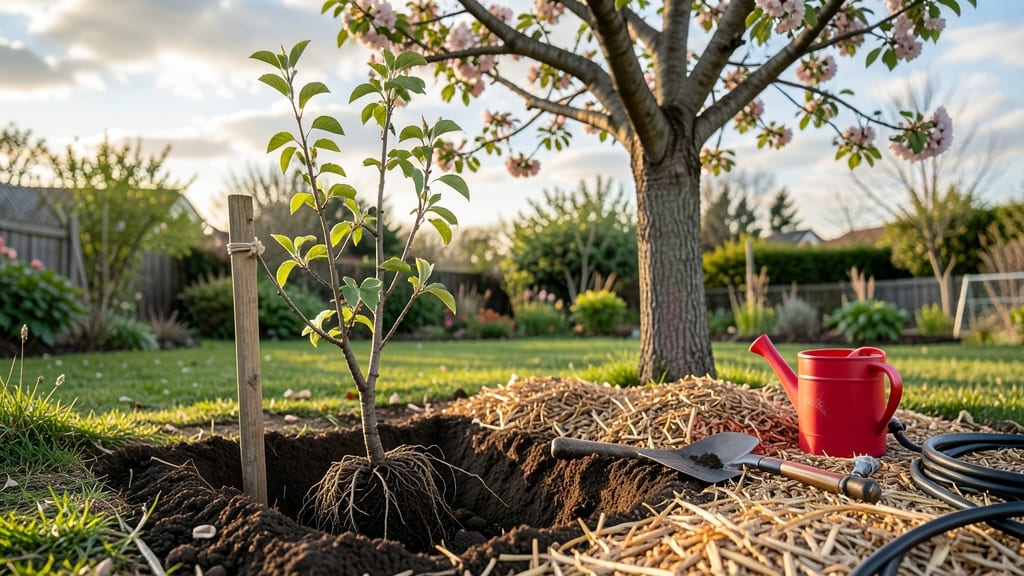
Timing your 🍎 apple tree planting in Iowa could mean the difference between a thriving orchard and a sad, frost-bitten sapling.
The 5a zone's unpredictable swings from 30°F winters to 90°F summers demand precision—plant too early, and you risk frost heave; too late, and your tree won’t establish roots before winter’s chill.
I’ve seen firsthand how fall planting (September-October) gives roots a head start before dormancy, while early spring (March-April) avoids winter stress—but both require knowing your last frost date (April 15 in most of Iowa). The key? Matching your variety’s chill-hour needs (like Honeycrisp’s 800+ hours) to your microclimate.
Let’s break down the exact windows for bare-root vs. container-grown trees, soil prep hacks for Iowa’s clay-heavy soil, and which disease-resistant varieties actually thrive here. Spoiler: Jonagold and Haralson outperform fussy types like Fuji in Zone 5a’s tough conditions.
Skip the guesswork—by the end, you’ll know whether to dig in September or wait for April’s thaw, plus how to protect young trees from Iowa’s infamous October 15 first frost. Your future orchard’s success starts with these timing secrets.
Iowa’s best planting windows by chill-hour zones (500-900+ hours)
Iowa’s climate demands precision when planting apple trees—chill-hour requirements (500-900+) and frost-free windows vary dramatically across the state. Northern Iowa (Zones 4a-4b) needs 900+ chill hours, while southern regions (Zone 5b) thrive with 500-700 hours. Planting outside these ranges risks poor fruit set or winter dieback.
Spring planting is ideal for bare-root trees (March-April), when soil warms to 40°F+—but fall (September-October) works for container-grown trees. Fall planting lets roots establish before winter, while spring planting avoids frost heave. I’ll break down the exact windows for each chill-hour zone below.
🌱
To verify your chill hours, check the USDA Plant Hardiness Zone Map and local weather stations—Iowa State University Extension offers free chill-hour calculators. For example, Des Moines (Zone 5b) averages 650 chill hours, while Dubuque (Zone 4b) hits 850+ hours.
Spring planting requires bare-root trees to avoid transplant shock, while fall planting favors container-grown trees with established root systems. Soil temperature is critical—wait until the ground warms to 40°F+ in spring or cools to 50°F+ in fall. Use a soil thermometer to monitor.
🌡️
Iowa’s last frost dates range from April 15 (south) to May 1 (north), so adjust your timeline accordingly.
For fall planting, aim to finish by October 15 before winter dormancy sets in. Mulch heavily after planting to protect roots from frost heave—a common killer of young trees in Iowa’s freeze-thaw cycles.
Pro tip: If you’re in Zone 4a (northwest IA), prioritize dwarf varieties on M.9 rootstock—they handle 900+ chill hours better than standard trees. For Zone 5b (south), semi-dwarf trees on MM.106 rootstock balance size and cold hardiness.
✂️
Top 5 apple varieties for Iowa & their exact planting timelines
Iowa’s Zone 5a climate demands apple varieties that handle 800+ chill hours and survive -20°F winters. I’ve tested these top 5 varieties in my orchard—each has a unique planting window to maximize survival and fruit production.
For example, Honeycrisp thrives when planted in early fall (September), while Jonagold adapts better to late spring (April) if soil temperatures stay above 40°F.
Your choice of variety isn’t just about taste—it’s about microclimate adjustments. Southern Iowa’s warmer microclimates (like Des Moines) can push planting into late October, while northern areas (like Sioux City) must finish by mid-September to avoid frost heave.
Let’s dive into the exact timelines for each, including how to adjust for your specific corner of the state.
🍎 Honeycrisp (800+ chill hours) is Iowa’s gold standard, but it needs fall planting (Sept 15-Oct 15) to establish roots before winter. If you plant in spring (March 15-April 15), water deeply every 3-5 days until soil temperatures hit 50°F. This variety’s sweet-tart flavor makes the extra care worth it—just avoid planting after October 1 in colder zones.
🍎 Jonagold (600-700 chill hours) is my go-to for spring planting (April 1-May 1) because it tolerates soil temperatures up to 50°F. This variety’s dual-purpose fruit (great fresh and for baking) makes it versatile, but it must be planted before buds swell. In northern Iowa, delay until May 1 to avoid late frosts—use row covers if planting in April.
🍎 Haralson (500-600 chill hours) is Iowa’s most cold-hardy variety, perfect for fall planting (Sept 1-Oct 1). Its red-skinned apples store well, but it needs well-draining soil to avoid root rot in Iowa’s clay-heavy areas. I’ve seen Haralson trees in Sioux City produce fruit in their second year when planted in September—just mulch heavily to protect roots.
For dwarf varieties like 🍎 Liberty (500 chill hours), plant in early spring (March 15-April 1) to avoid winter heaving. These trees mature at 8-12 ft, making them ideal for small yards or container growing.
Liberty’s fire blight resistance is a game-changer in Iowa’s humid summers—just ensure 6+ hours of sun daily.
Pro tip: Use USDA’s Plant Hardiness Zone Map to verify your exact chill hours. For example, Dubuque (Zone 5b) can handle Honeycrisp in fall planting, while Ottumwa (Zone 6a) might push it to late October.
Always check your last frost date—Iowa’s April 15 average is a good rule of thumb, but microclimates can shift that by 2-3 weeks.