
Plants
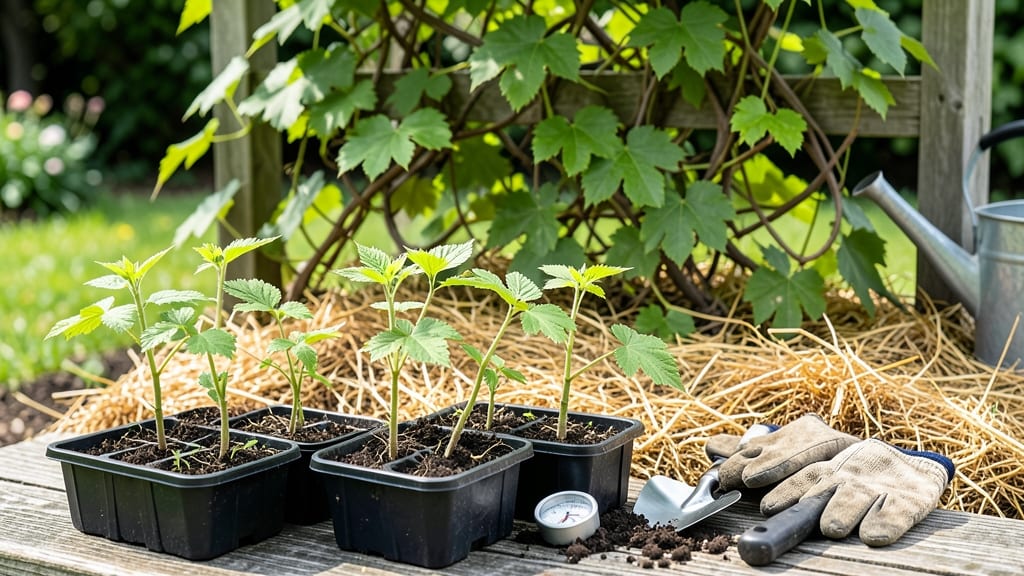
Timing your hops planting in Michigan could mean the difference between a thriving vineyard and struggling plants that never quite catch up.
The best time to plant hops in Michigan’s 5b-6b zones is a narrow window—late April to early May—when soil warms and frost risks fade, but getting it wrong can leave your 🌿 hops vulnerable to cold snaps.
Why does this matter so much? Hops need strong root growth before winter, and Michigan’s short growing season doesn’t leave room for mistakes. If you plant too early, frost can damage tender roots; too late, and your vines won’t mature enough before harvest season.
The key is understanding your local frost dates and soil conditions to lock in that perfect planting moment.
I’ve helped Michigan gardeners master this process, and the results speak for themselves: healthier plants, bigger yields, and fewer headaches come harvest time.
In this guide, I’ll walk you through the exact steps to time your planting like a pro—so you can avoid common pitfalls and set your hops up for success from day one.
Ready to transform your garden? Let’s dive into the optimal planting window, soil prep secrets, and pro tips to keep your hops thriving through Michigan’s unpredictable spring. Your future brews depend on it!
Michigan’s optimal hops planting window: Zone 5-6 climate breakdown
Planting hops in Michigan’s USDA Zones 5b-6b requires precise timing to ensure strong root establishment before winter. The ideal window spans late April to early May, aligning with soil temperatures of 50°F (10°C) or warmer and the last average frost date for your region.
Michigan’s frost-free season typically offers 150-180 days of growing time, which is just enough for hops to mature.
In northern Michigan (Zone 5b), like Traverse City, the last frost often occurs around May 10-15, while southern Michigan (Zone 6b), near Detroit, sees frost-free conditions by April 25-May 5.
For Michigan gardeners, this means starting hops 4-6 weeks before the last frost is critical. Planting too early risks late spring frosts damaging tender new growth, while planting too late cuts the growing season short, reducing cone production.
Here’s how to align your planting with Michigan’s climate zones:
| Region | Last Frost Date | Optimal Planting Window | Soil Temp Threshold | Notes |
|---|---|---|---|---|
| Northern Michigan (Zone 5b) | May 10-15 | April 25-May 10 | 50°F (10°C) | Use row covers for early planting |
| Central Michigan (Zone 5b-6a) | May 1-10 | April 15-April 30 | 50°F (10°C) | Monitor local frost alerts |
| Southern Michigan (Zone 6b) | April 25-May 5 | April 10-April 25 | 50°F (10°C) | Earlier planting possible |
For Michigan’s variable climate, always check the Michigan State University Extension frost date maps or use a soil thermometer to confirm readiness.
Planting when soil temperatures consistently stay above 50°F (10°C) ensures roots establish quickly, giving your hops a head start for the 105-120 day growth cycle needed for cone production.
If you’re in a microclimate, like a sheltered garden spot, you might push planting 1-2 weeks earlier. Conversely, higher elevations or northern exposures may require delaying until after May 1 to avoid frost damage.
For cold-hardy varieties like ‘Fuggle’ or ‘Cascade’, which thrive in Michigan’s climate, the late April to early May window is ideal. These varieties can handle cooler soils better than tropical types, but they still need warm soil to break dormancy efficiently.
Pro tip: Use black plastic mulch to warm soil faster in cooler regions. This can shave 1-2 weeks off your planting timeline by raising soil temperatures 5-10°F above ambient air temps.
Remember, hops are perennial plants in Michigan, meaning they’ll return each year. Planting at the right time ensures your first-year roots are strong enough to survive Michigan’s first frost in mid-October and produce vigorous growth in subsequent years.
🌱
Michigan’s optimal hops planting window: Zone 5-6 climate breakdown
Michigan’s USDA Zones 5-6 create a tight window for planting hops—too early, and late frosts will damage tender roots; too late, and your bines won’t mature before winter.
The ideal planting window spans from late April to early May, aligning with soil temperatures above 50°F (10°C) and after the last average frost date.
In northern Michigan (e.g., Traverse City, USDA Zone 5b), aim for May 1-15 to avoid late spring frosts, which can occur as late as May 10.
Meanwhile, southern Michigan (e.g., Detroit, USDA Zone 6a) offers a slightly earlier window—April 20-May 5—thanks to milder winters and earlier soil warming.
| Region | Last Frost Date | Optimal Planting Window | Soil Temp Threshold |
|---|---|---|---|
| Northern Michigan (Zone 5b) | May 1-10 | May 1-15 | 50°F (10°C) |
| Southern Michigan (Zone 6a) | April 15-25 | April 20-May 5 | 50°F (10°C) |
| Western Michigan (Zone 6b) | April 20-May 1 | April 25-May 10 | 50°F (10°C) |
Check your local Michigan State University Extension frost maps for precise dates, as microclimates (e.g., near lakes or urban areas) can shift frost risks by 1-2 weeks. For example, Grand Rapids often sees 2-3°F warmer nights than rural areas, allowing for slightly earlier planting.
If you’re growing cold-hardy varieties like ‘Fuggle’ or ‘Cascade’, you can push planting to early June in Zone 6a, but expect reduced yields and slower establishment. These varieties tolerate cooler soils better than ‘Centennial’ or ‘Simcoe’, which thrive in warmer conditions.
Use a soil thermometer to confirm readiness—plant only when soil temps stay above 50°F (10°C) for 5+ days. Cooler soils delay root growth, leaving hops vulnerable to root rot or winter kill. Mulch heavily after planting to maintain warmth and moisture.
For container-grown hops, extend your window by 1-2 weeks—pots warm faster than soil, but ensure they’re in a south-facing location with full sun exposure. Containers also allow you to move plants to protected microclimates if frost threatens.