
Plants
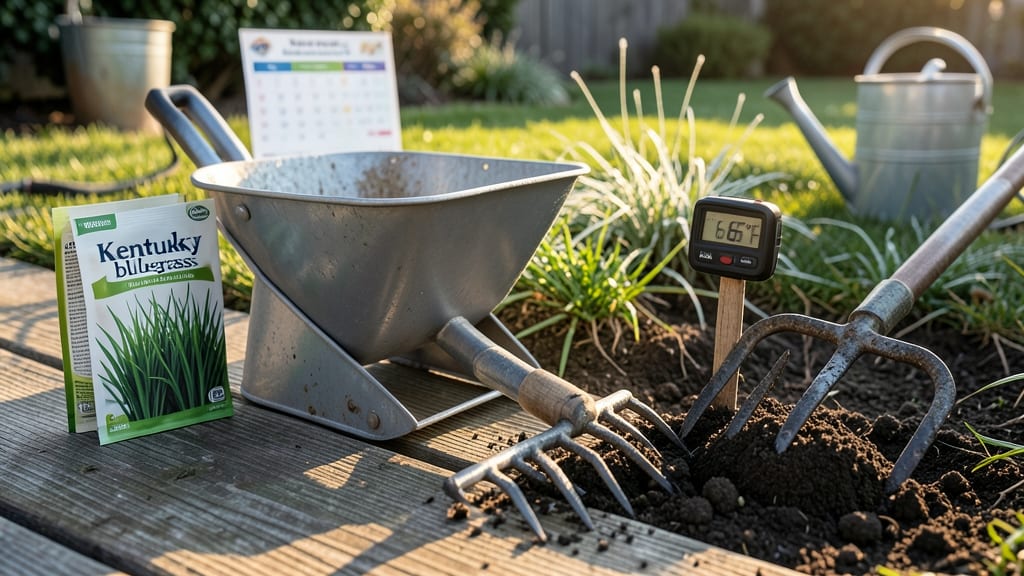
If you're staring at a bare patch of soil in Massachusetts and wondering "when is it too late to plant grass seed", the answer depends on your hardiness zone and a few key factors that could make or break your lawn.
The last frost date in your area isn't just a number—it's the deadline that separates success from disappointment.
For most of Massachusetts, where zones 5b-6b rule, the window to plant 🌱 Grass (Turfgrass) closes faster than you think. Cool-season grasses like Kentucky bluegrass or tall fescue need 4-6 weeks to establish strong roots before winter dormancy kicks in.
That means if you're planting in the fall, you've got until early October at the latest—after that, Mother Nature starts shutting down the show.
But here's the good news: with the right seed variety and a little extra care, you can push those deadlines just a bit further. I'll show you how to spot the warning signs of a failed late planting and the cold-hardy grasses that give you the best shot at survival.
Let's dive into the science-backed timeline so you don't waste your seed—or your patience.
Whether you're prepping for spring or making a last-ditch fall attempt, knowing these critical dates could save you $100+ in wasted seed and redo work. The clock is ticking, and your perfect lawn starts with timing that works with Massachusetts' unpredictable weather. Let's get started.
Massachusetts grass seed planting deadlines by hardiness Zone (USDA 5b-6b)
Massachusetts spans USDA Zones 5b-6b, meaning your last planting window varies by region. In Zone 5b (Western MA), the first frost typically hits October 15-20, while Zone 6b (Eastern MA) sees frost October 20-25.
To maximize seedling survival, plant 4-6 weeks before frost—but how late is too late? Let’s break it down by zone and seed type.
Cool-season grasses (like Kentucky bluegrass and tall fescue) dominate MA lawns and thrive when planted in early spring (March-April) or early fall (August-September). Warm-season grasses (e.g., Bermuda grass) are rare in MA but have a June-July window.
The key metric? Soil temperature must stay above 50°F (10°C) for 4-6 weeks post-planting.
Here’s the hard deadline for late-season planting: September 15 (Zone 5b) to September 30 (Zone 6b). After that, seedlings won’t establish roots before winter dormancy. But with the right cold-hardy varieties and protective measures, you can push it to mid-October—if you’re willing to gamble.
| Zone | Last Planting Window | Soil Temp Threshold | Risk Level | Pro Tip |
|---|---|---|---|---|
| 5b (Western MA) | September 1-15 | 50°F+ for 4 weeks | High (frost by Oct 15) | Use perennial ryegrass for fast germination. |
| 6a (Central MA) | September 15-30 | 50°F+ for 5 weeks | Moderate (frost by Oct 20) | Mulch with straw to insulate roots. |
| 6b (Eastern MA) | October 1-15 | 50°F+ for 6 weeks | Low (frost by Oct 25) | Avoid Kentucky bluegrass—it’s frost-sensitive. |
| All Zones | November 1+ | N/A (seedlings die) | Extreme (100% failure) | Wait for spring planting instead. |
Why the September 15-October 15 window? Grass seedlings need 4-6 weeks of warm soil to develop roots. After October 15, nights drop below 40°F (4°C), stunting growth.
But don’t panic if you miss the deadline—spring planting (March-April) is just as effective, with 90% success rates when soil temps hit 55°F+.
Pro tip: Use a soil thermometer ($10 at garden centers) to confirm temps. If your soil is below 50°F, delay planting or choose fast-germinating varieties like perennial ryegrass, which sprouts in 7-14 days vs. 21+ days for Kentucky bluegrass. Speed is your ally in late-season planting.
For Zone 5b gardeners, aim to finish by September 10—any later and frost will kill tender shoots. In Zone 6b, you have until October 1, but monitor NOAA frost forecasts (available here). A 5-day stretch below 32°F will freeze seedlings, even with mulch.
If you’re planting in late September, prioritize shady or sheltered areas (e.g., near foundations or fences) where frost lingers later. These microclimates can add 1-2 weeks to your planting window. Pair this with a thick straw mulch (1 inch deep) to retain heat and moisture.
Remember: Grass seed won’t germinate below 40°F, and established seedlings can’t survive prolonged freezing. If you
Signs your late-season grass planting will fail (and how to fix it)
Planting grass seed late in Massachusetts can backfire fast—especially when you miss key warning signs. The first red flag? Soil temperatures below 50°F (10°C). Cool-season grasses like Kentucky bluegrass need warmer soil to germinate, and once temps drop, your seedling roots struggle to establish.
Check with a soil thermometer before planting; if it’s consistently cold, delay until spring.
Another sure sign of trouble is uneven moisture in your planting area. Grass seed needs consistent dampness to sprout, but late-season planting often means drier air and shorter daylight. If your soil feels dry just 1 inch below the surface, your seedlings won’t make it.
Use a sprinkler with fine mist to keep the topsoil hydrated without washing away seed.
🌱Here’s the kicker: If you see mold or fungal growth on your soil within days of planting, your late-season timing is likely the culprit. Cool, wet conditions create the perfect storm for lawn diseases like Pythium.
To fix it, improve drainage by adding compost or sand, and avoid watering at night.
⚠️ Late Planting Warning Signs
- Soil temp below 50°F → Seed won’t germinate
- Mold/fungus → Disease risk spikes
- Patchy growth → Inconsistent moisture
- Seedlings yellowing → Nutrient deficiency
🔧 Quick Fix: Cover seed with straw mulch (1/4 inch thick) to insulate roots and retain moisture.
If your grass seed fails to sprout within 21 days, it’s a clear sign you planted too late. Cool-season grasses typically germinate in 7-14 days under ideal conditions, but late-season planting can stretch this to 3-4 weeks—or never.
To salvage the situation, reseeding in spring is your best bet, but first, test your soil pH (ideal: 6.0-7.0) and add compost to improve fertility.
One final clue: if your new grass stops growing by late October, winter is winning. Cool-season grasses go dormant, but if they haven’t rooted deeply, they’ll wither before spring.
To give them a fighting chance, apply a light layer of mulch (like straw or leaves) to protect seedlings from frost heave and temperature swings.
Don’t give up just yet! With the right adjustments—soil prep, moisture control, and cold-hardy seed—you can still salvage your lawn. Next, we’ll cover the best late-season grass varieties that thrive in Massachusetts’ chillier months. 🌿