
Plants
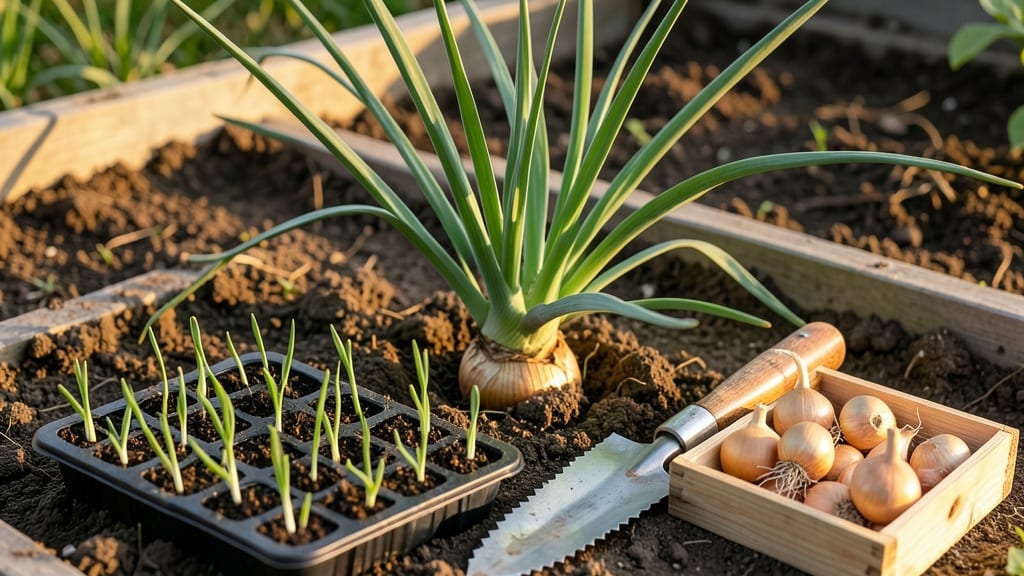
If you’ve ever wondered when to plant onions in Ohio, timing is the secret to avoiding frost damage and bolting—two of the biggest threats to your harvest.
Ohio’s Zone 6a climate means you’ve got two chances each year to grow these cold-hardy veggies, but getting the window wrong can mean the difference between a bountiful crop and wasted effort.
The best time to plant onions in Ohio is March to April for spring harvests or August to September for fall-planted varieties that overwinter. Whether you’re using sets, seeds, or transplants, knowing your last frost date (April 15) and soil temperature is key to success.
Let’s break down the exact planting schedule and varieties that thrive in Ohio’s unpredictable weather.
Spring-planted onions need to be in the ground 4-6 weeks before frost to establish roots, while fall varieties can handle cooler temps. The right approach depends on your location—whether you’re in northern Ohio with shorter seasons or southern Ohio with milder winters.
I’ll show you how to pick the perfect variety and avoid common mistakes that ruin harvests.
Ready to grow onions that rival store-bought? You’ll learn the exact planting windows, soil prep tips, and even how to tell when your onions are ready to harvest. No more guessing—just a foolproof plan for Ohio gardeners.
Best planting times for onions in Ohio (Zone 5-6): a month-by-month breakdown
Ohio’s Zone 5-6 climate gives you two prime windows to plant onions: early spring and late summer/fall. Timing depends on your goal—whether you want a summer harvest or overwintering bulbs. Let’s break down the best months and what to watch for in Ohio’s unpredictable weather.
For spring planting, aim for 4-6 weeks before your last frost date (typically mid-March to early April in most of Ohio). This gives seedlings time to establish roots before late spring frosts.
In northern Ohio, plant as late as April 15 to avoid frost damage, while southern Ohio can start as early as late February.
Fall planting is ideal for overwintering varieties like ‘Red Baron’ or ‘Sweet Sandwich’. Plant 8-10 weeks before the first frost (usually August 15 to September 15). These onions mature slowly over winter and produce sweeter, milder bulbs in late spring.
Soil temperature is critical—onions thrive when soil reaches 40°F. Use a soil thermometer to confirm readiness, especially in cool springs. If soil is too cold, delay planting until temperatures stabilize.
Ohio’s microclimates matter! Urban areas like Columbus may warm up faster than rural Toledo, so adjust planting dates accordingly. Always check your local USDA frost map for precision.
📅 Ohio Onion Planting Timeline
| Month | Task | Notes |
|---|---|---|
| February | Start seeds indoors | For early transplants |
| March | Plant sets/transplants | Soil must be 40°F+ |
| April | Direct-sow seeds | After last frost |
| August | Fall planting begins | For overwintering |
| September | Last chance for fall sets | Before first frost |
✅ Pro Tip: Use mulch after planting to protect from late frosts.
If you miss the spring window, don’t panic! Onions are perennial in Ohio—they’ll regrow from the same spot for 2-3 years if you leave a few bulbs in the ground. Just mulch heavily in winter to protect them from freeze-thaw cycles.
For container gardening, plant in March or early April using well-draining potting mix. Containers warm up faster than soil, so you can start slightly earlier. Just ensure pots have drainage holes to prevent root rot.
Watch for false starts—Ohio’s weather can swing wildly. If a late frost hits after planting, cover seedlings with frost cloth until temperatures stabilize. This is especially critical in northern Ohio, where frosts can linger into May.
Remember: Onion sets (small bulbs) are faster to harvest than seeds, but seeds produce larger bulbs. Choose based on your timeline—sets for quick harvests, seeds for bigger yields.
🌱
Best planting times for onions in Ohio (Zone 5-6): a month-by-month breakdown
Ohio’s Zone 5-6 climate gives you two prime windows for planting onions: early spring and late summer. Spring planting starts 4-6 weeks before your last frost date (typically mid-March to early April), while fall planting happens 8-10 weeks before first frost (August-September).
Timing this right ensures your onions mature before summer heat or winter freeze.
Northern Ohio’s cooler temps favor overwintering onions, while southern Ohio’s longer growing season lets you try two harvests per year. Always check your local average frost dates—Columbus averages April 15 for last frost, but Toledo may be 2 weeks later.
Use this as your guide, but stay flexible for Ohio’s unpredictable weather.
| Planting Window | Soil Temp | Onion Type | Notes |
|---|---|---|---|
| Mid-March to Early April | 40-50°F | Sets/Seedlings | Best for spring harvest (June-July) |
| Late August to Early September | 50-60°F | Sets/Seedlings | Overwinter for fall harvest (Oct-Nov) |
| Late February (under cover) | 35-45°F | Seeds | Start indoors for early transplant |
For spring planting, aim to get onions in the ground when soil temps hit 40°F—this prevents rot from cold, wet soil. Use onion sets (small bulbs) for fastest results, or start seeds indoors in late February to transplant after last frost.
Northern Ohio gardeners should wait until mid-April to avoid late frosts damaging tender shoots.
Fall planting offers a second harvest but requires cold-hardy varieties like ‘Red Baron’ or ‘Candy’. Plant 8-10 weeks before first frost (typically August 15-September 1) so bulbs mature before winter. Mulch heavily with straw or leaves to protect overwintering crops from freeze-thaw cycles.
Missed your window? Don’t panic—Ohio’s short growing season means even a May planting can yield small bulbs if given consistent care. Just expect smaller harvests and prioritize shade protection during summer heatwaves.
The key is soil prep: amend beds with compost and well-rotted manure before planting to give roots a head start.
Pro tip: Mark your calendar for April 15 (last frost) and October 15 (first frost)—these dates are your onion planting bookends. Use them to adjust for your specific Ohio microclimate, whether you’re in Toledo’s Zone 5b or Athens’ Zone 6b. 🌱