
Companion Plants
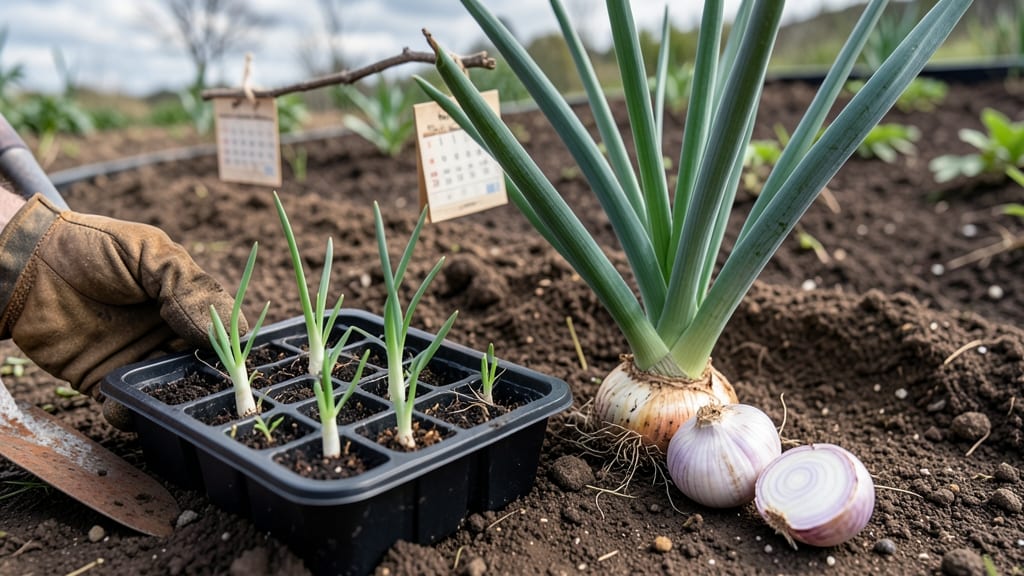
Timing your 🧅 onion planting in Zone 6 could mean the difference between a bountiful harvest and bitter disappointment—because those delicate bulbs hate being planted too early or too late. If you’ve ever watched your onions bolt into flower stems before maturing, you know how frustrating it can be.
The good news? With the right window, you can grow sweet, plump onions every season without the stress.
Most gardeners in Zone 6 focus on spring planting, but fall is actually a game-changer for avoiding bolting. Whether you’re starting with seeds or sets, knowing the exact dates—like planting 4-6 weeks before your last frost—is the secret to success.
Let’s break down the best times for both spring and fall plantings, plus how to adjust for your specific corner of Zone 6.
You don’t need a green thumb to master this—just a few key tricks, like soil temperature checks and frost date tracking. I’ll walk you through the ideal planting windows, regional tweaks (yes, even within Zone 6!), and how to keep your onions on track for harvest.
Ready to grow onions that actually taste like onions? Let’s get started.
From avoiding premature bolting to maximizing your yield, this guide covers everything you need to know. Whether you’re a first-time gardener or a seasoned pro, you’ll leave here with a clear timeline for planting onions in Zone 6—so you can enjoy fresh, homegrown bulbs all season long.
Zone 6 onion planting deadlines: spring vs fall timing for zero-bolt success
Getting your onion planting timing right in Zone 6 is the difference between sweet, plump bulbs and bitter, bolted disappointment. The key is understanding your last frost date (typically around April 15) and soil temperature thresholds.
In Zone 6, you have two prime planting windows: early spring and late summer. Let's break down the exact deadlines and what they mean for your harvest.
For spring planting, aim to get onion sets or transplants into the ground 4-6 weeks before your last frost date. This usually means starting in mid-March to early April. The soil should be at least 40°F (4°C)—any colder, and germination slows dramatically.
In northern Zone 6 areas, this might push your window to late March, while southern parts can start as early as February.
Fall planting is less common but can work if you start 8-10 weeks before your first frost (around mid-August to early September). The goal here is to establish roots before winter, with tops dying back naturally.
These onions will grow through spring and mature just in time for summer harvests. This method is especially useful for short-day onion varieties, which are bred to avoid bolting in heat.
Here's where many gardeners go wrong: planting too late in spring or too early in fall. If you miss the window, your onions may bolt prematurely—sending up flower stalks instead of bulbs.
The ideal soil temperature for planting is 50-65°F (10-18°C). Any hotter, and you risk bolting; any colder, and growth stalls.
| Planting Window | Zone 6 Deadline | Soil Temp | Variety Type | Harvest Time |
|---|---|---|---|---|
| Early Spring | Mid-March to Early April | 40-65°F (4-18°C) | Short-day or intermediate | Late summer to early fall |
| Late Summer | Mid-August to Early September | 50-65°F (10-18°C) | Short-day only | Following spring |
| Avoid | After April 15 (spring) or before August 1 (fall) | Below 40°F (4°C) or above 70°F (21°C) | Long-day varieties | Bitter, bolting, or poor yield |
🌱 Pro Tip: Use a soil thermometer to confirm temperatures before planting.
If you're planting from seeds instead of sets, start them indoors 8-10 weeks before your last frost. Seedlings need to be hardened off before transplanting, so plan accordingly.
For onion sets (small bulbs), you can plant them directly into the garden once the soil is workable, usually 2-3 weeks before your last frost.
Don't overlook regional microclimates within Zone 6. Areas near large bodies of water or at higher elevations may have later last frosts (up to May 1 in some cases), while urban heat islands can push planting deadlines 1-2 weeks earlier.
Check local weather records or ask experienced gardeners in your area for precise adjustments.
One common mistake is assuming all onions are created equal. Short-day onions (like 'Texas Early White') are perfect for Zone 6's climate, while long-day varieties (like 'Sweet Sandwich') will bolt prematurely. Always choose day-neutral or short-day varieties for reliable results in Zone 6.
For a foolproof approach, mark your calendar for these key dates:
- Start seeds indoors: February 1
- Transplant seedlings: March 15-April 1
- Plant sets: March 1-April 15
- Fall planting: August 15-September 1
Remember, onions are cool-season crops, so they thrive when temperatures are 50-75°F (10-24°C). Planting at the right time ensures your onions focus on bulb development rather than flowering. With precise timing, you'll enjoy crisp, sweet onions all summer long—no bitterness or bolting in sight! 🧅
Zone 6 onion planting deadlines: spring vs fall timing for zero-bolt success
In Zone 6, your onion planting window is a tightrope walk between early frost and bolting heat. The key is planting when soil temps hit 40-50°F—too early and frost zaps seedlings, too late and onions rush to flower.
Most gardeners focus on spring planting, but fall offers a secret weapon for avoiding bolting entirely.
Your last frost date in Zone 6 typically falls around April 15, but this varies by 1-2 weeks depending on whether you're in northern (e.g., Chicago) or southern (e.g., Atlanta) Zone 6.
For spring plantings, aim to get seeds or sets in the ground 4-6 weeks before last frost—so mid-March to early April is your sweet spot.
📅 Zone 6 Onion Planting Timeline Comparison
| Planting Method | Ideal Planting Window | Soil Temp Requirement | Key Consideration |
|---|---|---|---|
| Spring Sets | March 15 - April 15 | 40-50°F | Plant 4-6 weeks before last frost |
| Spring Seeds | February 15 - March 15 (indoors) | 60-70°F | Transplant after last frost |
| Fall Sets | July 15 - August 15 | 50-60°F | Harvest next spring |
| Fall Seeds | June 15 - July 15 (indoors) | 60-70°F | Overwinter in containers |
For fall planting, the magic window is July 15 to August 15—this gives onions time to establish roots before winter while avoiding the heat stress that triggers bolting. These onions will mature the following spring, often producing larger bulbs because they avoid summer's intense heat.
Regional tweaks matter: In northern Zone 6 (e.g., Madison, WI), push spring planting to late March to avoid early frosts, while in southern Zone 6 (e.g., Nashville, TN), you can start as early as February. Always check your local frost dates—they're your gardening GPS.
Pro tip: Use onion sets (small bulbs) for spring planting—they sprout faster than seeds and give you a head start. For fall, sets work too, but short-day varieties like 'Yellow Sweet Spanish' perform best. Avoid long-day onions (like 'Texas Early White') in Zone 6—they bolt faster.
Remember: Onions need 6+ hours of sun daily, so choose your planting spot carefully. If your garden gets partial shade, opt for green onions instead—they tolerate lower light but still deliver flavor.
With these deadlines nailed down, you're ready to grow onions that actually taste like onions, not bitter stems.