
Plants
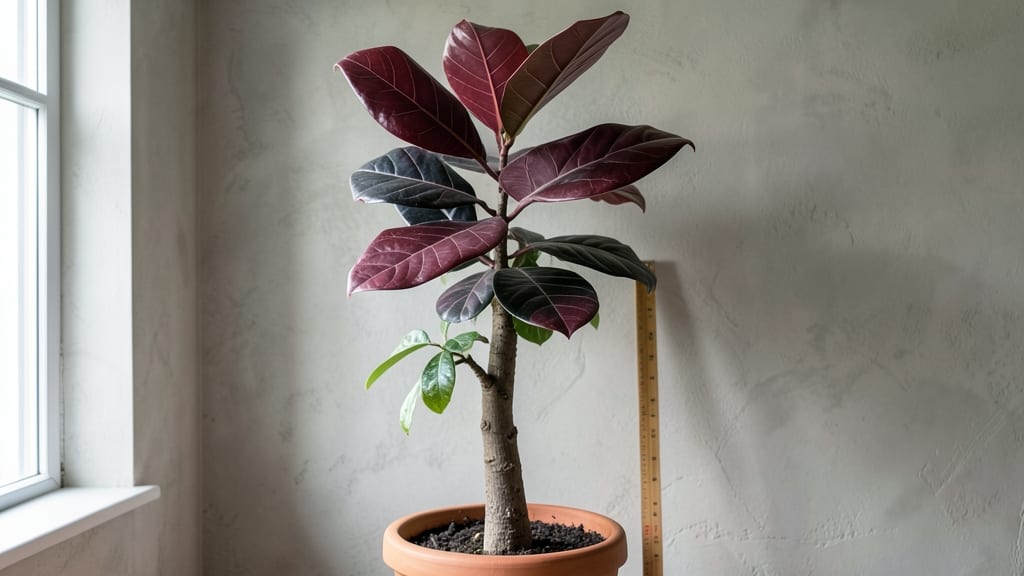
If you're wondering how tall does a rubber plant grow, the answer might surprise you—this striking 🌿 can reach anywhere from 3 to 10 feet depending on its variety and care.
Whether you're eyeing a bold statement plant for your living room or a compact tabletop specimen, understanding its growth potential helps you plan your space (and your pruning strategy).
The rubber plant's height isn't just about genetics—light exposure, pot size, and even your climate play a huge role.
In USDA Zone 6a, indoor plants typically grow slower than their outdoor counterparts, but with the right conditions, you can encourage that dramatic 6-foot height or keep it trimmed to a manageable 3-foot size.
Popular varieties like 'Robusta' and 'Burgundy' have distinct growth patterns, so choosing the right one for your space is key.
What's even better? You're not stuck with whatever height nature intended. Pruning isn't just about keeping your rubber plant in check—it's a way to shape it into the perfect size for your home.
Whether you want a bushy floor plant or a compact desk companion, learning when and how to trim can transform its growth trajectory completely.
Ready to grow a rubber plant that fits your space and style? Let's dive into how to control its height, from selecting the right variety to mastering pruning techniques that keep it looking lush year-round.


Rubber plant height ranges by variety: how big will yours get?
The rubber plant (Ficus elastica) is a showstopper with its glossy, deep green leaves, but its mature height can vary wildly depending on the variety and growing conditions. In my experience, most rubber plants reach 6 to 10 feet tall indoors, though some varieties stay compact.
Understanding these ranges helps you choose the perfect plant for your space—whether you want a floor-filling giant or a tabletop-sized statement piece.
Outdoor rubber plants can grow even taller, sometimes reaching 12 feet or more in tropical climates (USDA zones 10-12). However, most gardeners grow them as indoor plants, where their height is easier to manage.
The key to controlling their growth lies in selecting the right variety and providing the right care. Let’s break down the most popular types and their expected sizes.
| Variety | Mature Height (Indoors) | Growth Rate | Notes |
|---|---|---|---|
| Robusta | 6-10 ft | Moderate | Classic variety; fast-growing with broad leaves. |
| Burgundy | 5-8 ft | Slow to moderate | Dark purple-black leaves; slower growth than Robusta. |
| Tineke | 3-6 ft | Moderate | Variegated pink and cream; compact but needs bright light. |
| Black Prince | 4-7 ft | Slow | Deep black leaves; slower growth but striking appearance. |
| White Princess | 3-5 ft | Slow | Creamy white leaves; needs high light to maintain color. |
| Dwarf Varieties (e.g., 'Petite') | 2-3 ft | Slow | Ideal for small spaces; may need pruning to maintain shape. |
If you’re wondering how quickly your rubber plant will grow, know that indoor rubber plants typically add 1 to 2 feet per year under ideal conditions. In my first year of growing a Robusta variety, it shot up from a 1-foot-tall starter to nearly 3 feet with consistent care.
The second and third years see even faster growth, especially if you provide bright, indirect light and well-draining soil.
Outdoor rubber plants grow faster due to more sunlight and space, but they’re less common in colder climates. If you live in zones 9-11, your outdoor rubber plant could reach 10+ feet in just a few years.
Just be prepared for its wide-spreading habit—these plants can grow 3 to 5 feet wide at maturity, so give it room to stretch!
Light plays a huge role in determining height. Rubber plants grown in low-light conditions (like a north-facing window) tend to grow taller and leggier as they stretch toward any available light.
In contrast, plants in bright indirect light (like an east- or west-facing window) grow fuller and bushier, with shorter internodes between leaves.
I’ve seen Robusta plants in low light reach 8 feet tall in just 2 years, while the same variety in optimal light stays under 5 feet.
Soil and container size also influence height. Rubber plants in small pots become root-bound quickly, which can stunt their growth or make them grow taller and thinner as they compete for nutrients.
I repot mine every 2-3 years into a container just 1-2 inches larger in diameter to encourage balanced growth. Using a well-draining potting mix with perlite or orchid bark also prevents root rot, which can slow down growth.
Pruning is another way to control height. Regular pruning not only keeps your rubber plant at a manageable size but also encourages bushier growth. I prune mine in early spring by cutting back 1
How to control rubber plant height: pruning, training, and light tips
Controlling your rubber plant's height doesn't require guesswork—it's all about strategic pruning and light management. I've learned that cutting back stems in early spring encourages bushier growth, while allowing it to stretch toward light creates that iconic vertical look.
The key is timing: prune right after your plant finishes its winter dormancy (around March or April), when new growth is about to spurt.
For a compact tabletop plant, I trim the main stem just above a leaf node, then place the cutting in water to root. This not only controls height but also gives you free propagation material!
If you're aiming for a floor-filling statement plant, let it grow taller but prune side branches to create that dramatic, tree-like silhouette. Remember, rubber plants are forgiving—they'll bounce back from even aggressive pruning.
Light plays a surprising role in height control. My 'Burgundy' variety stretches dramatically when placed in low light, while the same plant in bright indirect light grows fuller and slower. Position your rubber plant within 3-5 feet of an east-facing window for ideal growth.
Too little light? It grows leggy. Too much direct sun? The leaves scorch. That goldilocks zone is where the magic happens.
- 🌿 Prune in spring (March-April) for bushier growth—cut just above leaf nodes.
- 🪴 Repot every 2-3 years to prevent root-bound stress that stunts growth.
- ☀️ Rotate weekly for even light exposure to prevent lopsided stretching.
- ✂️ Trim leggy stems to encourage lateral branching for fuller plants.
- 💧 Water deeply but less frequently—overwatering causes weak, tall growth.
Training is another game-changer. I use a bamboo stake or trellis to guide my rubber plants into specific shapes—whether it's a single-stemmed tree or a multi-branched bush. Simply tie the main stem to the support as it grows, and adjust branches to your desired shape.
This method works especially well for 'Tineke' varieties with their striking variegation, where you want to showcase those beautiful patterns.
Don't forget about fertilizer timing—too much food in winter slows growth, while balanced feeding in spring and summer encourages healthy, controlled expansion. I use a 10-10-10 NPK fertilizer every 4-6 weeks during growing months, but cut back in fall and winter.
The result? A rubber plant that grows at your pace, not against your space constraints.
With these techniques, you can transform your rubber plant from a wild, unruly giant into a perfectly proportioned centerpiece. The best part? Every cut you make gives you a chance to propagate new plants—so you're not just controlling height, you're expanding your plant collection for free! 🌱