
Plants
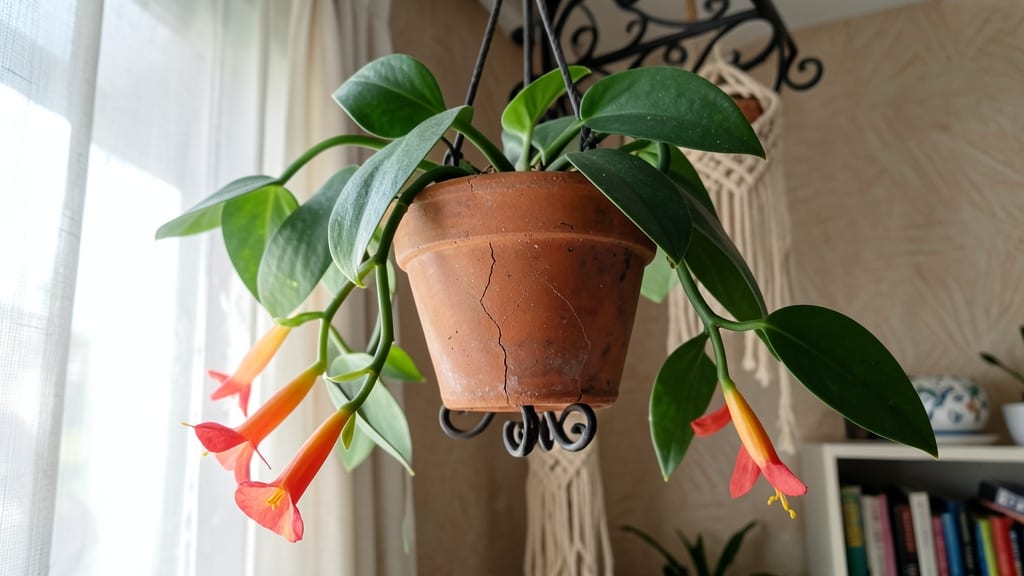
Optimal light requirements for lipstick plants: bright, indirect sunlight explained
Your lipstick plant (Aeschynanthus radicans) thrives in bright, indirect sunlight, mimicking its natural habitat under the dappled forest canopy. Too much direct sun causes leaf scorch, while too little dim light leads to sparse blooms and leggy growth.
The key is finding that sweet spot where your plant gets 4-6 hours of filtered light daily, especially during morning and late afternoon hours.
Think of east or west-facing windows as your best allies—these provide gentle morning sun or soft afternoon light without the harsh midday rays. South-facing windows can work, but you’ll need to use sheer curtains to diffuse the intensity.
Avoid north-facing windows unless you supplement with grow lights, as these often lack sufficient brightness for optimal growth.
Here’s how to visualize the perfect light setup: imagine your plant sitting 2-3 feet away from an east window, where it receives gentle sunlight from sunrise until mid-morning. This mimics the dappled sunlight it craves in the wild, promoting lush foliage and vibrant red tubular flowers.
The goal is to avoid direct midday sun, which can cause leaf burn and stress.
| Light Condition | Plant Response | Signs of Issue | Solution |
|---|---|---|---|
| Bright Indirect (Ideal) | Lush green leaves, frequent red blooms, compact growth | None | Maintain current position |
| Low Light (North Window) | Leggy stems, small leaves, few blooms | Yellowing leaves, sparse growth | Move to east/west window or add grow light |
| Direct Sun (South Window) | Crispy brown leaf edges, leaf drop | Sunburn spots, wilting | Use sheer curtain or move 3+ feet away |
| Artificial Grow Light | Healthy growth, even blooming year-round | None (if properly set) | Use 12-14 hour LED grow light daily |
Pay close attention to how your lipstick plant’s leaves respond to light. Healthy leaves should be a rich, glossy green with no yellowing or browning. If you notice yellowing between veins, it’s a classic sign of too much direct sun.
Conversely, if leaves turn pale or stems stretch excessively toward the light, your plant is begging for more brightness. This etiolation (leggy growth) happens when plants stretch toward light sources, a clear indicator of insufficient light.
Seasonal adjustments are crucial, too. During winter months, when natural light dims, your lipstick plant may need a boost. This is when grow lights become invaluable—position them 6-12 inches above the plant and run them for 12-14 hours daily to mimic summer daylight.
Even a simple LED bulb with full spectrum lighting can make a world of difference in maintaining your plant’s health and bloom production.
Pro tip: Rotate your plant quarter-turn weekly to ensure even light exposure. This prevents one side from becoming overly stretched or shaded, keeping your lipstick plant’s growth balanced and bushy. Think of it like giving your plant a gentle massage—it encourages uniform foliage and prevents that unsightly lopsided look.
For those in hotter climates, afternoon shade becomes even more critical. If your lipstick plant is outdoors during summer, provide afternoon shade cloth (30-50% shade) to protect it from intense rays.
Even a simple porch awning can work wonders. Remember, this plant hails from tropical forests where it’s accustomed to filtered sunlight, not the harsh glare of open skies.
Lastly, monitor your plant’s blooming frequency as a barometer for light success. A well-lit lipstick plant should produce bright red flowers consistently, especially during its peak growing season in spring and summer. If blooms become sparse or fail to appear, it’s time to reassess your light setup.
Sometimes, a simple move to a sunnier windowsill or the addition of a small grow light is all it takes to revive your plant’s flowering enthusiasm.
How to adjust your home’s lighting for a lipstick plant’s success
Your lipstick plant thrives in bright, indirect sunlight, but most homes don’t offer perfect conditions right away. Start by positioning it near an east-facing window—this provides gentle morning light without the harsh afternoon sun that can scorch delicate leaves.
If your space only has south or west windows, use sheer curtains to diffuse the intensity while still letting in plenty of light.
I’ve found that 2-3 feet from a window is ideal—closer than this risks sunburn, while farther away can lead to leggy growth. Rotate your plant quarter-turns every 2 weeks to ensure even exposure, preventing it from leaning toward the light source.
This simple habit keeps your plant compact and encourages fuller foliage.
For homes with low natural light, supplement with a grow light (LED or fluorescent) placed 6-12 inches above the plant for 12-14 hours daily. I recommend cool white or full-spectrum bulbs—they mimic natural sunlight without overheating the leaves.
Test the distance by checking for no visible browning after 2 weeks.
💡 Numbered Highlights for Perfect Lighting
- East windows = best natural light balance
- Use sheer curtains for south/west exposure
- Rotate plant weekly for even growth
- Grow lights 6-12" away for low-light spaces
- Check for leaf burn after adjustments
Pro tip: Morning sun is gentler than afternoon—ideal for blooming!
Seasonal changes require adjustments too. During winter’s shorter days, move your lipstick plant to the brightest spot available, even if it means temporarily placing it under artificial light.
I’ve seen plants thrive with a south-facing window combo (morning direct + afternoon filtered) during these months. Just watch for yellowing leaves—a classic sign of insufficient light.
If your plant starts stretching toward the light, it’s begging for more brightness. This etiolation (leggy growth) happens when it’s not getting enough light. To fix it, either move it closer to the window or add a grow light immediately.
I’ve revived multiple plants this way—just be patient and consistent with the new setup.
For outdoor growers, lipstick plants can handle partial shade outdoors (like under a tree canopy) but avoid full shade, which stunts blooming. If you’re transitioning from indoor to outdoor, acclimate gradually over 1-2 weeks to prevent shock from stronger sunlight.
Start with 2 hours of morning sun and increase slowly.