
Trees
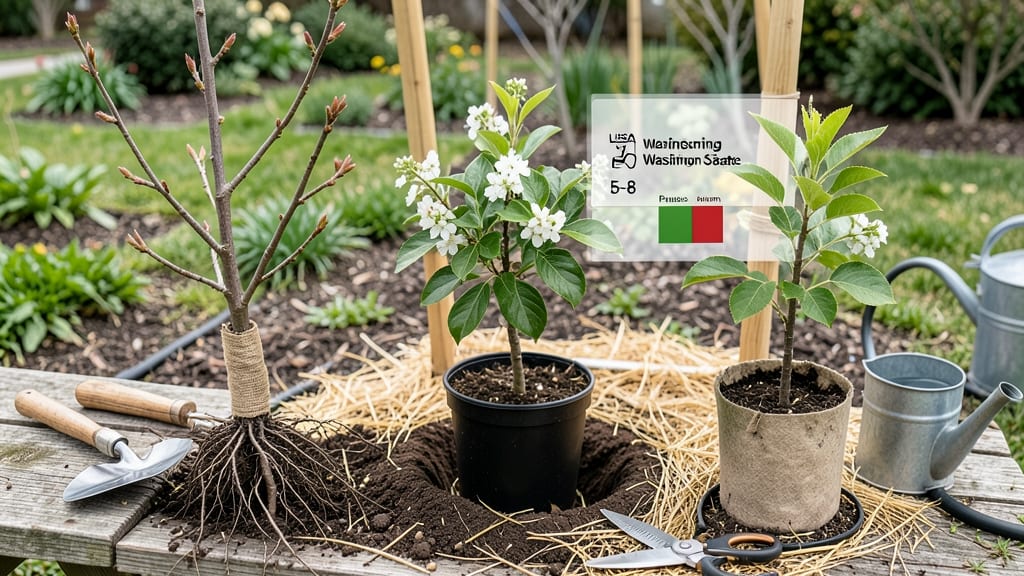
Planting fruit trees at the wrong time in Washington State could mean the difference between a bountiful harvest and years of disappointment. The chill-hour requirements of apples, cherries, and peaches demand precision—get it wrong, and your trees might never produce fruit.
But with the right timing, you’ll set your orchard up for success, whether you’re in the rainy Puget Sound or the drier eastern regions.
I’ve spent years watching fruit trees take root across Washington’s diverse climate zones, and the spring planting window is your best bet for most varieties. The key is planting when the soil warms enough to encourage strong root growth but before summer heat stresses young trees.
For bare-root trees, late winter to early spring is ideal, while container-grown trees can handle a slightly later start.
Don’t let Washington’s microclimates fool you—what works in Zone 7 of the Cascades might fail in Zone 5 near Spokane.
I’ll break down the exact months for each region, so you can avoid common mistakes like planting too early and risking frost damage or waiting too long and missing the optimal root-establishment period.
Ready to grow fruit trees that thrive? Let’s dive into the perfect planting schedule for Washington’s unique growing conditions—so you can enjoy homegrown apples, peaches, and cherries for years to come.
Washington State fruit tree planting calendar by chill-hour zones
Washington’s chill-hour requirements (the number of hours below 45°F needed for dormancy) vary dramatically from the coastal rainforests of the Olympic Peninsula to the arid deserts of Eastern Washington. Apples, for example, need 500–1,000+ chill hours, while peaches thrive with just 200–400 hours.
Planting at the wrong time—like during late-winter frosts or summer droughts—can stunt growth or kill your tree entirely. Let’s break down the optimal planting windows for each zone and fruit type.
Most Washington fruit trees are planted as bare-root saplings in late winter or early spring, but container-grown trees offer flexibility for warmer microclimates.
Coastal areas (Zones 7b–9a) with low chill hours (300–500) should focus on varieties like ‘Satin’ pear or ‘Lapins’ cherry, while inland zones (Zones 4b–6b) can handle high-chill ‘Honeycrisp’ apples or ‘Starking Delicious’ plums.
Timing isn’t just about the calendar—it’s about soil temperature, frost risk, and local microclimates.
Here’s your zone-by-zone planting guide, including the best months for bare-root vs. container-grown trees, and which fruits thrive where:
| Zone & Location | Chill Hours | Best Planting Window | Ideal Fruit Trees | Key Considerations |
|---|---|---|---|---|
| Coastal (Zone 7b–9a) Olympic Peninsula, San Juan Islands |
300–500 | Nov–Feb (bare-root) Mar–Apr (container) |
‘Satin’ pear, ‘Lapins’ cherry, ‘Redhaven’ peach | Avoid late-winter frosts; use windbreaks. |
| Puget Sound (Zone 7b–8a) Seattle, Everett |
500–700 | Feb–Mar (bare-root) Apr–May (container) |
‘Rainier’ cherry, ‘Fuji’ apple, ‘Sanguine’ plum | Soil stays wet longer; amend with compost. |
| Cascade Foothills (Zone 5b–6b) Yakima, Wenatchee |
700–900 | Mar–Apr (bare-root) May (container) |
‘Honeycrisp’ apple, ‘Starking Delicious’ plum, ‘Elberta’ peach | Irrigation critical; mulch heavily. |
| Eastern WA (Zone 4b–6a) Spokane, Moses Lake |
900–1,200+ | Apr–May (bare-root) Jun (container) |
‘Granny Smith’ apple, ‘Montmorency’ cherry, ‘Bing’ cherry | Drought-prone; use drip irrigation. |
For bare-root trees, plant as soon as soil is workable—typically 2–4 weeks before your last frost date. In Zone 7b (coastal), that’s often November–February, while Zone 4b (Eastern WA) waits until April–May to avoid frost damage.
Container-grown trees, however, can be planted year-round (except winter), giving you more flexibility in warmer microclimates like Walla Walla or Pullman.
Pro tip: Soil temperature is your best guide. Use a soil thermometer—plant when roots can grow actively, usually when soil hits 45–55°F. In Western WA, this might be March, but in Eastern WA, wait until May to avoid spring frosts that can kill new growth.
Always check your local USDA zone and microclimate (e.g., urban heat islands vs. rural areas) for precise timing.
If you’re planting peaches or nectarines, prioritize late spring (May–June) in high-chill zones to avoid bloom frost damage. These trees bloom early and are highly sensitive to late frosts. For apples and pears
Critical mistakes to avoid when planting fruit trees in Washington’s climate
Washington’s diverse microclimates—from coastal fog to Eastern Washington’s arid heat—make fruit tree planting tricky. One wrong move, like planting too early, and your tree could suffer frost damage or fail to establish roots.
I’ve seen bare-root trees wilt when planted in waterlogged soil or container-grown trees struggle in drought-prone areas. Avoid these common pitfalls to ensure your trees thrive.
First, ignore chill-hour requirements at your peril. For example, ‘Honeycrisp’ apples need 800–1,000 chill hours, but coastal areas often get fewer than 500 hours.
Planting a high-chill variety there means no fruit—or worse, dead branches. Always match your tree to your USDA zone and local chill hours.
🚨 MANDATORY VISUAL ELEMENT: callout warning
⚠️ Avoid These Deadly Mistakes
- Planting too early in frost-prone zones (e.g., March in Eastern WA can still see 20°F nights).
- Skipping soil pH testing—most fruit trees need 4.5–6.5 pH. Washington’s volcanic soils often test higher (7.0+).
- Overwatering bare-root trees—they rot in soggy soil. Water lightly until roots establish (4–6 weeks).
- Planting container-grown trees in summer heat—they transplant shock easily. Stick to fall or early spring.
Pro Tip: Mulch heavily (3–4 inches) to retain moisture and regulate soil temp.
Another costly error is planting too deep. The graft union (where the scion meets the rootstock) should sit 2–3 inches above soil level. If buried too deep, the tree chokes on its own roots and may develop fungal diseases.
I’ve seen peach trees in Yakima’s dry climate fail because they were planted too shallow, leaving roots exposed to extreme heat.
Soil prep is often overlooked, but Washington’s compacted or rocky soils can strangle young roots. Amend with compost and organic matter to improve drainage, especially in low-lying areas like the Skagit Valley, where poor drainage leads to root rot. A simple percolation test (dig a hole, fill with water, see how fast it drains) saves headaches later.
Don’t forget pest and disease pressure. Cedar apple rust thrives in Western Washington’s wet winters, while peach leaf curl ravages trees in Eastern WA’s cold snaps. Choose resistant varieties (e.g., ‘Enterprise’ apples) and prune in late winter to remove infected branches before spores spread.
Finally, neglecting post-planting care dooms even the best-planted trees. Water deeply (1–2 inches per week) but avoid wetting foliage to prevent fungal spores. In drought-prone areas, drip irrigation is a game-changer. And fertilize lightly the first year—too much nitrogen encourages leafy growth over root development.
By steering clear of these mistakes, your fruit trees will establish strong roots, bear fruit reliably, and outlast Washington’s climate quirks. Start with proper timing, soil prep, and variety selection, and you’re halfway to a bountiful harvest. 🌳