
Plants
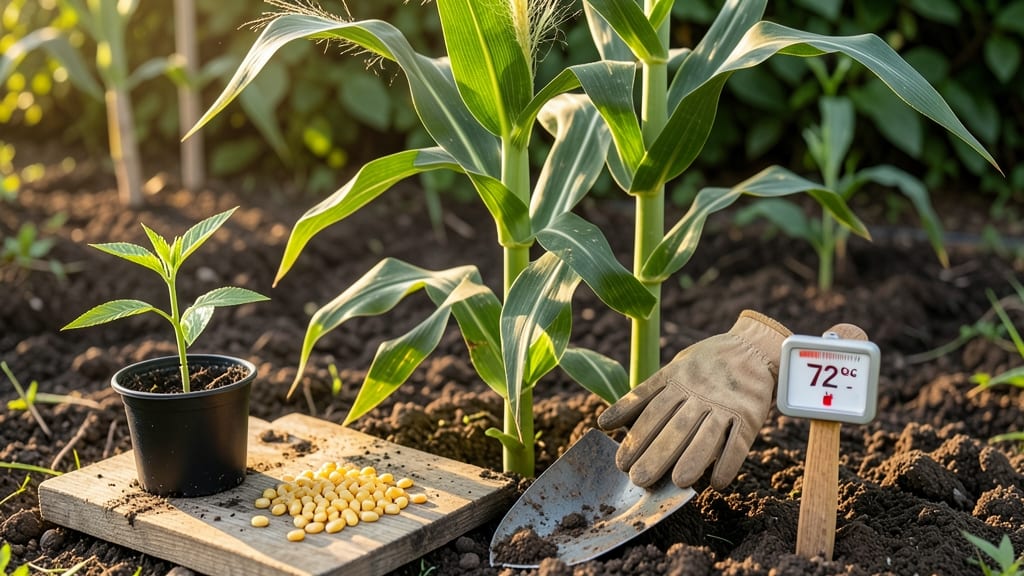
If you’ve ever dreamed of harvesting golden 🌽 sweet corn from your Virginia garden, timing is the secret ingredient—plant too soon, and frost will steal your crop; wait too late, and you’ll miss the sweetest harvest window.
The key to success lies in knowing when to plant corn in VA, where last frost dates and soil temperatures vary dramatically across regions like the Piedmont and Shenandoah Valley.
Virginia’s 6a-8a climate zones offer a surprisingly short window—just mid-April to late May—to get corn in the ground after the last frost.
But here’s the catch: soil needs to be at least 60°F before seeds sprout, and even a late frost can turn your tender seedlings into sad, wilted memories.
I’ll break down the exact weeks before your local last frost to plant for peak yields, so you can avoid common pitfalls like bolting or stunted growth.
Whether you’re growing ‘Peaches and Cream’ for summer BBQs or field corn for livestock, the right timing maximizes your harvest. We’ll also cover how to stretch your growing season with succession planting—because in Virginia, where humidity and pests lurk, every extra ear counts.
Ready to turn your garden into a cornucopia? Let’s get started.
From Coastal Plain to the Blue Ridge Mountains, Virginia’s diverse microclimates mean your neighbor’s perfect planting date might not work for you.
I’ll show you how to read your local frost data, adjust for soil warmth, and even troubleshoot delays—so you can enjoy July to September harvests of sweet, plump kernels every time. No more guesswork, just golden rows of corn waiting for you.
Virginia corn planting dates by region: exact weeks before last frost
Virginia’s diverse climate means your corn planting dates should align with your specific region. The Old Dominion spans from the Coastal Plain’s mild winters to the Blue Ridge’s cooler highlands.
Understanding these differences ensures your sweet corn thrives from seed to harvest. Let’s break down the ideal planting windows based on last frost averages and soil temperature requirements.
For all regions, soil temperature is critical—corn seeds won’t germinate well below 60°F. Use a soil thermometer to confirm readiness. Planting too early risks frost damage, while waiting too long may shorten your harvest window.
Most Virginia gardeners aim to plant 2-3 weeks after the last frost date, but regional adjustments are key.
Here’s how to time your plantings by Virginia’s four main climate zones, including exact weeks before last frost and recommended varieties for each area.
| Region | Last Frost Date | Planting Window | Soil Temp Requirement | Best Varieties |
|---|---|---|---|---|
| Coastal Plain (Norfolk, Virginia Beach) | Late March | 3-4 weeks after last frost (early April) | 60°F+ | ‘Peaches and Cream’ (70 days), ‘Silver Queen’ (85 days) |
| Piedmont (Richmond, Charlottesville) | Mid-April | 2-3 weeks after last frost (late April) | 60°F+ | ‘Ambrosia’ (72 days), ‘Bodacious’ (80 days) |
| Blue Ridge (Roanoke, Blacksburg) | Early May | 1-2 weeks after last frost (early May) | 60°F+ | ‘Country Gentleman’ (75 days), ‘Golden Bantam’ (70 days) |
| Shenandoah Valley (Staunton, Harrisonburg) | Late April | 2 weeks after last frost (late April) | 60°F+ | ‘Peaches and Cream’ (70 days), ‘Silver Queen’ (85 days) |
If you’re in the Coastal Plain, you’ll have the earliest planting window, often as early as late March. This region’s milder winters allow for two potential harvests if you plant early and late varieties.
Meanwhile, gardeners in the Blue Ridge should wait until early May to avoid late spring frosts that can devastate tender seedlings.
For all regions, succession planting is key to extending your harvest. Plant a second crop 4-6 weeks after the first to enjoy corn throughout the summer. This works especially well in the Piedmont and Shenandoah Valley, where the growing season is slightly shorter.
Choose early-maturing varieties (60-70 days) for the first planting and mid-season varieties (80-90 days) for the second.
One common mistake is planting corn too densely. Space rows 2.5-3 feet apart and thin seedlings to 10-12 inches apart once they’re 6 inches tall. This ensures proper airflow and reduces the risk of fungal diseases like corn smut, which thrives in Virginia’s humid summers.
Mulch around plants with straw to retain moisture and suppress weeds.
Pay attention to local microclimates—valleys and low-lying areas may experience frost longer than surrounding hills. Use a frost watch or local weather alerts to time your plantings precisely.
For example, if you’re in the Shenandoah Valley, a late April frost isn’t uncommon, so err on the side of caution and wait until early May.
Finally, consider soil warming tricks if your spring is unusually cool. Black plastic mulch or row covers can raise soil temperature by 5-10°F, helping seeds germinate faster. This is especially useful in the Blue Ridge, where cooler nights can delay planting.
With the right timing and care, you’ll be enjoying homegrown Virginia sweet corn by mid-summer!
🌽
Best corn varieties for Virginia gardens and their planting timing
Choosing the right corn variety for your Virginia garden is key to avoiding disease and ensuring sweet kernels. The humid climate here favors varieties with disease resistance, while shorter growing seasons in mountainous regions need faster-maturing types.
Let’s break down the top-performing sweet corn varieties and their ideal planting windows.
For two-crop harvests, plan to plant early- and late-season varieties. Early types like ‘Peaches and Cream’ mature in 60-70 days, while late-season varieties like ‘Ambrosia’ take 85-100 days. Staggering plantings lets you enjoy corn from July through September.
Here’s a quick guide to the best varieties for Virginia’s climate and their planting timing:
| Variety | Days to Maturity | Planting Window | Best For |
|---|---|---|---|
| Peaches and Cream | 60-70 | Mid-April to early May | Early harvest, sweet flavor |
| Silver Queen | 75-85 | Late April to mid-May | Classic sweet corn, disease-resistant |
| Ambrosia | 85-100 | Late May to early June | Late-season harvest, rich flavor |
| Bodacious | 70-80 | Mid-April to early May | Super-sweet, high yield |
For Coastal Plain regions, where frost arrives later, you can push planting to early June for a second crop of ‘Ambrosia’ or ‘Silver Queen’. In mountainous areas, stick to early-maturing varieties like ‘Peaches and Cream’ to avoid early fall frosts.
Pro tip: If you’re growing field corn (for grain or livestock), opt for ‘Reid’s Yellow Dent’ or ‘Mangels’, which mature in 90-110 days. Plant these in late April to early May for best results.
Don’t forget to rotate crops every year to prevent soil-borne diseases like corn smut or leaf blight, which thrive in Virginia’s humidity. Pair corn with beans or squash to improve soil health and deter pests.