
Plants
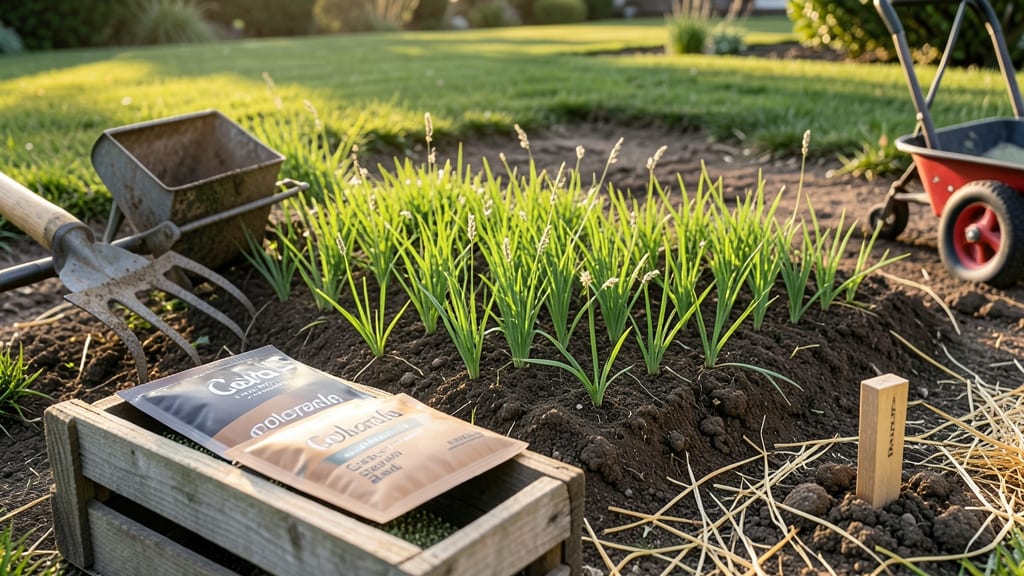
Timing your grass seed planting in Colorado isn’t just about picking a month—it’s about understanding how elevation, soil warmth, and frost dates create a perfect window for success.
With USDA zones 5-7 and dramatic shifts from the Front Range to the High Plains, getting it wrong can mean patchy lawns or wasted seed.
Most gardeners know spring and fall are ideal, but Colorado’s unique climate demands precision. Plant too early, and frost will kill your 🌱 seedlings; too late, and summer heat dries them out before roots take hold.
The secret? Waiting until soil temps hit 50°F—a threshold that varies wildly between Denver’s urban heat and the cooler mountain valleys.
In this guide, I’ll break down the exact planting months by elevation, from the 2,500-foot plains to alpine meadows above 10,000 feet, plus how to prep your soil and choose the right seed for your microclimate. No more guessing—just a fast, reliable lawn that thrives year after year.
Whether you’re seeding a new yard or repairing bare spots, these insights will help you avoid common mistakes and get the best results. Let’s dive into the best times to plant for your specific Colorado zone.
Optimal grass seed planting months in Colorado by elevation zone
Colorado’s dramatic elevation shifts—from the Front Range’s 5,000–7,000 feet to the Rocky Mountains’ 8,000–10,000 feet—mean your planting window can vary by 4–6 weeks between regions.
At lower elevations like Denver or Colorado Springs, you’ll have a longer spring window, while high-altitude areas (e.g., Summit County) may only get 2–3 weeks before summer heat halts germination.
Let’s break it down by zone to avoid common mistakes like planting too early (frost damage) or too late (drought stress).
For spring planting, aim for mid-April to mid-May when soil temperatures consistently reach 50°F (10°C)—critical for cool-season grasses like Kentucky bluegrass and fescue. At higher elevations (7,000+ ft), wait until late May to avoid late frosts.
Fall planting, however, is more forgiving: late August to early October works across most zones, with September being ideal for even germination.
Here’s the non-negotiable rule: Never plant when nighttime temperatures drop below 40°F (4°C)—seedlings will fail. Use a soil thermometer (just $10 at garden centers) to confirm readiness. In dry climates like the Western Slope, prioritize fall planting to leverage autumn rains for natural watering.
Pro Tip: If you’re in Zone 5 (e.g., Grand Junction), shift your window 2 weeks earlier than Denver—heat arrives faster. For Zone 7 (e.g., Boulder), you’ve got 6 weeks of wiggle room in spring.
🌱 Colorado Grass Seed Planting by Elevation
| Elevation Zone | Spring Window | Fall Window | Soil Temp Threshold | Key Risk |
|---|---|---|---|---|
| Front Range (5,000–7,000 ft) | Mid-April–Mid-May | Late Aug–Early Oct | 50°F (10°C) | Late frosts |
| Foothills (7,000–8,500 ft) | Late April–Early June | Early Sept–Mid-Oct | 55°F (13°C) | Drought stress |
| Mountains (8,500–10,000 ft) | Late May–Early June | Mid-Sept–Early Oct | 60°F (16°C) | Short season |
💡 Note: Adjust 1–2 weeks earlier for dry climates (e.g., Grand Junction) to capitalize on spring rains.
At higher elevations, the shorter growing season demands precision. For example, Aspen (8,000 ft) has only 60–70 frost-free days, so fall planting is non-negotiable.
Start seeds indoors in late March if you’re aiming for a June transplant—but this is only worth it for high-value lawns (e.g., golf courses). For homeowners, stick to direct seeding in September for simplicity.
Avoid these 3 deadly mistakes: Planting in June or July (seedlings will bake), ignoring soil moisture (Colorado’s clay soils dry out fast), or using warm-season grasses (like Bermuda) outside their June–August window. Cool-season grasses dominate here, so Kentucky bluegrass and fine fescue are your best bets for 90% of the state.
For urban areas like Denver, where summer heat and drought are major threats, late August planting lets seedlings establish before winter. In rural areas with irrigation, you can push to early October, but stop by September 15 in Zone 5 to avoid frost.
Always test your soil’s pH (aim for 6.0–7.0)—Colorado’s alkaline soils often need sulfur or peat moss to sweeten the mix.
Final Rule: If you’re unsure, plant in September. It’s the safest bet across all elevations, gives seedlings time to root before winter, and aligns with natural rainfall patterns. For spring planters, set a calendar reminder for April 15—after that, the window closes fast.
Optimal grass seed planting months in Colorado by elevation zone
Colorado’s elevation zones drastically change when you should plant grass seed. At 2,500 feet in Denver, your ideal window differs from 7,500 feet in the mountains. The key is soil temperature: seeds need 50°F+ soil to germinate reliably.
Below, I’ll break down exact months for three zones—Front Range (2,500–6,000 ft), Foothills (6,000–8,000 ft), and Mountain (8,000–10,000 ft)—plus how to adjust for early or late starts.
For the Front Range, think late April to early May in spring and late August to mid-September in fall. This zone warms fastest, but don’t rush—wait until soil hits 50°F (use a soil thermometer).
In the Foothills, cool nights delay germination, so aim for mid-May to early June in spring or early September in fall. Above 8,000 feet, the window shrinks to June–July (spring) or late August–early September (fall), as frost lingers longer.
| Elevation Zone | Spring Planting Window | Fall Planting Window | Soil Temp Threshold | Key Risk |
|---|---|---|---|---|
| Front Range (2,500–6,000 ft) | Late April–Early May | Late August–Mid-September | 50°F+ | Late frost or drought |
| Foothills (6,000–8,000 ft) | Mid-May–Early June | Early September | 55°F+ | Cool nights slow growth |
| Mountain (8,000–10,000 ft) | June–July | Late August–Early September | 60°F+ | Short season, frost risk |
🌱 Pro Tip: Use a soil thermometer to confirm temps before planting.
Adjusting for early or late starts? If you plant too early in spring, frost will kill seedlings. If you wait too late, summer heat dries out soil before roots establish.
For Front Range gardeners, I recommend late April if your soil warms by then; otherwise, wait until mid-May. In the mountains, prioritize fall planting—seeds germinate faster in cool weather, and established roots handle winter better.
Don’t overlook microclimates within zones. Urban areas like Denver heat up faster than rural spots, while north-facing slopes stay cooler. Test your soil’s warmth by pressing your hand into the ground—if it feels lukewarm, it’s likely ready.
Pair this with a weather forecast for 7+ days of dry, warm weather to avoid washouts. For high-altitude areas, consider cool-season grasses like fescue, which germinate faster in cooler temps.
One common mistake? Planting based on air temperature instead of soil temperature. A 70°F day can hide 40°F soil, stalling germination. Use a soil thermometer ($10 at garden centers) to avoid this pitfall.
Also, water deeply after planting—Colorado’s dry winds evaporate moisture fast. Aim for 1 inch of water weekly until germination (7–21 days).
For fastest results, combine the right timing with proper seed selection. Cool-season grasses like Kentucky bluegrass thrive in spring/fall, while buffalo grass handles summer heat better. Next, I’ll cover the best varieties for each elevation zone to maximize your lawn’s success. 🌿