
Plants
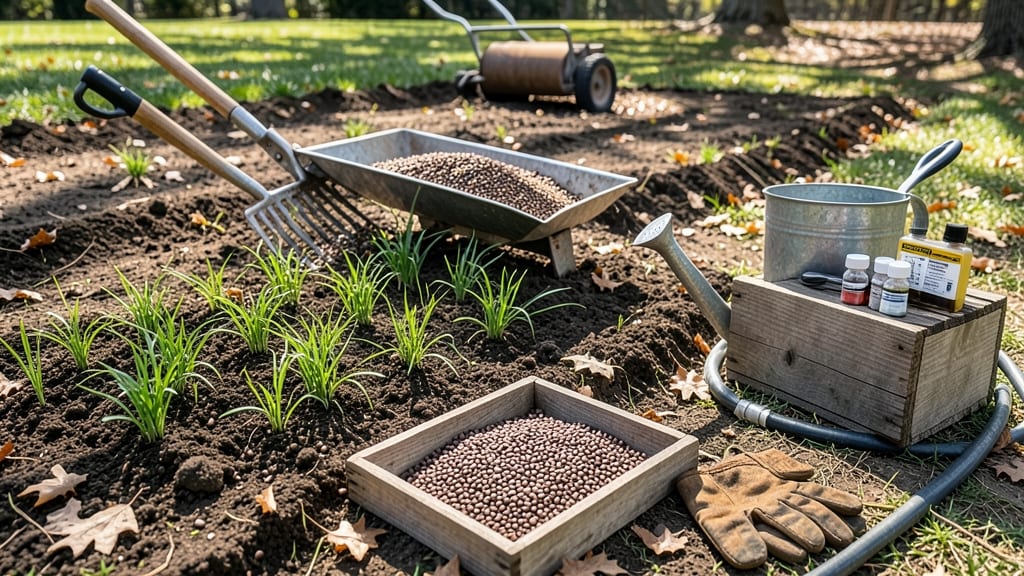
If you’ve ever stared at a patchy lawn wondering "when is the best time to plant grass seed in Georgia", you’re not alone.
Georgia’s 7a-8b climate throws curveballs with its sweltering summers and unpredictable weather—but timing your planting just right could mean the difference between a thin, struggling lawn and a vibrant carpet of green by next spring.
The secret lies in fall planting, specifically between September and October, when soil temperatures hover in that sweet spot of 60-75°F. This window gives grass seed the perfect conditions to germinate before winter sets in, allowing roots to establish deep and strong.
But here’s the catch: not all of Georgia is created equal. Coastal regions, Piedmont hills, and mountain areas each have their own ideal timing, and skipping prep work like soil testing can turn your efforts into wasted seed.
I’ve spent years perfecting my own lawn, and what I’ve learned will save you from common mistakes—like planting too early and inviting weeds or too late and risking frost damage.
Whether you’re seeding a new yard or repairing bare spots, this guide breaks down the exact steps to maximize your grass’s potential, from soil prep to watering schedules tailored to Georgia’s microclimates.
Ready to transform your lawn from brown and patchy to lush and green? Let’s dive into the fall timing secrets that’ll give your grass the strong start it deserves—and keep it thriving year-round.
Why fall is the optimal time to plant grass seed in Georgia (and when to avoid it)
Georgia’s climate—with its humid subtropical conditions and hot summers—can turn grass seed planting into a high-stakes gamble. But fall planting (September–October) isn’t just luck; it’s science. When soil temperatures dip to 60–75°F, seeds germinate faster, and young roots establish 3x deeper before winter dormancy than spring-planted grass.
This means stronger turf by spring.
The key lies in soil temperature thresholds. Grass seeds need warmth to sprout but can’t handle the intense summer heat (often exceeding 90°F in Georgia). Planting in late summer or early spring risks heat stress or drought conditions, leading to patchy, weak growth.
Fall’s milder temps and consistent rainfall create the perfect window.
Here’s the golden rule: Aim for 60–75°F soil temps and after the last summer heatwave. In Georgia, this typically means mid-September to early October for most regions.
Coastal areas (like Savannah) may extend slightly later due to moderate humidity, while the Piedmont region (Athens, Macon) should plant earlier to avoid early frost risks.
Spring planting (February–March) is a second-best option, but it comes with risks. Young grass faces spring droughts and competing weeds that thrive in warm soil. Plus, Georgia’s unpredictable spring rains can wash away seeds or cause fungal diseases like brown patch. Fall planting avoids these pitfalls entirely.
Another critical factor is root development speed. Studies show grass planted in fall establishes roots 50% faster than spring-planted grass because cooler temps reduce water stress and evaporation rates.
By winter, your grass will have a deep root system ready to bounce back in spring—unlike spring-planted grass, which often struggles through summer.
Let’s break down the ideal fall planting window by Georgia’s microclimates. Coastal areas (zones 8a–8b) can plant as late as early November, while the mountain region (zones 7a–7b) should finish by mid-October to avoid early frosts.
The Piedmont falls in between, with late September to early October as the sweet spot.
| Factor | Fall Planting Advantage | Spring Planting Risk |
|---|---|---|
| Soil Temperature | 60–75°F (ideal for germination) | 50–80°F (heat stress or cold soil) |
| Root Growth | 50% faster establishment | Shallow roots (summer drought risk) |
| Water Needs | Lower evaporation; consistent rain | High evaporation; spring droughts |
| Weed Competition | Weeds dormant or less aggressive | Weeds germinate faster, outcompete grass |
| Frost Risk | Established roots survive winter | New grass vulnerable to early frost |
If you miss fall planting, don’t panic—spring is your second chance. But act fast: Plant late February to early March (after the last frost date, typically March 15) and focus on daily watering to outpace weeds.
Just know that fall-planted grass will always outperform spring-planted in Georgia’s climate.
Avoid planting in late fall (November–December) or summer (June–August). Late fall seeds may not germinate before frost, while summer heat causes seed desiccation (drying out) and poor soil contact. Even if seeds sprout in summer, they’ll bolt (go to seed) quickly instead of forming a lush lawn.
Pro tip: Use a soil thermometer to monitor temps. Plant when readings are consistently 60–75°F for 3–5 days in a row. This ensures your seeds won’t sit in too-cold or too-hot soil, which stalls germination.
Pair this with a light mulch (like straw) to retain moisture and protect seeds from birds.
Timing isn’t just about the calendar—it’s about understanding Georgia’s microclimates. Coastal areas stay warmer longer, while inland regions cool faster. Adjust your planting date 1–2 weeks earlier if you’re in the Piedmont or mountains to avoid early frost.
With the right timing, your fall-planted grass will reward you with a thicker, greener lawn by next spring.
Why fall is the optimal time to plant grass seed in Georgia (and when to avoid it)
Georgia’s fall season isn’t just the best time to plant grass seed—it’s the only reliable window for most of the state. When soil temperatures drop to between 60-75°F, grass seeds germinate faster and establish deeper roots before winter dormancy.
This ideal range typically occurs between late September and early October, but timing shifts slightly depending on whether you’re in the coastal plain, Piedmont, or mountains.
Spring planting (February–March) is risky because Georgia’s unpredictable heat waves can dry out seeds before they sprout, while summer planting is a no-go—intense heat and drought stress seeds into dormancy. Even winter planting fails because cold soil slows germination, leaving your lawn vulnerable to weeds and erosion.
The key to fall success lies in soil temperature, not air temperature. Use a soil thermometer to confirm readings: 60-75°F is prime for germination. In northern Georgia (Zone 7a), aim for early September to avoid early frosts, while southern Georgia (Zone 8b) can wait until mid-October.
This window gives seeds 6-8 weeks to root before winter slows growth.
| Season | Soil Temp (°F) | Germination Risk | Root Growth |
|---|---|---|---|
| Spring (Feb–Mar) | 50–65°F | High (heat stress) | Slow (unpredictable weather) |
| Summer (Jun–Aug) | 80–100°F | Very High (dormancy) | None (seeds fail) |
| Fall (Sep–Oct) | 60–75°F | Low (ideal) | Fast (deep roots) |
| Winter (Nov–Jan) | Below 50°F | Critical (frost kills seeds) | None (dormant) |
One common mistake is planting too late in fall, leaving seeds vulnerable to early frosts (typically mid-November in Georgia). To hedge your bets, I recommend planting 4-6 weeks before your area’s first frost date.
For example, if frost hits November 15, seed by October 15 to ensure roots establish before dormancy.
Pro tip: Test your soil’s pH before planting—Georgia’s clay-heavy soils often need lime (to raise pH) or sulfur (to lower pH). Aim for a pH of 6.0–7.0 for optimal germination. Skipping this step can leave your seeds struggling to access nutrients, even with perfect timing.
Fall planting isn’t just about timing—it’s about giving grass a head start for spring. When seeds germinate in cool weather, they develop stronger root systems that outcompete weeds and survive Georgia’s summer heat with ease. The result? A lawn that’s thicker, greener, and more drought-resistant by next year.