
How To
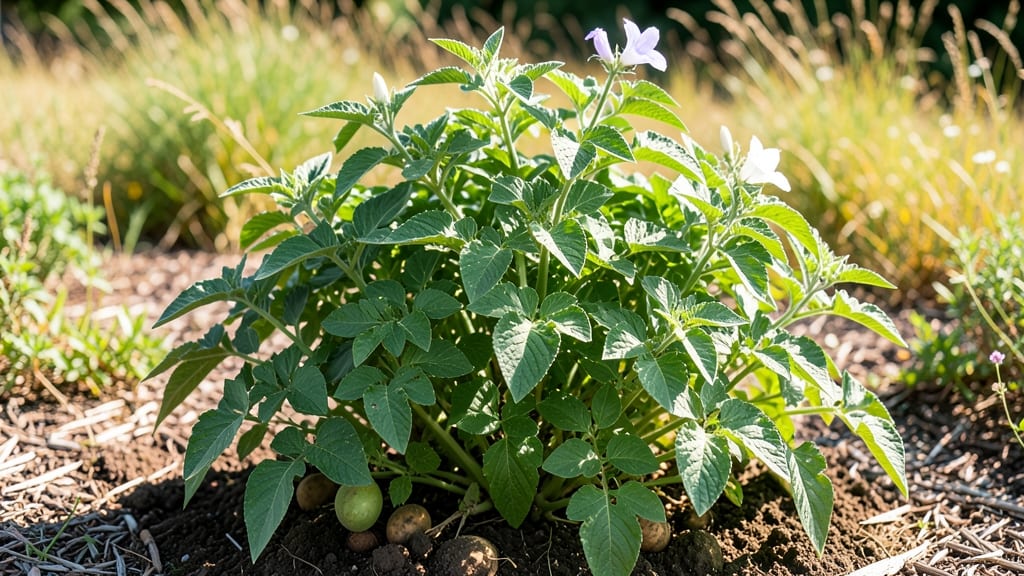
If you've ever wondered "how tall does a potato plant grow", the answer might surprise you—especially when planning your garden layout. These humble 🥔 plants can range from compact 1-foot varieties to sprawling vines reaching nearly 3 feet, depending on the type you choose.
For home gardeners, understanding these height differences is key to maximizing space, whether you're working with raised beds or small urban containers. Some varieties, like early-season potatoes, stay low to the ground, while others—like russets—send up tall, leafy stems that need support.
But here's the catch: taller vines don't always mean bigger harvests. The real secret lies in choosing the right variety for your space and learning how to manage growth without sacrificing yield.
I'll show you exactly how to plan your potato patch for success, no matter how much (or little) room you have.
From dwarf varieties perfect for containers to sprawling types that thrive in hills, we'll cover everything you need to know to grow potatoes that fit your garden—and your goals. Let's dig in!


Potato plant height by variety: a complete growth chart for space planning
Potato plants are surprisingly versatile in size, with some varieties staying compact at just 12 inches while others sprawl up to 3 feet or more. The height of your potato vines directly impacts your garden layout, especially when choosing between raised beds, containers, or vertical gardening systems.
Understanding these differences helps you maximize space without sacrificing yield.
Not all potato plants grow the same way. Early-season varieties like 'Yukon Gold' typically reach 18-24 inches, while late-season types such as 'Russet Burbank' can stretch toward 36 inches.
Even within the same variety, growth habits vary based on soil quality, sunlight, and pruning practices. Let’s break down the specifics so you can plan your garden like a pro.
Why height matters: Taller vines need more vertical space, while compact varieties thrive in small pots or tight garden beds. Some gardeners mistakenly assume taller plants produce bigger tubers—but that’s not always true. The key is balancing vine growth with soil volume and root development.
| Variety Type | Mature Height | Vine Spread | Best For |
|---|---|---|---|
| Dwarf Varieties | 12–18 inches | 12–18 inches | Containers, small gardens |
| Early Season | 18–24 inches | 18–24 inches | Quick harvests, cool climates |
| Mid-Season | 24–30 inches | 24–30 inches | Standard gardens, trellising |
| Late Season | 30–36+ inches | 30–48 inches | Large tubers, deep soil |
| Sprawling Types | 36+ inches | 48+ inches | Hills, mounds, or trellises |
*Height varies by growing conditions and pruning practices.
Take 'Red Pontiac', a mid-season favorite that typically hits 24–30 inches. Its vines spread widely, making it ideal for hill planting or raised beds with at least 12 inches of soil depth.
On the other hand, 'Fingerling' varieties like 'Purple Majesty' stay under 18 inches, perfect for balcony containers or interplanting with carrots or onions.
For vertical gardening, choose compact varieties like 'Rocket' or 'Adirondack Blue' (both under 2 feet). Train their vines up a trellis or cage to save floor space while still producing high-yield tubers.
Just remember: even with vertical support, you’ll need 12–18 inches of soil depth for tubers to develop properly.
One common misconception is that taller vines = bigger potatoes. In reality, soil volume and nutrient availability often play a bigger role in tuber size. For example, a 3-foot-tall 'Russet' might produce fewer but larger potatoes than a 1-foot 'Yukon Gold' in the same 5-gallon container.
If you’re working with limited space, prioritize early-maturing dwarf varieties. They reach harvest size faster and require less vertical room. For example, 'Early Rose' matures in 60–70 days and tops out at 18 inches, making it a great choice for succession planting in small gardens.
Pro tip: Always check the seed packet for specific height ranges. Some heirloom varieties, like 'German Butterball', can surprise you with 3-foot vines if given ideal conditions. Plan accordingly by spacing plants 12–18 inches apart in rows 3 feet apart for adequate airflow and sunlight.
For urban gardeners, container growing is a game-changer. Use 5–10 gallon pots for dwarf varieties and 15+ gallon containers for standard types. Just ensure your container has drainage holes and at least 12 inches of soil depth to accommodate growing tubers.
How potato vine growth affects yield and space requirements
You might assume that taller potato plants automatically mean bigger harvests, but that's not always the case. The height of your potato vines actually plays a surprising role in both yield potential and space efficiency.
For example, russet potatoes can grow up to 3 feet tall with sprawling vines, but their deep-growing tubers often produce fewer but larger potatoes compared to compact varieties.
Compact varieties like Yukon Gold or Red Pontiac typically stay between 12-18 inches tall, making them ideal for small gardens or containers. These shorter varieties often produce more uniform tubers because their energy isn't spread across excessive foliage.
The key is balancing vine growth with tuber development—too much foliage can actually steal nutrients from your potatoes!
Here's the science: Potato plants grow foliage above ground while developing tubers below ground. When vines get too tall without proper support, they can shade the soil, slowing tuber growth.
That's why many gardeners use hilling techniques—piling soil around the stems—to encourage more tuber formation rather than vertical growth.
🌱 Key Takeaway: Vine Height vs. Yield
- Taller vines (2-3 ft): Often produce fewer but larger tubers (e.g., russets). Requires more space and support.
- Medium vines (1-2 ft): Balanced growth with good tuber production (e.g., Yukon Gold). Ideal for most home gardens.
- Compact vines (under 1 ft): High tuber-to-foliage ratio (e.g., Fingerlings). Perfect for containers or small plots.
Pro Tip: Prune excessive foliage early to redirect energy to tuber development without sacrificing height.
If you're growing potatoes in raised beds or containers, vine height becomes even more critical. A 3-foot russet planted in a 5-gallon bucket will quickly outgrow its space, while a 12-inch Red LaSoda will thrive.
The solution? Choose varieties that match your container size—never let vines crowd the edges, as this can lead to blight or poor air circulation.
Another common misconception is that pruning potato vines will reduce yield. In reality, strategic pruning—removing excessive side shoots while keeping the main stem—can actually increase tuber size by 20-30%. Just avoid cutting into the flowering stems, as this is where tuber development is signaled.
For maximum space efficiency, consider vertical growing techniques. Trellising potato vines (especially compact varieties) not only saves space but also improves airflow and sunlight exposure.
I've had success growing Fingerling potatoes in 5-gallon fabric pots with a simple tomato cage—resulting in twice the yield compared to traditional planting in the same square footage. The secret? Keeping the vines upright prevents soil-borne diseases while maximizing light penetration to the tubers below.