
Plants
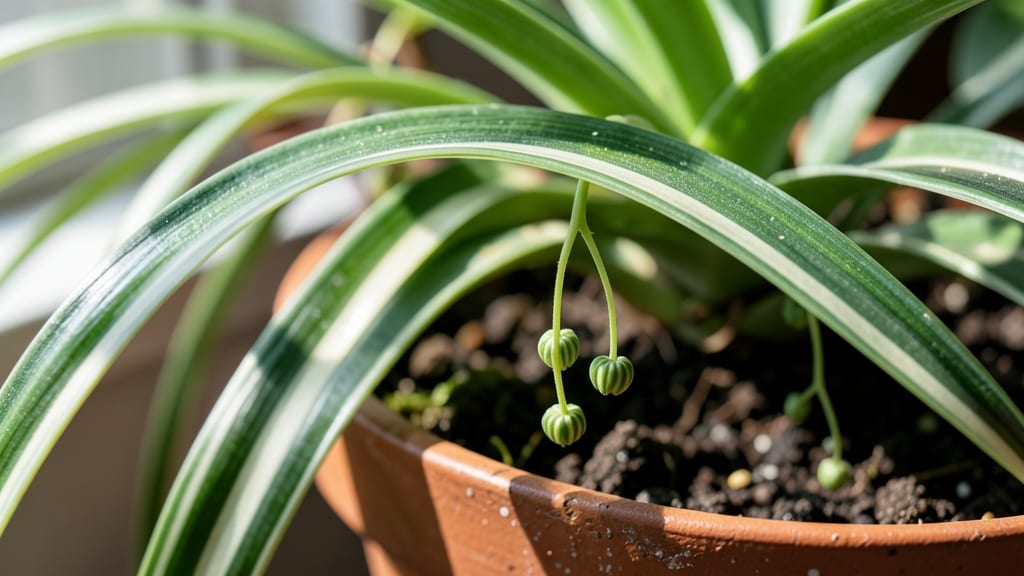
If you're wondering how much light should a spider plant get, your leggy or faded plant is probably giving you the answer—it’s either getting too little or the wrong kind.
These hardy plants thrive in bright indirect light, but most people either overthink their placement or leave them in dim corners where they struggle.
The key to lush Spider Plant growth lies in mimicking their natural habitat under dappled forest light. Too little light causes weak stems and faded variegation, while direct sun burns the delicate leaves.
I'll show you exactly how to strike that perfect balance, whether you're working with a sunny kitchen window or a shady office corner.
You don't need fancy equipment to get this right—just a few simple adjustments can transform your plant's health. We'll cover the ideal light conditions, how to spot when your plant is begging for more (or less) light, and practical tips to create the perfect growing environment year-round.
Let's turn that struggling Spider Plant into a thriving showstopper with just a few light adjustments that take less than 5 minutes to implement. Your plant will thank you with stronger growth and those coveted baby spiderettes in no time.

Optimal light requirements for spider plants: bright indirect sunlight explained
Your spider plant (Chlorophytum comosum) thrives best with bright indirect sunlight, mimicking its natural understory habitat. Too little light leads to leggy, sparse growth, while too much direct sun causes brown leaf tips. Understanding these light requirements is key to keeping your plant lush and healthy year-round.
Ideal light conditions fall between 1000-2000 foot-candles, which is roughly the light level you'd find 2-3 feet from an east-facing window. This moderate brightness allows your spider plant to photosynthesize efficiently without risking sunburn.
Most homes naturally provide this light range in living rooms, kitchens, or offices with filtered sunlight.
🌱 How to Measure Light at Home: Use a light meter app (like "Light Meter" for smartphones) to check your plant's current light exposure. Aim for readings between 500-1500 foot-candles for optimal growth. If your reading is below 500, your plant needs more light; above 2000 indicates potential sunburn risk.
🌿 Spider Plant Light Requirements Summary
| Light Condition | Foot-Candles | Growth Effect | Best Window Placement |
|---|---|---|---|
| Bright Indirect | 1000-2000 | Healthy, lush growth | East or North-facing |
| Low Light | <500 | Leggy, sparse foliage | North-facing (deep shade) |
| Direct Sun | >2000 | Brown tips, sunburn | South or West-facing (no filter) |
Seasonal adjustments are crucial for indoor spider plants. In spring and summer, when sunlight is intense, move your plant further from windows or use sheer curtains to diffuse harsh rays.
During fall and winter, when natural light diminishes, consider supplementing with a grow light for 6-8 hours daily to maintain healthy growth.
Watch for visual cues that indicate your spider plant's light needs. Yellowing leaves or stretched stems signal insufficient light, while brown patches or crispy edges mean it's getting too much direct sun. Adjust placement immediately when you notice these signs to prevent permanent damage.
Outdoor spider plants adapt well to partial shade gardens, especially in hot climates. Place them where they receive morning sun and afternoon shade, such as under dappled tree canopies or on east-facing patios.
In cooler climates, they can tolerate full sun as long as the soil stays consistently moist.
For variegated spider plants, which have striking white or yellow stripes, bright indirect light is even more critical. These varieties need slightly more light than solid green types to maintain their color contrast. Without enough light, the variegation fades, and the leaves revert to solid green.
Pro tip: Rotate your spider plant quarter-turns every 2-4 weeks to ensure even light exposure. This prevents one-sided growth and helps the plant develop a balanced, bushy shape. A well-lit spider plant will reward you with long, arching leaves and abundant spiderettes for propagation.
Remember, spider plants are highly adaptable, but they perform best when given consistent, moderate light. With the right conditions, your plant will thrive for years, becoming a lush, low-maintenance centerpiece in any room. 🕷️
How to adjust your spider plant’s light exposure for maximum growth
Adjusting your spider plant’s light exposure doesn’t have to be complicated. Start by observing its current location—if the leaves are stretching toward the light or turning pale, it’s craving more bright indirect sunlight.
Conversely, crispy brown tips or yellowing leaves mean it’s getting too much harsh direct sunlight. The goal is finding that sweet spot where your plant thrives without stress.
For homes with south-facing windows, place your spider plant at least 3-4 feet away to avoid leaf scorch. Use sheer curtains to diffuse the intensity while still allowing plenty of light through.
If your plant is near a west-facing window, rotate it quarter-turns weekly to ensure even growth and prevent leaning toward the light source.
If your home lacks natural light, grow lights are a game-changer. Opt for full-spectrum LED bulbs (6400K color temperature) and position them 6-12 inches above the plant. Keep them on for 12-14 hours daily to mimic natural daylight cycles.
For extra efficiency, pair your grow light with a timer plug to automate the schedule and ensure consistency.
Seasonal changes also impact light exposure. In summer, move your spider plant away from windows to prevent overheating, while in winter, bring it closer to capitalize on shorter daylight hours. Watch for leaf color shifts—deep green indicates healthy growth, while pale or yellow leaves signal insufficient light.
For outdoor placement, spider plants thrive in partial shade under trees or on shaded patios. Avoid placing them in full sun, which can cause leaf burn.
If moving outdoors, acclimate your plant gradually by exposing it to outdoor conditions for 1-2 hours daily before increasing the duration over a week.
Remember, every home’s light conditions are unique. Experiment with placement and monitor your plant’s response. With the right adjustments, your spider plant will reward you with vibrant variegation and lush, arching foliage in no time! 🌿