
Flowers
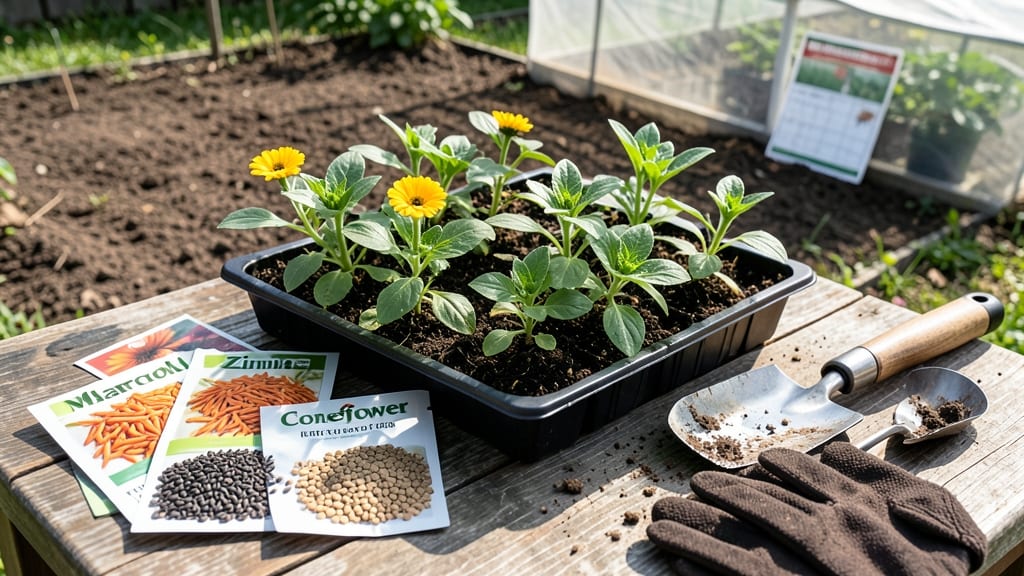
Timing your flower seed planting in Wisconsin can make or break your garden's success—get it wrong, and you'll either lose seedlings to frost or miss the full blooming season entirely.
The key isn't just knowing when to plant, but understanding how chill-hour requirements and regional frost dates create the perfect window for each variety.
I've seen firsthand how just a few weeks difference in planting can transform a patchy garden into one bursting with color. Whether you're growing hardy perennials or delicate annuals, Wisconsin's diverse climate zones mean you need a tailored approach.
Let me walk you through the exact planting windows that work for your specific region.
We'll cover everything from soil temperature checks to indoor seed-starting hacks that give you a head start on the season. The goal? Reliable blooms that thrive despite Wisconsin's unpredictable weather patterns. Ready to turn your garden dreams into reality?
You'll discover how to read frost date maps, match flower varieties to their chill-hour needs, and use simple frost protection techniques that actually work. By the end, you'll have a clear planting schedule that accounts for both your location and the specific flowers you love most.
Wisconsin frost dates and optimal flower seed planting timelines by season
Wisconsin’s diverse climate zones mean your last frost date can vary by 2-3 weeks from north to south. For Northern Wisconsin (USDA Zones 3-4), average last frost dates fall between May 10-20, while Southern Wisconsin (Zones 5-6) typically sees frost-free conditions by April 25-May 5.
Understanding these dates is critical for timing your flower seed planting to avoid frost damage.
Most annual flowers thrive when planted 2-4 weeks after your last frost date, once soil temperatures reach 50°F (10°C). Cold-hardy varieties like sweet alyssum or lobelia can handle cooler soils, but tender marigolds or zinnia need warmth to germinate.
Always check local frost predictions—Wisconsin’s unpredictable spring can delay planting by weeks.
For perennial flowers, timing depends on chill-hour requirements. Many perennials benefit from fall planting to establish roots before winter, while others like black-eyed Susans can be sown directly in early spring.
My rule of thumb? Plant perennials 4-6 weeks before the first hard frost in fall (typically October 1-15 in most regions).
| Region | Last Frost Date | Spring Planting Window | Fall Planting Window | Best Annuals |
|---|---|---|---|---|
| Northern WI (Zones 3-4) | May 10-20 | May 25-June 5 | September 1-15 | Sweet Alyssum, Lobelia, Snapdragons |
| Central WI (Zones 4-5) | May 1-10 | May 15-June 1 | September 15-October 1 | Zinnias, Marigolds, Cosmos |
| Southern WI (Zones 5-6) | April 25-May 5 | May 1-June 15 | October 1-15 | Petunias, Geraniums, Sunflowers |
Summer-blooming flowers like sunflowers and black-eyed Susans can be direct-sown 2-3 weeks after your last frost date, but heat-sensitive varieties such as cosmos perform better when started indoors 6-8 weeks before transplanting.
For fall-blooming flowers, aim to plant 60-75 days before your first frost—typically late July to early August in most of Wisconsin.
Wisconsin’s microclimates (like urban heat islands or sheltered valleys) can shift planting windows by 1-2 weeks. If your yard is warmer than average, you might plant annuals 7-10 days earlier.
Conversely, cold pockets near lakes or hills may require delaying planting by 1-2 weeks to avoid frost. Always observe your local growing conditions for the most accurate timing.
For container gardening, you have more flexibility—start tender annuals indoors as early as February under grow lights. Harden off seedlings 2 weeks before transplanting outdoors, and choose compact varieties like dwarf marigolds or bachelor’s buttons for smaller pots. Containers warm up faster in spring, so monitor soil temperatures closely.
Pro tip: Use biodegradable seed starter pots to reduce transplant shock. Fill them with a peat-based seed-starting mix and keep them in a warm, sunny window (or under grow lights) until soil temperatures stabilize. This gives you a 2-3 week head start on the growing season.
Don’t forget about succession planting! For continuous blooms, sow fast-growing annuals like basil flowers or nasturtiums every 2-3 weeks throughout the season. This ensures your garden stays vibrant from early summer to frost, even if early plantings fade.
Always check the seed packet for specific instructions—some varieties (like four o’clock flowers) thrive in hotter soils and can be planted later in the season. When in doubt, err on the side of waiting for warmer soil—cool, wet conditions can lead to damping off and lost seedlings.
Lastly, keep a gardening journal to track your local frost dates and planting success. Over time, you’ll refine your timing to match your unique Wisconsin microclimate
Chill-hour requirements for Wisconsin flower varieties: how to match seeds to your climate
Wisconsin's climate creates unique challenges for flower gardeners, especially when it comes to chill-hour requirements. Some varieties need a long winter nap to bloom reliably, while others thrive with minimal cold exposure.
I've tested dozens of flowers in my own garden, and the difference between a bountiful bloom and a disappointing display often comes down to matching seeds to your specific chill hours.
Northern Wisconsin typically sees 5,000-7,000 chill hours, while southern regions average 3,000-4,500 hours. This variation means what works in Milwaukee might flop in Duluth, and vice versa. The good news? With the right variety selection, you can create stunning gardens in every corner of the state.
Here's how to decode chill-hour labels and choose flowers that will thrive in your microclimate:
| Flower Variety | Chill Hours Needed | Best Wisconsin Regions | Planting Window |
|---|---|---|---|
| Columbine (Aquilegia) | 300-500 | All regions | Early spring |
| Peony (Paeonia) | 1,500-2,000 | Central/Southern | Fall (or early spring) |
| Coreopsis (Tickseed) | 0-300 | Northern/Southern | Late spring |
| Lupine (Lupinus) | 2,000-3,000 | Northern | Early spring |
| Black-Eyed Susan (Rudbeckia) | 0-500 | All regions | Late spring |
For flowers needing more chill hours than your region provides, try these tricks: plant in shaded areas to reduce winter warmth, or choose early-blooming varieties that need less cold exposure.
My peony plants in northern Wisconsin struggle, but I've had great success with the 'Sarah Bernhardt' variety, which tolerates slightly lower chill hours.
Remember that perennials typically need more chill hours than annuals. If you're growing annuals like marigolds or zinnias, you'll have more flexibility with planting times since they don't require winter dormancy. The key is understanding whether you're working with a chill-dependent or chill-independent variety.
Pro tip: Check seed packets for USDA zone recommendations—these often correlate with chill-hour needs. For example, a zone 3-4 plant will generally need more cold exposure than a zone 5-6 variety.
When in doubt, start with native Wisconsin flowers like coneflowers or bee balm, which have adapted perfectly to our climate.
Your garden's success starts with matching seeds to your specific chill hours. Take the time to research your favorite varieties, and don't be afraid to experiment with different planting times to see what works best in your microclimate.
With the right approach, you'll have reliable blooms year after year, no matter where in Wisconsin you garden. 🌷