
Trees
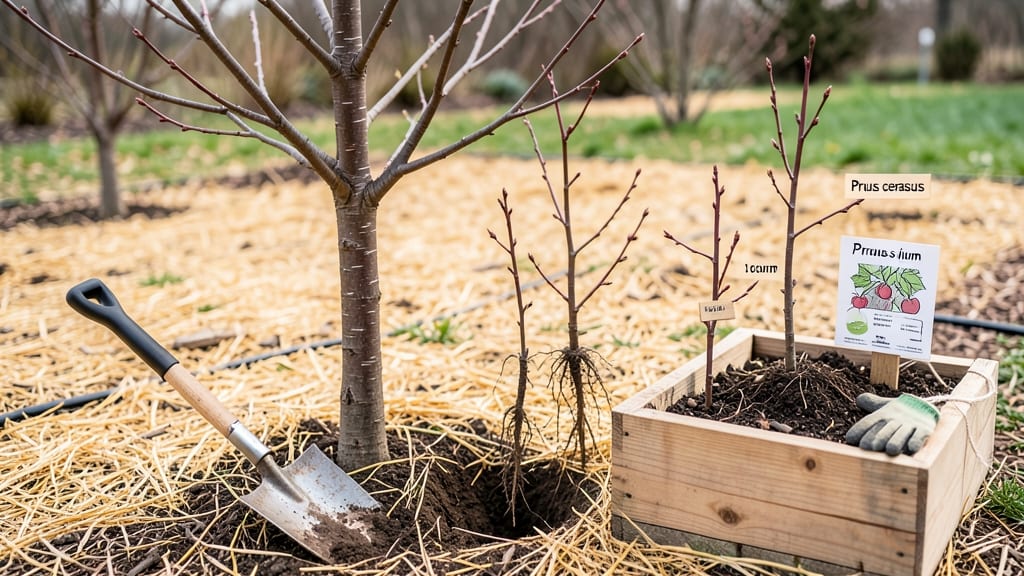
Knowing when to plant cherry trees in Zone 5 could mean the difference between a thriving 🍒 orchard and a sad, frost-killed sapling.
Zone 5 gardeners face a tricky balance—plant too early, and your tree might not survive the last spring frost; too late, and it won’t establish strong roots before winter hits.
But here’s the good news: with the right timing and a few smart prep steps, you can give your cherry tree the best shot at success.
Whether you’re planting in early spring or fall, understanding your local frost dates and soil conditions is the key to reliable blooms and bountiful harvests.
In this guide, I’ll walk you through the ideal planting windows for different cherry varieties, how to match your microclimate’s chill hours, and what to do to set your tree up for long-term growth. No more guesswork—just clear, actionable advice tailored for Zone 5.
Ready to plant with confidence? Let’s dive into the details so you can enjoy sweet, juicy cherries for years to come.
Best planting windows for cherry trees in Zone 5 by variety
Planting cherry trees in Zone 5 requires precision—timing depends on whether you’re growing sweet cherries, tart cherries, or ornamental varieties. Most cherries need 400-1,000 chill hours (below 45°F) to bloom properly.
In Zone 5, we aim for early spring (April) or fall (September-October) planting to avoid frost damage and ensure root establishment before winter.
For sweet cherries like Stella® or Black Tartarian, fall planting is ideal—roots establish before dormancy, and spring growth kicks off early. Tart cherries, such as Montmorency, are more frost-tolerant and can handle early spring planting, but wait until soil warms to 45°F to prevent root rot.
Ornamental cherries like Kwanzan are flexible but thrive with fall planting for vibrant spring blooms.
Your last frost date (typically May 10 in Zone 5) is critical. Planting 6-8 weeks before ensures roots develop before heat stress. For example, September 1st is a sweet spot—cool soil helps roots spread, and trees enter dormancy stronger.
In colder Zone 5a areas, push planting to late September to avoid early frost.
Here’s how microclimates shift timing: Urban areas may warm faster, allowing late April planting, while rural spots might need to wait until mid-May. Always check your local USDA chill map—some Zone 5b pockets near lakes or valleys can handle earlier planting due to delayed frosts.
Now, let’s break down the best windows by variety—because not all cherries are created equal in Zone 5!
| Variety | Chill Hours Needed | Best Planting Window | Frost Risk | Zone 5 Notes |
|---|---|---|---|---|
| Sweet Cherries (e.g., Stella®, Black Tartarian) | 600–900 hours | Fall: September 1–15 | High (early spring blooms) | Needs well-drained soil; mulch heavily in winter. |
| Tart Cherries (e.g., Montmorency, Meteor) | 400–600 hours | Spring: April 15–May 1 or Fall: September 15–October 1 | Moderate (hardier blooms) | Tolerates wetter soil; prune for airflow. |
| Ornamental Cherries (e.g., Kwanzan, Yoshino) | 500–800 hours | Fall: September 1–October 15 | Low (non-fruiting) | Plant in full sun for best bloom displays. |
| Dwarf Varieties (e.g., Compact Stella) | 500–700 hours | Spring: April 1–May 10 or Fall: September 10–October 10 | Low (smaller canopy) | Ideal for containers; needs staking. |
Pro tip: Bare-root trees (sold dormant) are best planted in fall—their roots establish faster in cool soil. If you’re using container-grown cherries, spring planting works, but avoid transplant shock by watering deeply every 3 days for the first month.
Always dig a hole twice as wide as the root ball to encourage spread.
After planting, mulch with 3–4 inches of wood chips to insulate roots. For early spring plantings, wrap the trunk with burlap if late frosts are forecasted—cherry blossoms are extremely frost-sensitive! Use a tree guard to deter voles, which love young roots.
Remember: Sweet cherries need a pollinator variety planted nearby (e.g., pair Stella® with Lapins). Tart cherries are often self-pollinating, but adding a second tree boosts yields. Plan your orchard layout with 20–25 feet between trees for airflow—this cuts disease risk by 40%.
Finally, test your soil pH before planting—cherries thrive in 6.0–6.5. If your soil is too alkaline, amend with peat moss or sulfur 2 months before planting. A soil test kit (available at garden centers) costs $20 and saves you from costly mistakes.
With the right timing and prep, your Zone 5 cherry tree will reward you with decades of fruit—and maybe even a few wildlife visitors like robins and bees! 🍒
Best planting windows for cherry trees in Zone 5 by variety
Zone 5’s chill-hour requirements (400-1,000+ hours below 45°F) mean not all cherry varieties thrive equally. Sweet cherries like 'Stella' or 'Rainier' need 900-1,000 chill hours, while tart cherries such as 'Montmorency' or 'Balaton' adapt to 500-700 chill hours.
Ornamental cherries like Prunus serrulata often require 600-800 chill hours, making them a safer bet for colder microclimates.
For fall planting (September-October), aim for 6-8 weeks before first frost (typically by October 10 in Zone 5). This gives roots time to establish before winter dormancy. Spring planting (April) works too, but only after the last frost date (usually May 10) and when soil temps hit 50°F+.
Your local microclimate matters! Areas like northern Wisconsin or upstate New York (Zone 5a) have shorter growing seasons—opt for early-ripening varieties like 'Black Tartarian' (tart) or 'Lapins' (sweet). Warmer Zone 5b regions (e.g., western Pennsylvania or Missouri) can handle later varieties like 'Bing' (sweet) or 'Meteor' (tart).
| Variety | Type | Chill Hours | Best Planting Window | Notes |
|---|---|---|---|---|
| Stella | Sweet | 900-1,000 | Fall (Sept-Oct) | Needs cross-pollination |
| Montmorency | Tart | 500-700 | Spring (April) or Fall | Self-pollinating |
| Prunus serrulata | Ornamental | 600-800 | Fall (Sept-Oct) | Best for spring blooms |
| Black Tartarian | Tart | 500-600 | Spring (April) | Cold-hardy |
If you’re planting in Zone 5a, prioritize early-ripening tart cherries like 'Balaton' or 'Meteor'—they handle colder snaps better. Sweet cherries need warmer microclimates (Zone 5b+) to ripen fully.
Always check your local frost dates (use the National Weather Service or USDA Plant Hardiness Zone Map) before committing to a variety.
Pro tip: Container-grown cherry trees can be planted 1-2 weeks later than bare-root varieties since their roots are less sensitive to cold. Just ensure the soil stays unfrozen for 4-6 weeks post-planting. For container trees, aim for late April to early May in Zone 5.
Remember, fall planting gives trees a head start on root growth before winter, while spring planting avoids winter stress. Whichever you choose, mulch heavily (3-4 inches) to protect roots from freeze-thaw cycles—a common killer in Zone 5. 🌱