Plants
If you've ever wondered when to plant caladiums in Texas, timing is the secret to those jaw-dropping leaves you see gracing gardens from summer through fall.
These tropical beauties 🌿 won't tolerate frost, so getting them in the ground just right means the difference between a stunning display and a sad, wilted disappointment.
Texas gardeners know the drill—waiting until after that last frost (usually mid-March in most regions) is non-negotiable. But here's the kicker: soil temperature matters just as much as calendar dates.
Planting too early when the ground is still cool can leave your caladiums struggling, while waiting too long risks missing out on their full potential.
I've learned the hard way that these plants thrive when soil hits 65°F or warmer, which typically aligns with late March to early April in Texas.
That's your sweet spot for planting, but don't worry if you're new to this—we'll break down exactly how to tell when your soil is ready and what to do to give your caladiums the best possible start.
Whether you're a seasoned gardener or just starting out, mastering this timing will transform your garden into a vibrant showcase. Let's dive into the specifics so you can enjoy those stunning leaves all season long without the guesswork.
Texas caladium planting timeline: frost-free dates by region
Caladiums thrive in Texas’s warm climate, but timing is critical—these tropical tubers won’t survive frost, and planting too late means missing their summer-to-fall foliage show. The perfect window depends on your USDA zone (7a–10b) and last frost date, which can vary by 1–2 months across the state.
In North Texas (Zones 7a–8a), like Dallas and Fort Worth, the last frost typically falls between February 15–March 15. Wait until after March 1 to plant, but also ensure soil temps hit 65°F+—use a soil thermometer to confirm.
Meanwhile, Central Texas (Zones 8a–9a), including Austin and San Antonio, sees last frosts by mid-February, so you can start as early as late February.
South Texas (Zones 9b–10b), like Houston and the Rio Grande Valley, has no frost risk after early February, but soil warmth is still key. Plant February–March for peak performance, but avoid mid-summer heat (June–August), which can stress tubers. Microclimates matter too—urban areas (like downtown Houston) warm faster than rural zones.
| Region | USDA Zone | Last Frost Date | Ideal Planting Window | Soil Temp Threshold |
|---|---|---|---|---|
| North Texas | 7a–8a | Feb 15–Mar 15 | After March 1 | 65°F+ |
| Central Texas | 8a–9a | Mid-February | Late Feb–Early Mar | 65°F+ |
| South Texas | 9b–10b | Early Feb (rare) | Feb–Mar (avoid June–Aug) | 60°F+ |
For container gardening, you can push the envelope slightly—start tubers indoors in January under grow lights, then transplant after last frost. This trick works well for Zone 7a gardeners who want an earlier display. Just acclimate plants outdoors gradually to avoid transplant shock.
Pro tip: Monitor weather forecasts the week before planting. A cold snap can delay germination by 2–4 weeks, so have a row cover ready to protect young shoots.
In East Texas (humid microclimates), plant earlier (February) to avoid fungal diseases like leaf spot, which thrive in hot, wet conditions.
Remember, caladiums are slow to emerge—don’t panic if you don’t see sprouts for 4–6 weeks. Patience pays off with bold foliage by late May, just in time for summer container displays. Use this timeline to sync planting with your garden’s peak color schedule.
If you’re in West Texas (drier zones), focus on water retention—mulch heavily with straw or pine needles to keep roots cool. Overhead watering can spread disease, so use drip irrigation instead. For shade-loving varieties like ‘White Queen,’ plant under trees by mid-April to avoid leaf scorch.
Finally, mark your calendar for September–October—that’s when you’ll dig up tubers before the first frost. Store them in dry peat moss at 60°F until next year. Timing your harvest right ensures healthy tubers for next season’s vibrant display. 🌿
Soil warmth and pre-planting preparation for caladium success
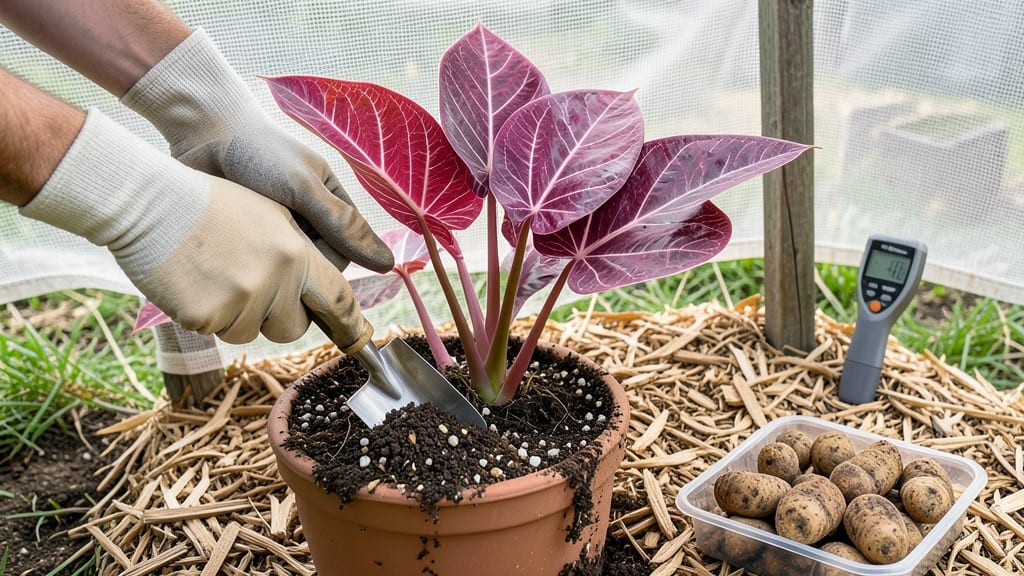
Before you rush to plant those caladium tubers, checking your soil temperature is the first rule of thumb. These tropical plants won’t sprout until the ground warms to at least 65°F.
In Texas, that usually means waiting until late March or early April, but don’t rely on the calendar—use a soil thermometer to confirm.
Texas gardeners often deal with clay-heavy soil, which can stay cool longer and drain poorly. Amend your beds with compost or aged manure to improve drainage and warmth retention. A 2-3 inch layer of compost mixed into the top 6 inches of soil works wonders for caladiums.
Here’s how I prepare my garden beds for planting: I start by loosening the soil with a broadfork to about 12 inches deep. This helps roots penetrate easily and prevents waterlogging, which is a common issue with caladiums in Texas’ heavy clay.