
Plants
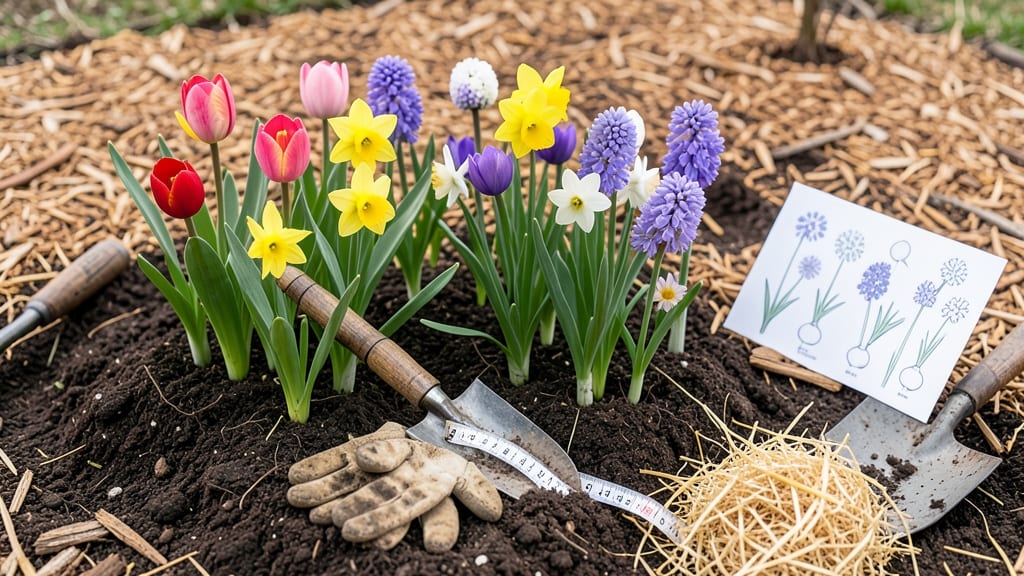
If you've ever stared at your calendar in October wondering whether to plant those Spring Flowering Bulbs 🌷 before the first frost hits Iowa, you're not alone.
The difference between a stunning spring garden and a missed opportunity often comes down to timing—and getting it wrong can mean waiting another year for those cheerful blooms.
Iowa's USDA zones 5a-5b create a unique challenge, where late fall frost can sneak in earlier in northern areas while southern Iowa might still feel a hint of summer in November.
But here's the good news: with a few simple rules, you can nail the perfect window for planting daffodils, tulips, crocuses, and hyacinths that'll reward you with vibrant color come spring.
I'll break down exactly when to plant each type of bulb for maximum success, including how to adjust for Iowa's microclimates and soil conditions. You'll learn the 4-week rule that separates thriving bulbs from wasted effort, plus pro tips to handle Iowa's unpredictable weather patterns.
Whether you're a seasoned gardener or just starting your first bulb garden, these insights will help you plant with confidence—so you can enjoy your April-May blooms instead of wondering what went wrong. Let's get those bulbs in the ground the right way!
Iowa bulb planting timeline by frost zone (zone 4-5 guide)
Iowa’s USDA zones 4-5 create distinct planting windows—northern Iowa (zone 4) freezes earlier than southern Iowa (zone 5). Aim to plant bulbs 6 weeks before the first hard frost, which typically lands in mid-October for most of the state.
For northern Iowa, this means early September planting, while southern regions can wait until late September or October.
Fall-planted bulbs like tulips and daffodils need time to establish roots before winter. In Iowa, this means October is ideal for most gardeners, but don’t wait past mid-November—soil too cold will stunt root growth. Use your last frost date (check Iowa State University’s frost maps) as your deadline.
Here’s how to adjust for Iowa’s microclimates. Northern counties (e.g., Sioux City) should plant by September 15, while southern areas (e.g., Des Moines) can extend to October 15. Even within cities, urban heat islands can delay frost by a week or more.
Iowa Bulb Planting Window by Zone
| Zone | Ideal Planting Month | Last Chance (Before Frost) | Soil Temp Goal (°F) |
|---|---|---|---|
| Zone 4 (North) | Early September | Mid-October | 50-60°F |
| Zone 5 (South) | Late September | Late October | 50-60°F |
| Urban Heat Islands | October | Early November | 45-55°F |
*Use a soil thermometer to verify temps—bulbs need 6 weeks of root growth before winter.
For early bloomers like crocus, plant as soon as soil is workable in September. These hardy bulbs tolerate colder soils, but daffodils and tulips need warmer temps to root.
If you miss the fall window, spring planting is possible for some varieties (like tulips), but blooms will be smaller.
Iowa’s heavy clay soil can delay planting if soggy. Wait until soil drains well—stick a trowel in the ground; if it comes out clean, it’s ready. Amend with compost or sand to improve drainage, especially in low-lying areas where water pools.
Pro tip: Mark your planting calendar with Iowa’s average frost dates. Northern Iowa’s first frost often hits October 10-15, while southern Iowa may see October 25-30. Use this as your 6-week countdown to planting.
If you’re unsure about your zone, check the Iowa State University Extension’s frost maps or use a frost date calculator. Local garden centers also track frost trends—ask for their recommendations based on your county.
Remember: Early planting = bigger blooms. Bulbs planted in September often produce 2-3 times more flowers than those planted in November. Don’t rush—patience pays off with Iowa’s unpredictable winters.
Best bulbs to plant in Iowa by bloom season (spring vs. fall)
Iowa’s spring-flowering bulbs need careful selection to thrive in USDA zones 4-5. Daffodils, tulips, and alliums dominate spring gardens, but each has unique timing and care needs. For fall-blooming varieties like crocus, planting early ensures vibrant early spring color. Let’s break down the best options for your Iowa garden.
Start with daffodils (Narcissus), the hardiest choice for Iowa. Their early spring blooms (March-April) mean they tolerate late frosts better than tulips. Plant 6-8 weeks before ground freezes, typically by mid-October in northern Iowa and late October in southern Iowa.
These bulbs hate wet soil, so amend clay-heavy areas with compost.
Tulips (Tulipa) need cooler soil to form buds, making them perfect for Iowa’s fall planting. Aim for September-October timing, with standard tulips planted deeper (6-8 inches) than dwarf varieties (4-6 inches). After blooming, let foliage die back naturally to recharge bulbs for next year’s flowers.
Alliums (Allium spp.) bring dramatic late spring blooms (May-June) and thrive in Iowa’s heat. Plant globemaster alliums in October at 6-8 inches deep for their 2-foot-tall purple spheres. These bulbs love full sun and well-draining soil, making them ideal for rocky or poor-soil areas.
For early spring color (February-March), try crocus (Crocus spp.) and hyacinths (Hyacinthus). Crocus needs shallow planting (2-3 inches deep) and blooms even through snow. Hyacinths, with their intense fragrance, should go in October at 6 inches deep in well-drained soil to prevent rot.
| Bulb Type | Best Planting Month | Planting Depth | Bloom Time | Iowa-Specific Tip |
|---|---|---|---|---|
| Daffodils | October (northern IA) / Late October (southern IA) | 6-8 inches | March-April | Tolerates wet soil better than tulips |
| Tulips | September-October | 6-8 inches (standard) / 4-6 inches (dwarf) | April-May | Plant in cooler soil for better bud formation |
| Alliums | October | 6-8 inches | May-June | Drought-tolerant; great for hot Iowa summers |
| Crocus | September-October | 2-3 inches | February-March | Blooms through snow; plant shallow |
| Hyacinths | October | 6 inches | April-May | Needs well-drained soil to prevent rot |
Pro tip: Mix early bloomers (crocus) with late bloomers (alliums) for continuous color. In Iowa’s alkaline soil, add sulfur or peat moss to lower pH for acid-loving hyacinths. Always plant bulbs in well-draining soil—Iowa’s clay can suffocate roots if too compacted.
For long-lasting displays, group bulbs by height and color. Start with tall alliums at the back, medium tulips in the middle, and low daffodils in front. Mulch with 2-3 inches of straw after planting to insulate bulbs from Iowa’s fluctuating fall temperatures.