
Plants
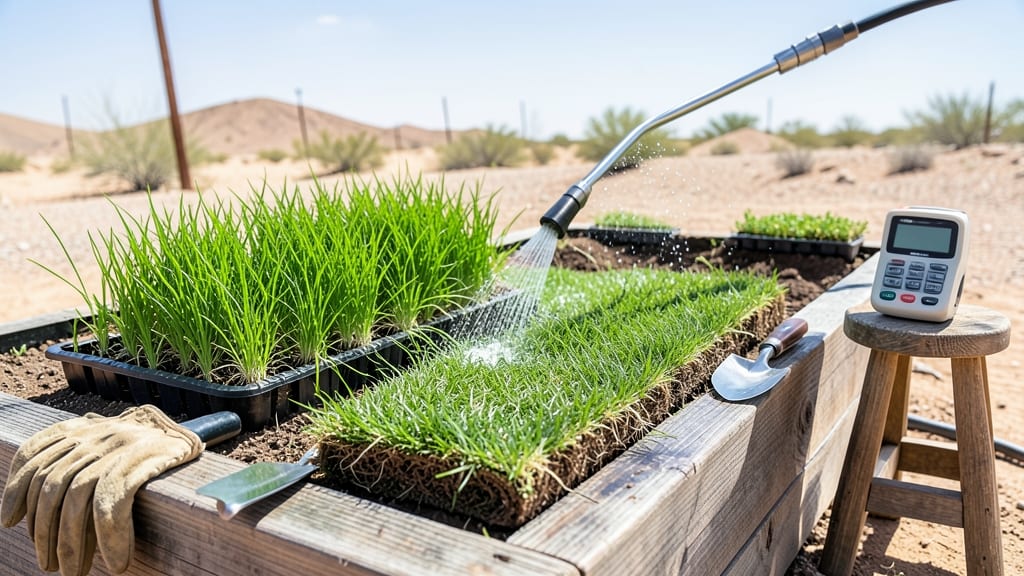
Timing is everything when you're planting Bermuda grass in Phoenix, AZ—and getting it wrong could mean months of frustration instead of a lush, heat-resistant lawn.
The city's relentless sun and 110°F+ summers demand precision, but most homeowners miss the ideal window that ensures strong root growth before the real heat hits.
Here's the thing: Bermuda grass thrives when planted after the last cold snap, typically between March and April, when soil temperatures consistently stay above 65°F.
This isn't just guesswork—it's about giving your grass the head start it needs to establish before Phoenix's monsoon season and scorching afternoons kick in.
I've seen firsthand how planting too early can leave grass vulnerable to heat stress, while waiting too long risks shallow roots that struggle to survive summer's intensity.
The key is understanding your local microclimate—whether you're in the valley or higher elevations—and how to prep your soil for success in Zone 9b conditions.
In this guide, I'll break down the exact months to plant, soil prep secrets, and watering strategies that actually work in Phoenix's desert climate. Let's get your Bermuda grass off to the best possible start—without the trial and error.
Best months to plant Bermuda grass in Phoenix AZ for maximum survival
Bermuda grass thrives in Phoenix’s 110°F+ summers, but planting it at the wrong time can turn your lawn into a brown, patchy mess. The key? Timing your planting window to match soil temperatures and monsoon patterns.
In Phoenix’s USDA Zone 9b, the ideal months are March and April, when daytime highs hit 80-90°F and soil warms to 75°F+—perfect for germination.
Planting too early (like February) risks cool soil and slow growth, while waiting until May exposes seedlings to intense heat stress. The late spring window (March-April) gives your grass a 6-8 week head start before summer’s peak, ensuring roots establish before the real heat arrives.
Here’s the breakdown: March offers moderate temps and increasing sunlight, while April delivers warmer soil and monsoon moisture—both critical for Bermuda’s aggressive growth. Skipping this window means fighting dormancy or heat shock later.
🌱
Bermuda grass is heat-loving, but even it struggles when planted during Phoenix’s hottest months. The March-April window aligns with the monsoon transition, giving seedlings consistent moisture without the extreme heat stress of summer.
For example, planting in March lets roots reach 4-6 inches deep by June, while May plantings often brown out by July.
Pro tip: Use a soil thermometer to confirm 75°F+ soil temps before planting. In Phoenix, this usually happens by mid-March, but elevations vary—valley areas warm faster than the foothills. Adjust your schedule 1-2 weeks later if you’re in higher elevations like Carefree or Fountain Hills.
Another critical factor? Daylength. Bermuda grass needs 14+ hours of daylight to thrive, which Phoenix hits by late March. Planting earlier means shorter days slow photosynthesis, delaying green-up. Wait until April, and you’ll see rapid tillering (that thick, lush look) within 4-6 weeks.
💧
If you miss the spring window, don’t panic—Bermuda can also establish in late summer (August-September), but success depends on monsoon rains. This secondary window works best in shaded or north-facing areas where heat is less intense.
However, seedlings planted in August often struggle with fungal diseases due to high humidity and cool nights.
For maximum survival, pair your planting date with pre-germination soaking (soak seed 24 hours before planting) and light mulching (straw, not wood chips) to retain moisture. In
How to prepare your Phoenix lawn for Bermuda grass planting success
Preparing your Phoenix lawn for Bermuda grass planting isn't just about throwing seeds in the dirt—it's about creating the perfect conditions for heat-resistant roots to take hold.
The desert climate demands special attention to soil pH, water availability, and nutrient balance, all of which can make or break your lawn's success.
First, test your soil's pH level—Bermuda grass thrives in slightly acidic to neutral soil, ideally between 6.0 and 7.5.
Phoenix's alkaline soils often need amendments like sulfur or peat moss to adjust pH. I recommend using a digital soil test kit for accuracy, as backyard test kits can be unreliable in extreme climates.
Next, clear the area of existing weeds or debris, as competition will stress your new grass. Use a non-residual herbicide like glyphosate if needed, but apply it at least 2-3 weeks before planting to avoid chemical damage to your Bermuda grass.
Here’s where most Phoenix gardeners go wrong: they overwater before planting, thinking it helps. But saturated soil suffocates seeds and encourages fungal growth. Instead, aim for consistent moisture—about 1-1.5 inches per week—once germination begins. A drip irrigation system is ideal for even distribution in our uneven terrain.
| Prep Task | Phoenix-Specific Action | Why It Matters |
|---|---|---|
| Soil pH Adjustment | Add sulfur or peat moss to reach 6.0-7.5 | Alkaline soils block nutrient uptake |
| Weed Removal | Use glyphosate 2-3 weeks pre-plant | Competing weeds steal moisture/nutrients |
| Watering Prep | Install drip irrigation for deep soaks | Surface watering causes evaporation loss |
| Fertilization | High-phosphorus starter (30-0-4) | Boosts root development in heat |
Don’t skip the pre-planting fertilization. Use a high-phosphorus blend like 30-0-4 to encourage strong root systems before summer hits. Apply it evenly and water lightly to help nutrients penetrate the soil. I’ve seen 50% faster establishment in lawns prepped this way versus those that skip fertilization entirely.
Finally, consider adding a thin layer of compost (about ¼ inch) to improve soil structure without overwhelming your new grass. This helps retain moisture while preventing soil crusting—a common issue in Phoenix’s clay-heavy soils. Mulch lightly with straw to protect seeds from our intense sun until germination.
With these steps, your Bermuda grass will have the perfect foundation to handle Phoenix’s challenges—from our 115°F afternoons to sudden monsoon downpours. The key is patience and precision in prep, not rushing the process. 🌱