
Trees
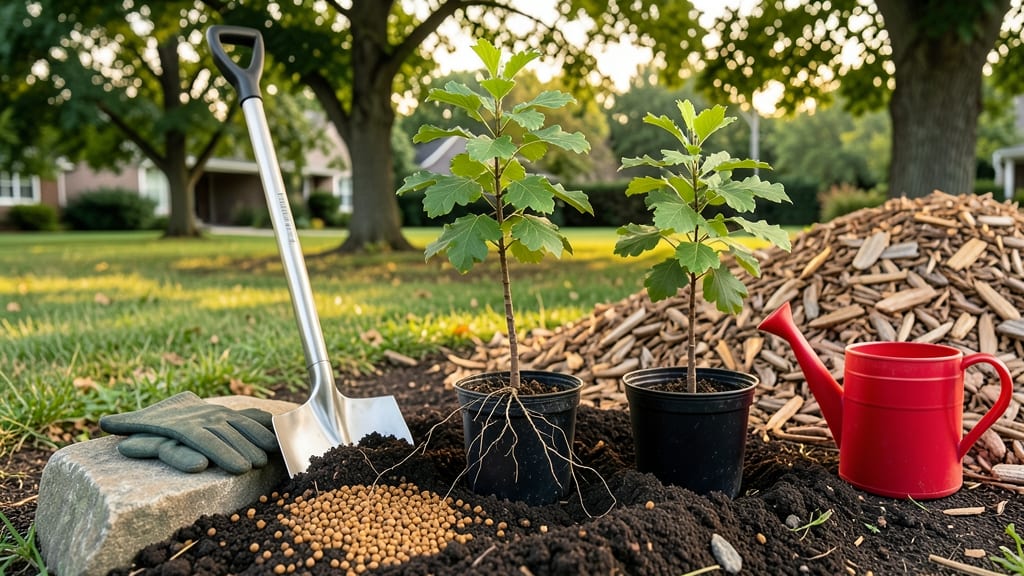
If you’ve ever wondered why some trees in Colorado seem to thrive while others struggle, the answer might surprise you: planting at the wrong time can make all the difference.
Whether you're a seasoned gardener or a first-time tree planter, getting the timing right ensures your 🌳 establishes strong roots before Colorado’s unpredictable winters hit.
Colorado’s USDA zones 5-7 create unique challenges, with frost dates that vary dramatically from the Front Range to the mountains. Planting too early risks frost damage, while waiting too long can leave young trees vulnerable to drought or extreme heat.
The key is understanding when soil conditions and weather align for success.
In this guide, I’ll break down the best months to plant trees in your specific zone, plus pro tips for preparing soil and caring for your new addition. Whether you’re planting a shade tree or an evergreen, timing is everything—and I’ve got the zone-specific deadlines you need.
Ready to give your tree the best possible start? Let’s dive into the science and strategies that make all the difference in Colorado’s high-altitude climate.
Colorado’s USDA zones & their ideal tree-planting windows
Colorado’s diverse USDA zones (3-8) create unique challenges for tree planting. High-altitude zones like zone 3 (elevation 6,000+ ft) have shorter growing seasons, while zone 7 (elevation 4,500-5,500 ft) offers more flexibility.
The key is planting when soil temperatures stay above 40°F (4°C) for 2-3 weeks, ensuring roots establish before winter’s freeze.
For bare-root trees, late winter to early spring (March-April) is ideal—roots wake up but soil isn’t frozen. Container-grown trees can handle fall planting (September-October) since they’re less stressed. Evergreens like Ponderosa Pine prefer fall, while deciduous trees like Colorado Blue Spruce thrive in spring.
Timing also depends on microclimates. Urban Denver (zone 6) has later frosts than rural Grand Junction (zone 7a). Always check your local last frost date—Colorado’s ranges from April 15 (mountains) to May 1 (front range).
| USDA Zone | Best Planting Window | Soil Temp Threshold | Key Consideration |
|---|---|---|---|
| Zone 3 (6,000+ ft) | Late April–May (spring) or early Sept (fall) | 45°F (7°C) minimum | Short season; prioritize drought-resistant species |
| Zone 4 (5,000–6,000 ft) | March–April (spring) or Sept–Oct (fall) | 40°F (4°C) minimum | Watch for late spring frosts in valleys |
| Zone 5 (4,500–5,000 ft) | April–May (spring) or Sept (fall) | 42°F (6°C) minimum | Ideal for aspen and cottonwood |
| Zone 6 (3,500–4,500 ft) | March–April (spring) or Sept–Oct (fall) | 40°F (4°C) minimum | Denver’s zone; blue spruce thrives here |
| Zone 7 (2,500–3,500 ft) | Feb–March (spring) or Oct–Nov (fall) | 38°F (3°C) minimum | Longer season; fruit trees do well |
Spring planting lets trees establish roots before summer’s drought stress. Fall planting avoids summer heat but requires 6-8 weeks for roots to harden before freeze. For container-grown trees, you can plant anytime soil isn’t frozen—just water deeply afterward.
Colorado’s elevation variations complicate timing. A tree planted in zone 4 Boulder may struggle if moved to zone 6 Colorado Springs without adjusting. Always research your specific microclimate—urban areas warm faster than rural zones.
Pro tip: Use a soil thermometer to confirm temperatures. Roots need consistent warmth to grow. In zone 3, wait until soil hits 45°F (7°C)—earlier planting risks frost damage.
Evergreens like Engelmann Spruce need fall planting to avoid winter desiccation. Deciduous trees like Quaking Aspen can handle spring planting. Match your species to the season for maximum survival rates.
Remember: Root growth > Top growth. A tree planted in ideal timing will focus energy on roots, not leaves—critical for Colorado’s dry summers and harsh winters.
Colorado’s USDA zones & their ideal tree-planting windows
Colorado’s USDA zones 3-8 create distinct planting windows, but the golden rule is simple: plant when soil is workable but not frozen. For most of the state, this means late winter to early spring (March-April) or fall (September-October).
High-altitude zones (like zone 3 in the mountains) have shorter windows due to earlier frosts, while lower elevations (zone 7+) can extend planting into early November.
The key factor is soil temperature. Aim for 40-60°F (4-15°C)—cold enough to prevent early growth but warm enough for roots to establish.
In Denver (zone 5), this typically aligns with April 15 to May 15 for spring planting, while fall planting should wrap up by October 1 before the first frost.
| USDA Zone | Ideal Planting Window | Soil Temp Threshold | Key Consideration |
|---|---|---|---|
| 3 (Mountains) | Late April - Early June | 45-55°F (7-13°C) | Short growing season; prioritize cold-hardy species |
| 5 (Front Range) | March 15 - April 15 or Sept 15 - Oct 15 | 40-60°F (4-15°C) | Balanced timing for root growth before winter |
| 7 (Southeast CO) | March 1 - April 30 or Sept 1 - Nov 1 | 45-65°F (7-18°C) | Longer window; watch for late frosts |
| 8 (San Luis Valley) | March 15 - May 15 or Sept 15 - Dec 1 | 50-70°F (10-21°C) | Mild winters allow later planting |
Evergreen trees like Ponderosa Pine or Douglas Fir can handle fall planting better than deciduous varieties, thanks to their year-round foliage. Meanwhile, aspen or cottonwood thrive when planted in early spring to avoid drought stress.
Always check your local Colorado State University Extension for hyper-local frost date updates—these can vary by 1-2 weeks even within the same city!
Pro tip: If you’re planting bare-root trees, do it in late winter (February-March) while they’re still dormant. Container-grown trees, however, are more flexible and can go in until early November in warmer zones.
Just avoid planting when soil temps drop below 40°F (4°C)—roots won’t establish properly in cold ground.
Don’t overlook microclimates—urban areas like Denver can be 5-10°F warmer than rural zones, delaying frost dates. Use this to your advantage: if you’re in a heat island, you might push planting into early November.
For mountain zones, stick to early spring to avoid late-season frosts that can kill tender new growth.
Remember, the first 60 days after planting are critical for root development. By aligning your planting with these zone-specific windows, you’ll give your tree the best shot at becoming a thriving, long-lived part of Colorado’s landscape. 🌳