
Plants
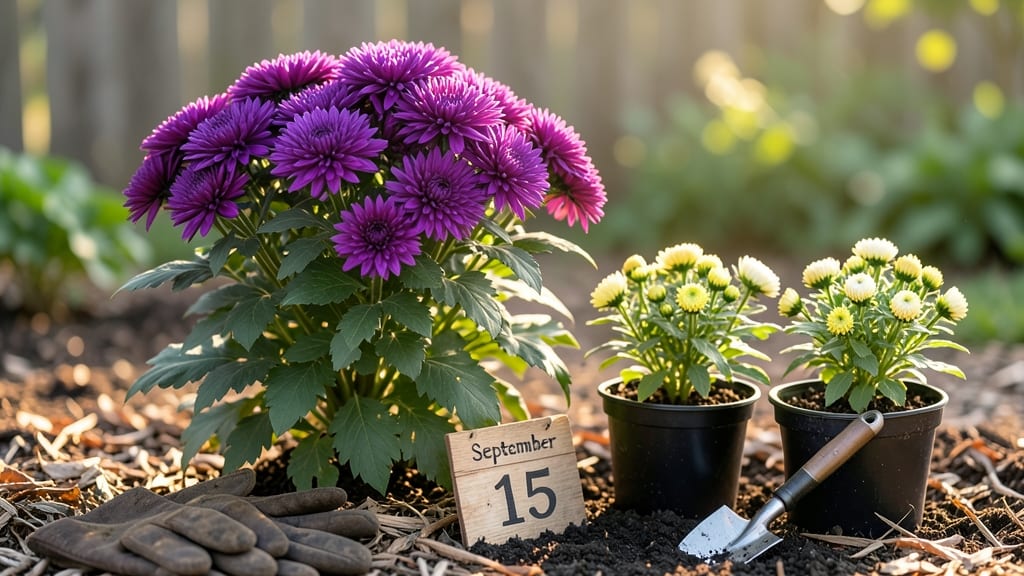
If you’ve ever wondered when is the best time to plant mums in Ohio, timing might be the missing piece that’s keeping your garden from blooming like your neighbor’s. Planting these vibrant flowers at the wrong time can mean sparse blooms—or worse, plants that struggle to survive Ohio’s 6a climate.
Here’s the secret: Mid to late summer (August through early September) is your golden window for planting mums in Ohio. This timing ensures they’ll establish roots before the first frost hits around October 15, giving you those showstopping fall colors you crave.
But there’s more to it than just the calendar—soil prep, frost dates, and even your yard’s microclimate play a role.
Whether you’re tucking mums into garden beds or containers, I’ll break down the exact steps to get them thriving. You’ll learn how to prep your soil, when to fertilize, and why 4-6 weeks before frost is the magic number for blooms that last.
Let’s make your Ohio garden the talk of the neighborhood this fall.
Ready to transform your yard into a vibrant fall display? The clock is ticking—literally. Grab your gardening gloves, and let’s get those mums in the ground at the perfect moment.
Best months to plant mums in Ohio for fall blooms: exact timeline
Ohio’s USDA Zone 6a climate creates a narrow window for planting chrysanthemums (mums) that guarantees vibrant fall blooms. The key is planting 4-6 weeks before the first frost, which typically lands between mid-August and early September across most of the state.
This timing allows roots to establish while still providing enough daylight for flower development.
Northern Ohio’s cooler microclimates may shift this window slightly earlier—late July to mid-August—while southern Ohio gardeners can extend it until early October. The goal is to avoid planting too late, which risks stunted growth before winter, or too early, which can lead to leggy, weak plants.
Soil temperatures play a critical role. Mums thrive when soil stays above 55°F (13°C). In Ohio, this usually aligns with late summer’s warmth, but early September can still work if nights remain mild. Use a soil thermometer to confirm—cooler soils delay root growth, reducing bloom potential.
Pro tip: Check your local frost date averages. Columbus typically sees frost by October 15, while Cleveland’s first frost arrives earlier—around October 1. Adjust your planting schedule accordingly to maximize bloom time.
| Region | Ideal Planting Window | Soil Temp Threshold | Frost Risk |
|---|---|---|---|
| Northern Ohio (Cleveland, Toledo) | Late July - Mid-August | 55°F+ (13°C+) | High (Oct 1) |
| Central Ohio (Columbus, Dayton) | Mid-August - Early Sept | 55°F+ (13°C+) | Moderate (Oct 15) |
| Southern Ohio (Cincinnati, Athens) | Late Aug - Early Oct | 55°F+ (13°C+) | Low (Oct 20) |
🌼 Note: Adjust 1-2 weeks earlier for high-altitude areas (e.g., Appalachian regions).
Container-grown mums offer flexibility. If you miss the ideal window, transplant container mums into garden beds as late as mid-September in southern Ohio. Their established root systems adapt better to cooler soils. Just ensure containers have drainage holes to prevent root rot from Ohio’s frequent fall rains.
Light exposure is non-negotiable. Mums require 6+ hours of full sun daily to produce their signature blooms. In Ohio’s partial-shade gardens, growth slows dramatically, and flowers may fail to open. Test your site’s sunlight with a sunlight tracker for 24 hours before planting.
Watering strategies shift post-planting. For the first 2 weeks after transplanting, keep soil consistently moist but avoid soggy conditions. Ohio’s humid summers can lead to fungal diseases like powdery mildew, so water at the base of plants in the morning to allow foliage to dry quickly.
Fertilization timing matters too. Apply a balanced 5-10-10 fertilizer at planting, then again in early September to boost bloom production. Skip fall fertilizers in northern Ohio—new growth risks frost damage before winter dormancy.
Ohio’s microclimates can create local variations. Urban areas like Columbus often experience 2-3°F warmer nights than rural zones, extending the planting window by 10-14 days. Use a neighborhood plant heat map to refine your schedule.
Remember: Spring planting is a gamble in Ohio. While some gardeners try planting mums in April or May, the resulting blooms often arrive too late for fall enjoyment. Stick to the summer window for reliable, vibrant displays.
With the right timing, your Ohio garden will burst with chrysanthemum color from September through October, turning heads and making your yard the envy of the neighborhood. Happy planting! 🌼
How to prepare Ohio soil for mum planting: key steps for healthy growth
Ohio’s clay-heavy soil and humid summers can challenge mum growth, but proper prep ensures vibrant blooms and winter hardiness. Start by testing your soil’s pH level—mums thrive in slightly acidic to neutral soil, ideally between 6.0 and 6.5.
Use a soil test kit from your local extension office for precise results.
If your soil is too heavy or compacted, amend it with compost or aged manure to improve drainage and nutrient retention. Mix in 2-3 inches of compost into the top 12 inches of soil at least 4-6 weeks before planting.
This gives beneficial microbes time to break down organic matter and enrich the soil.
🌱 Step-by-Step Soil Prep for Mums
- 📋 Test Soil pH: Aim for 6.0-6.5 using a kit.
- 🌿 Amend with Compost: Mix 2-3 inches into top 12 inches of soil.
- 💧 Improve Drainage: Add perlite or sand if soil is clay-heavy.
- 🌱 Fertilize Lightly: Use 5-10-10 NPK fertilizer at planting.
- 🌳 Mulch After Planting: Apply 2-3 inches of mulch to retain moisture.
For clay-heavy soils common in Ohio, add perlite or coarse sand to prevent waterlogging, which can lead to root rot. Work these amendments into the soil at least 2 weeks before planting to avoid disturbing young roots later.
If your soil is sandy, incorporate peat moss or compost to help retain moisture and nutrients.
At planting time, add a slow-release fertilizer with a 5-10-10 NPK ratio to provide balanced nutrition. Sprinkle 1 tablespoon per plant into the planting hole and mix it with the native soil. Avoid over-fertilizing, as this can burn delicate roots and reduce bloom quality.
After planting, apply a 2-3 inch layer of mulch around each mum to retain moisture, regulate soil temperature, and suppress weeds. Use straw or shredded leaves for a natural, Ohio-friendly mulch. Keep mulch 2-3 inches away from the plant stems to prevent rot and pests.
Finally, water deeply after planting to settle the soil and encourage root establishment. Ohio’s hot, humid summers can dry out soil quickly, so monitor moisture levels and water early in the morning to reduce fungal risks.
With the right soil prep, your mums will thrive and burst into color come fall! 🌼