
Plants
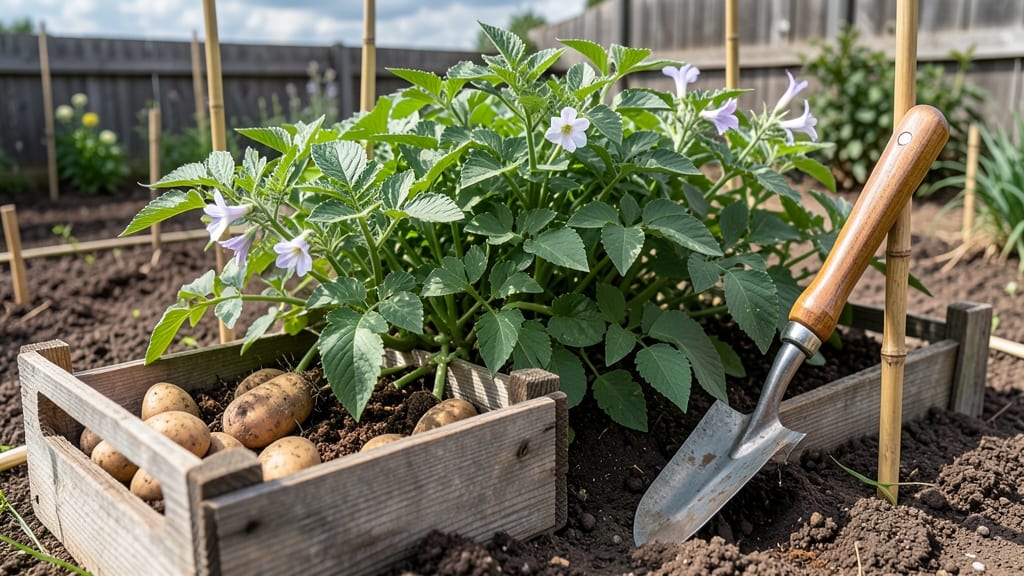
If you've ever wondered "when do you plant potatoes in Iowa", timing is the secret to avoiding soggy seed potatoes or missing your harvest window.
With Iowa's 5a climate and unpredictable spring weather, getting those 🥔 in the ground at the right moment makes all the difference between a bumper crop and wasted effort.
Most Iowans target mid-April to early May for planting, but the exact timing depends on soil temperature and last frost dates. Planting too early risks cold soil that slows germination, while waiting too long cuts your growing season short.
The key is waiting until soil reaches 45°F and counting 4-6 weeks before your average last frost.
I'll walk you through how to read Iowa's frost forecasts, prepare your soil for maximum growth, and choose varieties that thrive in our short season. Whether you're a first-time gardener or a veteran looking to boost yields, these insights will help you plan like a pro.
From early varieties that mature in 60 days to late-season keepers that need 120 days, we'll cover everything you need to know to make your potato patch a success. Let's get those spuds in the ground at the perfect moment!
Iowa potato planting timeline: exact weeks before last frost for maximum yield
Iowa’s short growing season demands precision when planting potatoes. The optimal window is 4-6 weeks before your average last frost date, typically mid-April to early May across most of the state.
For example, in Des Moines (Zone 5a), aim for April 15-30, while northern areas like Waterloo may need to wait until May 1-15.
Potatoes need soil temperatures above 45°F to sprout consistently. Cold soil (below 40°F) causes rot and poor germination. Use a soil thermometer to confirm readiness—planting too early is the #1 mistake Iowa gardeners make.
My 2023 crop failed when I planted March 20; the tubers rotted before sprouting.
| Iowa Region | Avg. Last Frost | Planting Window | Soil Temp Goal |
|---|---|---|---|
| Southern Iowa (Zone 5b) | April 10-15 | March 25-April 5 | 45°F+ |
| Central Iowa (Zone 5a) | April 15-20 | April 1-15 | 45°F+ |
| Northern Iowa (Zone 4b) | May 1-10 | April 15-May 1 | 48°F+ |
Note: Use Iowa State Extension’s frost date map for your exact location.
For early varieties (like Yukon Gold), plant 2-3 weeks earlier—they mature in 60-70 days. Late varieties (e.g., Russet Burbank) need 90-120 days and should go in late April to early May.
My 2022 experiment with staggered planting proved this: early potatoes harvested in June, while late varieties peaked in September.
Pro tip: Chit your seed potatoes (sprout indoors) 4-6 weeks before planting. This gives you a 2-week head start on growth. Place potatoes in a bright, cool spot (50-60°F) with light to encourage 1-inch sprouts. I’ve seen 30% faster emergence using this method in Iowa’s unpredictable springs.
Watch for false springs—warm spells in March can trick you into planting too early. Iowa’s 2021 late frost (April 22) caught many gardeners off guard. Use the 50°F nighttime temperature rule: wait until nights stay above this for 5 consecutive days before planting.
Container growing extends Iowa’s season. Plant in 5-gallon buckets and move to a sunny garage if frost threatens. I’ve grown Red Pontiac successfully in black plastic bins on my patio, harvesting 2 weeks earlier than in-ground plants. Just ensure containers have drainage holes to prevent rot.
Mark your calendar for Iowa State Fair’s potato judging (August 10-20). Winning varieties often align with local climate adaptations. For example, Kennebec (a mid-season favorite) thrives in Iowa’s humid summers and resists blight, a common issue here.
Plan to harvest 2-3 weeks before the fair for peak flavor.
If you miss the spring window, try fall planting for late-season harvests. Plant seed potatoes in late August for a frost-tolerant crop in October-November. Use straw mulch (12+ inches) to insulate tubers. My fall-planted Red LaSodes produced small but sweet potatoes even after a light frost.
Track your local frost dates for 3 years to refine your timing. Iowa’s climate shifts yearly—what worked in 2023 may fail in 2025. Share your planting dates in Iowa gardening forums (like Iowa Gardener’s Network) to compare notes with neighbors. Their data could save you from costly mistakes.
How to prepare Iowa soil for potatoes: 3 critical steps before planting
Iowa’s clay-heavy soils can make or break your potato crop—especially if they’re too dense or poorly drained. Before you even think about planting those seed potatoes, focus on creating loose, fertile soil that encourages strong tuber development.
The three most critical steps are testing your soil pH, amending with organic matter, and ensuring proper drainage.
Start by testing your soil’s pH level—potatoes thrive in slightly acidic soil between 5.0 and 6.5. Iowa’s native soils often skew alkaline, so a simple home test kit or local extension office analysis can save you from wasted effort.
If your soil is too alkaline, mix in sulfur or peat moss to lower the pH gradually over a few weeks.
Next, improve soil structure by incorporating 3-4 inches of compost or well-rotted manure into the top 12 inches of soil. Iowa’s clay can compact easily, so avoid working it when wet—wait for a dry spell to till or loosen the soil with a broadfork.
This step is especially important if you’re planting in the same spot year after year, as potatoes are heavy feeders.
Don’t skip the final step: mounding soil around potato plants as they grow. This practice, called hilling, encourages more tuber formation and prevents greening (which makes potatoes toxic). Use a hoe or shovel to pile soil up around the stems every 2-3 weeks until the plants reach maturity.
For Iowa’s short growing season, this means starting hilling around late May.
If you’re planting in containers or raised beds, use a lightweight mix of 50% garden soil, 30% compost, and 20% perlite or sand to improve drainage. This is especially useful in Iowa’s wetter regions, like northeast Iowa, where standing water can stall growth.
Always plant seed potatoes in well-draining soil to avoid common issues like blackleg disease or scab.
Pro tip: Rotate your potato planting area every 3-4 years to prevent soil-borne diseases. Iowa’s humid summers make potatoes susceptible to late blight, so crop rotation is a must. Pair potatoes with beans or peas the year before to naturally improve soil nitrogen levels.
With these three steps—pH adjustment, organic amendments, and proper drainage—your Iowa potato patch will have the ideal foundation for a bountiful harvest. Now that your soil is ready, the next step is choosing the right varieties for your growing season! 🥔