
Plants
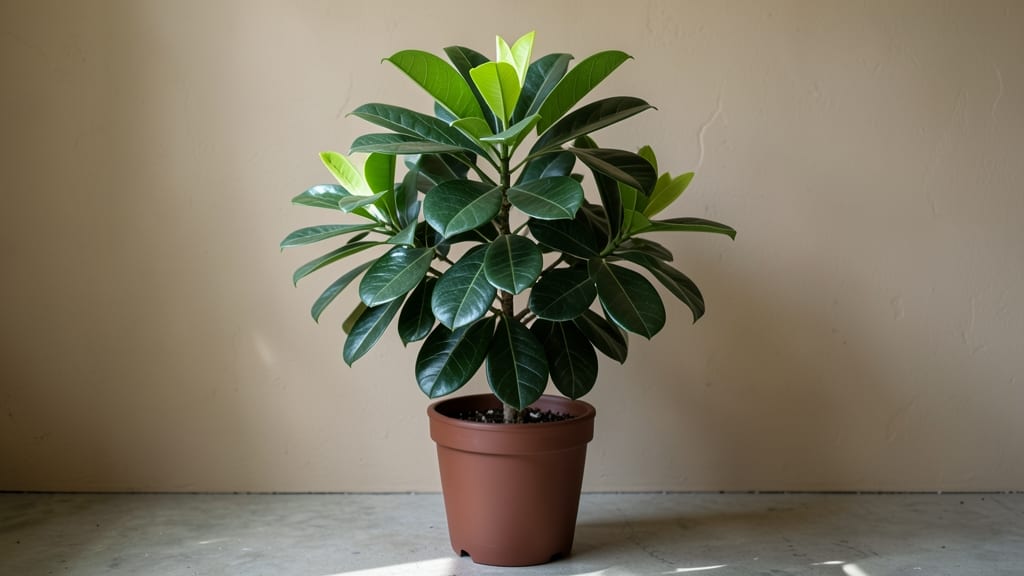
If you're eyeing a Schefflera 🌿 for your home but wondering how tall this plant can grow, you're not alone. This tropical favorite comes in sizes ranging from compact tabletop plants to towering indoor trees, depending on the variety and care.
Some varieties max out at just 3 feet, while others can easily reach 12 feet with proper growing conditions.
Understanding your Schefflera's growth potential is key to keeping it in the perfect spot for years to come. Whether you're working with a dwarf variety that stays under 5 feet or a fast-growing type that could outpace your furniture, knowing the differences helps you plan ahead.
The right light, pruning, and pot size can even influence how tall it grows—so let's break down what to expect from each popular type.
For those who love the idea of a lush, leafy centerpiece but worry about limited space, don't fret. With the right care, you can easily manage your Schefflera's height—whether that means keeping it small or encouraging it to grow taller.
I'll share the secrets to controlling its size, from pruning tips to the best placement for your home.
Ready to find out which Schefflera fits your space and lifestyle? Let's dive into the height ranges, care tips, and everything else you need to know to keep your plant thriving—no matter how tall (or short) you want it to be.


Schefflera height by variety: compact to towering growth expectations
If you’ve ever wondered whether your schefflera will become a ceiling-height statement piece or stay a manageable tabletop plant, the answer depends entirely on the variety. Scheffleras range from dwarf varieties that top out at 3 feet to towering giants reaching 12 feet indoors.
Knowing your plant’s potential height helps you choose the right variety for your space and plan for its growth.
The most common schefflera varieties—like Schefflera arboricola and Schefflera actinophylla—grow at dramatically different rates. For example, the dwarf umbrella schefflera stays under 5 feet, while the Australian schefflera (actinophylla) can soar to 12 feet if left unpruned.
Even within a single species, growth habits vary based on care and environment.
Below, I’ve compared the most popular schefflera varieties by their mature height, growth rate, and ideal use cases. Think of this as your cheat sheet for picking—or pruning—a schefflera that fits your space perfectly.
| Variety | Mature Height (Indoor) | Growth Rate | Best For | Height Comparison |
|---|---|---|---|---|
| Schefflera arboricola (Dwarf) | 3–5 ft | Slow to moderate | Small spaces, desks, shelves | Taller than a standard chair |
| Schefflera arboricola (Standard) | 5–8 ft | Moderate | Living rooms, hallways | As tall as a 6-ft dining table |
| Schefflera actinophylla (Umbrella Tree) | 8–12 ft | Fast | Large rooms, atriums, outdoor pots (zones 10-11) | Taller than a ceiling fan |
| Schefflera elegantissima (Australian Schefflera) | 6–10 ft | Moderate to fast | Statement plants, green walls | Taller than a person (6 ft) |
| Schefflera ‘Trinette’ (Dwarf) | 3–4 ft | Slow | Offices, apartments, terrariums | Shorter than a standard door |
Notice how Schefflera actinophylla and elegantissima are the fastest growers, capable of adding 1–2 feet per year with ideal care. Meanwhile, dwarf varieties like ‘Trinette’ grow just 6–12 inches annually, making them perfect for small spaces.
If you’re working with limited vertical space, a dwarf schefflera will stay manageable for years without pruning.
Pro tip: Even fast-growing scheffleras can be pruned to size. I’ll show you how to control height in the next section—but first, let’s talk about what makes these plants grow tall (or stay short) in the first place.
For now, use this table to pick a schefflera that matches your space. A 5-foot variety fits cozy living rooms, while a 10-foot schefflera makes a bold statement in an open-concept home.
And if you’re unsure? Start with a dwarf variety—you can always propagate cuttings to grow a taller plant later!
🌿
Factors that control schefflera height: light, pruning, and pot size secrets
Your schefflera’s height isn’t set in stone—it’s shaped by three key factors: light exposure, pruning habits, and container size. Master these, and you’ll control whether your plant stays a compact tabletop centerpiece or stretches toward your ceiling like a jungle giant.
Let’s break down how each factor influences growth and what you can do to guide your schefflera’s vertical destiny.
Light exposure is the #1 growth regulator. Place your schefflera in bright indirect light (like an east or north-facing window) to encourage moderate, balanced growth. Too little light? Your plant will stretch leggy, reaching for sunlight and growing 30-50% taller than expected. Too much direct sun? Leaf scorch can stunt growth entirely. Aim for 4-6 hours of filtered light daily to keep your schefflera thriving at its ideal height.
Pruning isn’t just for shaping—it’s a tool to control height. Prune in late winter or early spring (just before new growth begins) to encourage bushier, slower vertical growth. Cut back 1/3 of the tallest stems to redirect energy into lateral branches. For faster vertical growth, avoid heavy pruning and let your schefflera grow freely—it’ll reward you with 6-12 feet of lush foliage in just a few years.
Your pot size plays a surprising role in height control. Root-bound scheffleras grow taller as they compete for space, while a slightly larger pot (1-2 inches wider than the root ball) encourages wider, bushier growth.
If you want a compact schefflera, repot into a shallow, wide container to limit upward growth. For a towering specimen, keep it in a tall, narrow pot to encourage vertical stretching.
🌿
- 🌞 Light Exposure: Bright indirect light = balanced growth; low light = leggy, tall growth (up to 50% taller).
- ✂️ Pruning Timing: Prune in late winter for bushier growth; avoid pruning in summer to encourage height.
- 🪴 Pot Size: Small pots = taller plants; wide pots = shorter, bushier growth.
- 💧 Watering: Overwatering = stunted growth; underwatering = slower vertical growth.
- 🌱 Fertilizer: Balanced NPK (10-10-10) in spring/summer = faster growth; over-fertilizing = leggy stems.
Don’t overlook the role of fertilizer—too much can lead to rapid, weak growth that stretches your schefflera taller than you want. Use a balanced 10-10-10 fertilizer every 4-6 weeks in spring and summer, but cut back in fall and winter to slow growth during dormancy.
For a slow-growing, compact schefflera, reduce fertilizer to half-strength or switch to a low-nitrogen formula (like 5-10-10) to encourage denser foliage over height.
Pro tip: If your schefflera is already too tall, don’t despair—you can still train it downward. Use soft plant ties to gently guide new growth along a trellis or wall.
Over time, this will create a sprawling, vine-like schefflera that adds vertical interest without dominating your space. Just remember: patience is key—training takes 3-6 months to show noticeable results.
🪴